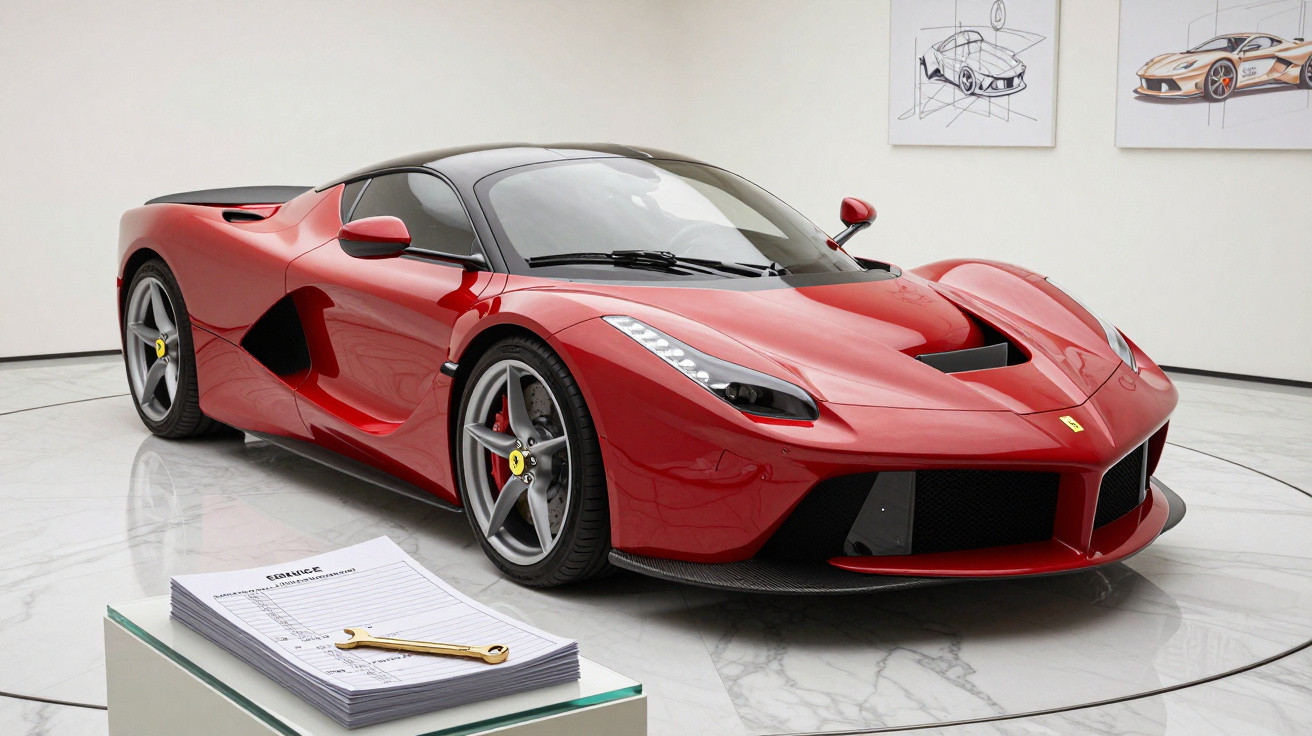
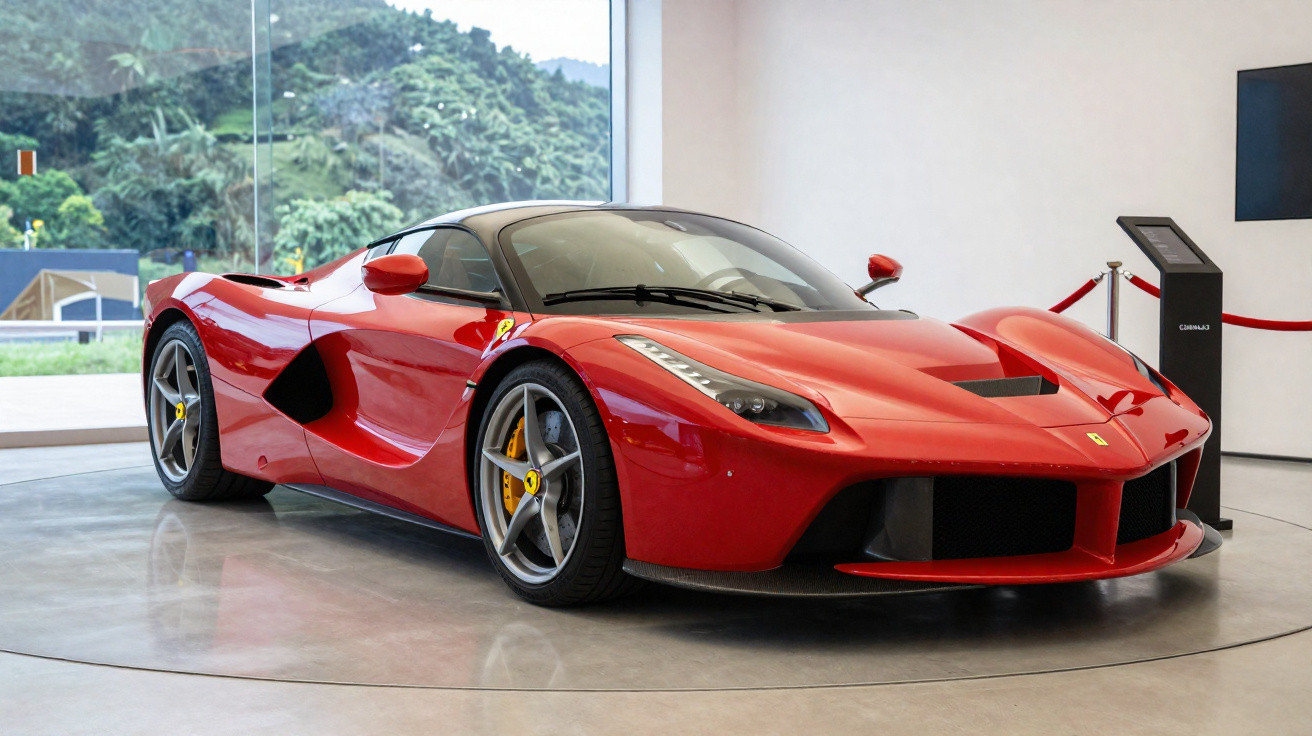
On a Californian road, the roar of a Ferrari worth several million euros draws attention before it even comes into view. Its owner has only just completed the final paperwork, delighted to have added an exceptionally rare, almost untouchable machine to the garage. Just a few hundred kilometres later, the phone rings: certain consumable parts already need replacing. It is enough to puzzle anyone, particularly when the servicing bill resembles the price of a desirable new car. We all know the moment when a dream purchase suddenly reveals its less glamorous side. At this level of collectability, the dream travels fast, but it also comes at a very high price.
An exceptional Ferrari, but unlike any ordinary car
Most people would assume that a Ferrari invoiced at several million euros ought to cross California without complaint. Yet some exceptionally rare supercars were developed around the opposite principle: delivering sensations close to those of motorsport, even when that means demanding mechanical requirements and components with a limited lifespan.
According to several reports circulating within automotive circles, the Californian owner, said to be an experienced collector, learned that items such as tyres, fluids, certain seals and brake-system components required prompt attention after only a few hundred kilometres. On a car of this kind, a specially specified set of tyres can cost several tens of thousands of euros.
This does not necessarily point to an embarrassing failure or poor construction. A high-performance collectible Ferrari operates under intense demands: high temperatures, soft-compound tyres, lightweight materials and parts made in very limited production runs. It was not designed for Saturday-morning shopping trips, nor to sit under a cover for months without consequences.
When rarity turns Ferrari maintenance into an obstacle course
Before getting behind the wheel of such an exclusive Ferrari, the first step is to request the full maintenance schedule in writing. Both mileage intervals and time-based deadlines matter, since some parts must be checked or replaced even when the car has covered very few kilometres.
A common mistake is assuming that low mileage automatically protects the car mechanically. It is understandable: an odometer reading of 300 or 500 kilometres appears reassuring. Let us be honest: nobody really does this every day, yet a vehicle left unused for too long can suffer ageing fluids, dried-out seals and tyres that lose their properties.
In this world, the invoice is determined by more than the part being changed; availability, transport, specialist tooling and skilled labour all play a role. The true cost of a rare Ferrari begins once it has been bought.
“A high-performance collector car must be maintained according to its age, history and use, not solely by the figure shown on the odometer,” notes an Italian sports-car maintenance specialist.
- Request maintenance invoices and confirmation of completed technical campaigns;
- Ask for the exact age of the tyres, brakes and fluids;
- Set aside an annual budget that is separate from the kilometres driven;
- Have the car inspected by a workshop with precise knowledge of the model.
The listed price is only part of the story
This Californian episode highlights a reality that auction sales seldom show: owning an exceptional automobile is nothing like an ordinary purchase. A multi-million-euro Ferrari can simultaneously be a work of art, a speculative asset and a machine for which every outing requires preparation.
The paradox is almost moving. The rarer a car becomes, the more reluctant its owner may be to drive it; but the less it is driven in suitable conditions, the more unavoidable certain procedures become. Between the fear of damaging a jewel and the simple wish to hear a V12 sing, the balance is delicate.
A Ferrari’s real value cannot be measured solely by its sale price. It is evident in its records, the care it receives and its owner’s willingness to accept that mechanical pleasure can sometimes be expensive-very expensive. The question remains: should these cars be preserved like sculptures, or allowed to live on the road, where they were conceived?
| Key point | Detail | Benefit for the reader |
|---|---|---|
| Accelerated maintenance | Some components age according to time as much as mileage. | Avoid relying solely on low mileage. |
| Hidden budget | Tyres, brakes, fluids and specialist labour can amount to substantial sums. | Anticipate the true cost before buying. |
| Specialist inspection | Model-specific expertise can identify expensive upcoming requirements. | Reduce the risk of an unwelcome surprise after delivery. |








Comments
No comments yet. Be the first to comment!
Leave a Comment