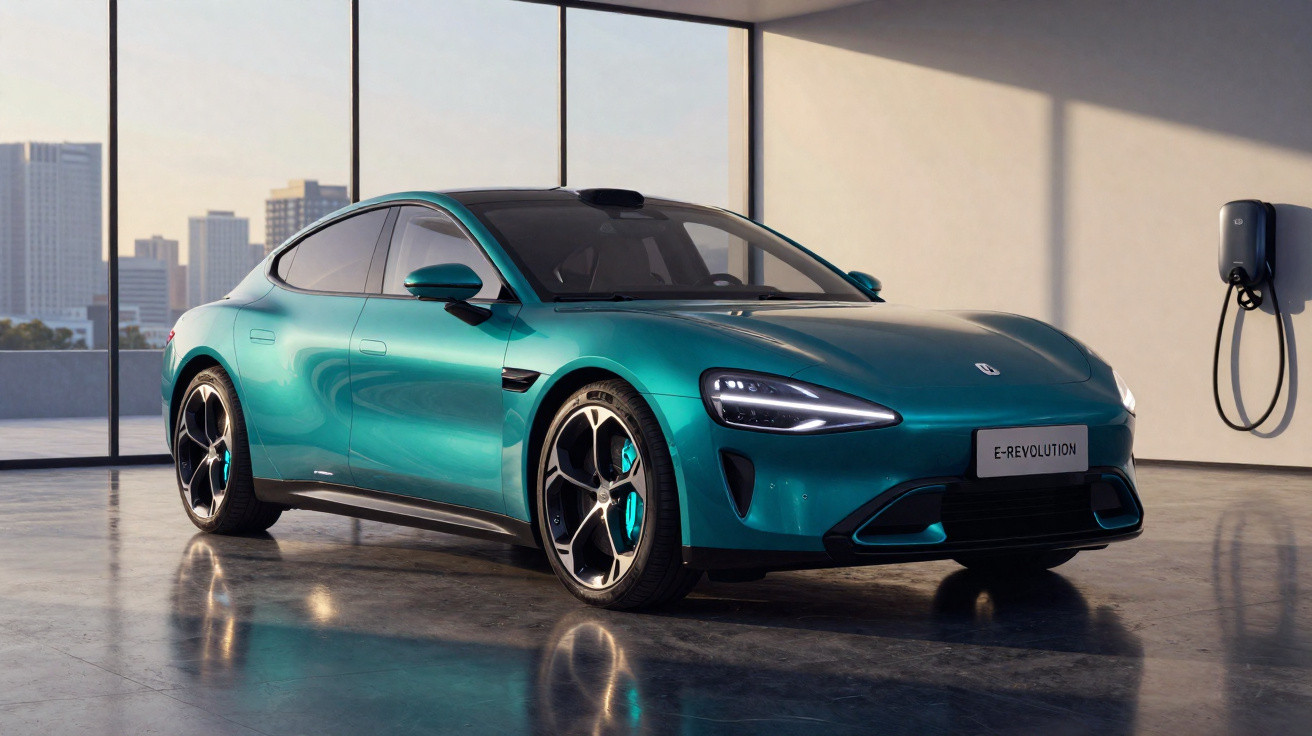
Drivers worried about an electric car tax can take some reassurance from the Court of Audit’s examination of the issue. Its findings suggest that, at least for the next few years, no such move is on the horizon.
Will electric car owners soon face a new charge? As revenue from petrol and diesel steadily declines, the question is becoming increasingly urgent for the state. A per-mile levy, higher taxation on home charging, or a new vehicle disc are among the options frequently raised. However, an official report from the Court of Audit provides a clearer picture.
Published in June 2026, the report “What future for energy taxation?” by the Compulsory Levies Council (CPO), an independent body linked to the Court of Audit, devotes part of its work to the future of car taxation.
Its assessment is relatively reassuring for drivers who have switched to electric vehicles: “it is still too early to tax their use more heavily”, the report states. The Court of Audit considers that imposing a tax on electric cars now would be the worst possible approach.
Taxing electric cars would be counterproductive
Much of today’s motoring taxation still comes from fuel. Every electric car replacing an internal-combustion model therefore means fewer litres of petrol or diesel on which tax can be collected.
Eventually, the state will need to identify a way to make up for this fall in income. The reasoning is understandable. Nevertheless, the CPO believes this is the wrong time to start taxing electric cars.
Introducing a new tax on the use of electric cars too soon could slow their uptake, at a time when public authorities are trying to speed up the electrification of the vehicle fleet. In particular, the report dismisses the prospect of specifically taxing electricity used to charge a car at home.
From a technical perspective, this would require, for example, fitting a sub-meter to separate the electricity supplied to the battery from that used by the rest of the home. Such a system would be difficult to implement, especially as drivers can charge from an ordinary socket, at a relative’s house or at their workplace.
Furthermore, European law does not currently allow households to be charged a different excise duty on electricity according to how it is used.
What about the much-discussed per-mile tax?
Instead of taxing energy, the state could charge drivers according to the distance they travel. This is the most serious option to have returned to the agenda over the summer.
The idea is not unprecedented: other countries have already introduced this type of charge. Iceland, for instance, has adopted distance-based taxation, while the United Kingdom is preparing its own scheme for electric cars from 2028.
In France, the CPO does not favour this approach. A per-mile tax would create several difficulties, particularly on toll motorways. Charging both a toll and a distance-based levy could require adjustments to prevent double taxation. Tracking journeys would also make the system considerably more complicated.
There is also an obvious political challenge: bringing in a new charge for motorists could be particularly difficult to secure public acceptance for. This is especially true when drivers choosing electric vehicles already pay more for their cars while contributing to the environmental transition. Such a tax would therefore amount to penalising those supporting that transition.
A new vehicle disc rather than a per-mile tax?
If electric car taxation changes in the future, it would more likely take the form of “an annual ownership charge”. Put simply, this would involve introducing a new-generation vehicle disc.
Its cost could be based on vehicle characteristics, including its weight or its footprint. Heavier and more cumbersome cars could therefore pay more.
Even so, no decision has been made. This is an avenue being considered to prepare for the future decline in fuel-related revenue, rather than a new tax with an implementation date already scheduled. Whatever happens, given how often the subject is debated, electric car owners should expect new taxation to emerge sooner or later.



Comments
No comments yet. Be the first to comment!
Leave a Comment