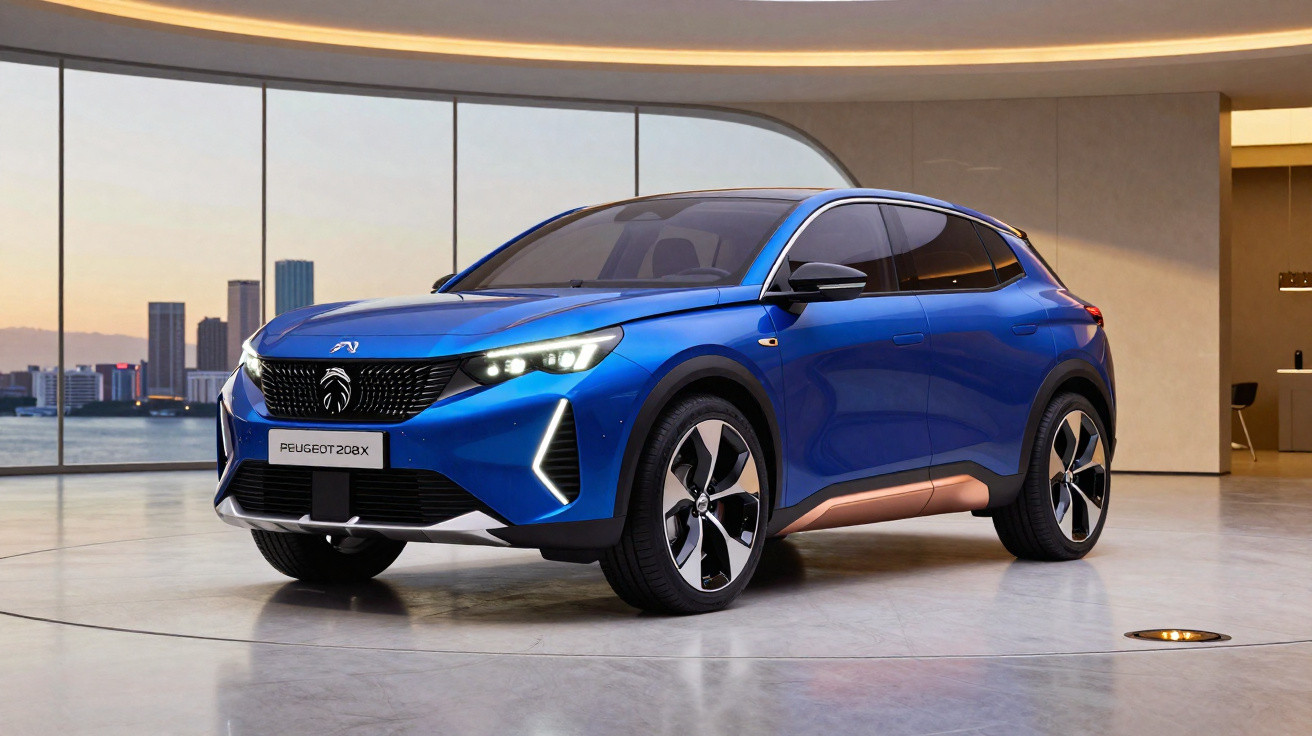
The initial plan was straightforward: the third-generation Peugeot 208 and 2008 were due to arrive in 2026 as electric-only models. This was the route mapped out both by the French marque and, more broadly, by Stellantis.
However, demand for electric cars has not increased at the anticipated pace, as has become clear. As a result, many manufacturers have reassessed their approaches, either delaying their electrification programmes or changing them entirely.
Peugeot will do a little of both. The current generations of the two models, introduced in 2019, will remain on sale for longer and, in at least one case, the next generation will no longer be exclusively electric.
Avoiding what happened to the FIAT 500
Stellantis wants to prevent its best-selling Peugeot model from following the path taken by the FIAT 500. The third generation of the Italian city car was launched in 2020 solely as an electric vehicle. Although sales initially reached promising levels, they effectively fell off a cliff after three years. FIAT was forced to take a step back and will reintroduce a 500 with an internal-combustion engine at the beginning of next year.
According to the newspaper L’Automobile, the next-generation Peugeot 208 is therefore expected to follow the FIAT 500's lead in order to avoid more serious consequences. There will consequently be two 208 versions: a fully electric model and a mild-hybrid. That is also the case with the current generation, although its successor will drop the pure combustion-engine variants.
The revised strategy has also moved the launch date for the new generation. Rather than arriving in 2026, it is now scheduled for 2027. This has created room for a high-performance 208 version that brings back the GTI badge. Find out about it:
Peugeot 2008 gets an extended lifespan
While the 208 has been postponed by one year, the third-generation 2008 has been pushed back even further, from 2026 to 2028.
To remain competitive until virtually the end of the decade, it is expected to receive another update, having already been refreshed in 2023, with new technology and design features. In this case, it should gain a “facelift” similar to the one soon to be revealed for the 308 and 408.
Unlike the 208, however, the third-generation Peugeot 2008 remains aligned with the original plan and will be electric-only. The expectation is that, by 2028, the electric-car market will have expanded sufficiently to secure the model's commercial viability.
The new Peugeot 208 and 2008 generations will share the new STLA Small platform, which will replace the current CMP architecture. Because their launches have been delayed, the platform could now debut with the new-generation Opel Corsa, recently previewed by a radical prototype created for the Gran Turismo video game.
Another change will be the use of a new generation of LFP (lithium iron phosphate) batteries in the electric versions. These are less expensive, but also have lower energy density. The electric Peugeot 208 and 2008 currently use batteries with NMC (nickel, manganese, cobalt) chemistry.

Comments
No comments yet. Be the first to comment!
Leave a Comment