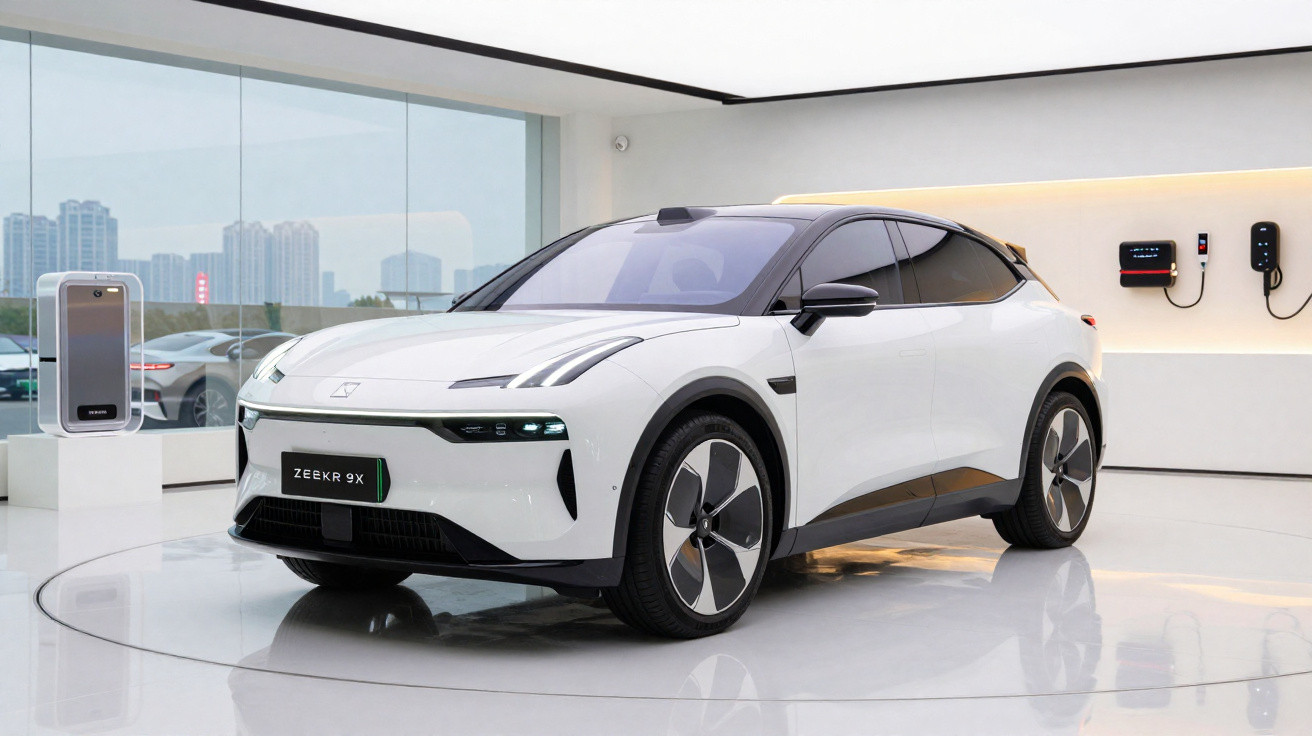
Zeekr - one of the brands within China’s Geely group, which also owns Smart, Volvo and Lotus - has taken a step back from full electrification with the unveiling of its first plug-in hybrid (PHEV). Called the Zeekr 9X, this luxury SUV is more than five metres long and has a distinctly British-looking presence.
Leaving styling aside, it is a genuine giant in both size and weight. Yet it is the plug-in hybrid (PHEV) system that looks set to take most of the attention - and potentially “embarrass” certain all-electric models - not only because of its claimed range, but above all due to the battery capacity.
Big and Chinese
In the motor industry, the expression “big in the French way” ought to be replaced by “big in the Chinese way”, and there is no better illustration of that than the Zeekr 9X.
This Chinese SUV is 5.239 m long, 2.029 m wide and 1.819 m tall, with a 3.169 m wheelbase. It is a true colossus, tipping the scales at more than three tonnes in running order.
Supercar power
Based on the new SEA-S modular architecture, designed for large electrified vehicles, the Zeekr 9X pairs a 2.0-litre turbocharged engine producing 275 hp, supplied by Chinese company Aurora Bay Technology, with three electric motors. Total combined output is 1030 kW (1381 hp).
With that output, the Zeekr 9X can sprint from 0 to 100 km/h in 3.1 seconds, while its top speed is electronically limited to 240 km/h. On paper, then, it is close to the territory occupied by proper performance cars. For comparison, the Audi RS 6 (C8) takes 0.5 seconds longer to reach 100 km/h from a standstill.
Electric-car-sized batteries
While the output is already striking, the Zeekr 9X stands out chiefly for carrying the largest batteries ever fitted to a plug-in hybrid. They are even larger than those found in certain all-electric vehicles.
Supplied by CATL, this Chinese SUV’s battery packs range from very large, at 55.1 kWh, to enormous, at 70 kWh. The latter is the largest battery ever used in a passenger PHEV and delivers up to 302 km of electric range under the Chinese CLTC cycle, which should equate to 250 km under the European WLTP cycle.
The model is scheduled to make its first public appearance at the Chengdu Motor Show at the end of August, before reaching the Chinese market during the third quarter of 2025. Prices are expected to range from 600,000 to 900,000 yuan (approximately €85,000 to €200,000).


Comments
No comments yet. Be the first to comment!
Leave a Comment