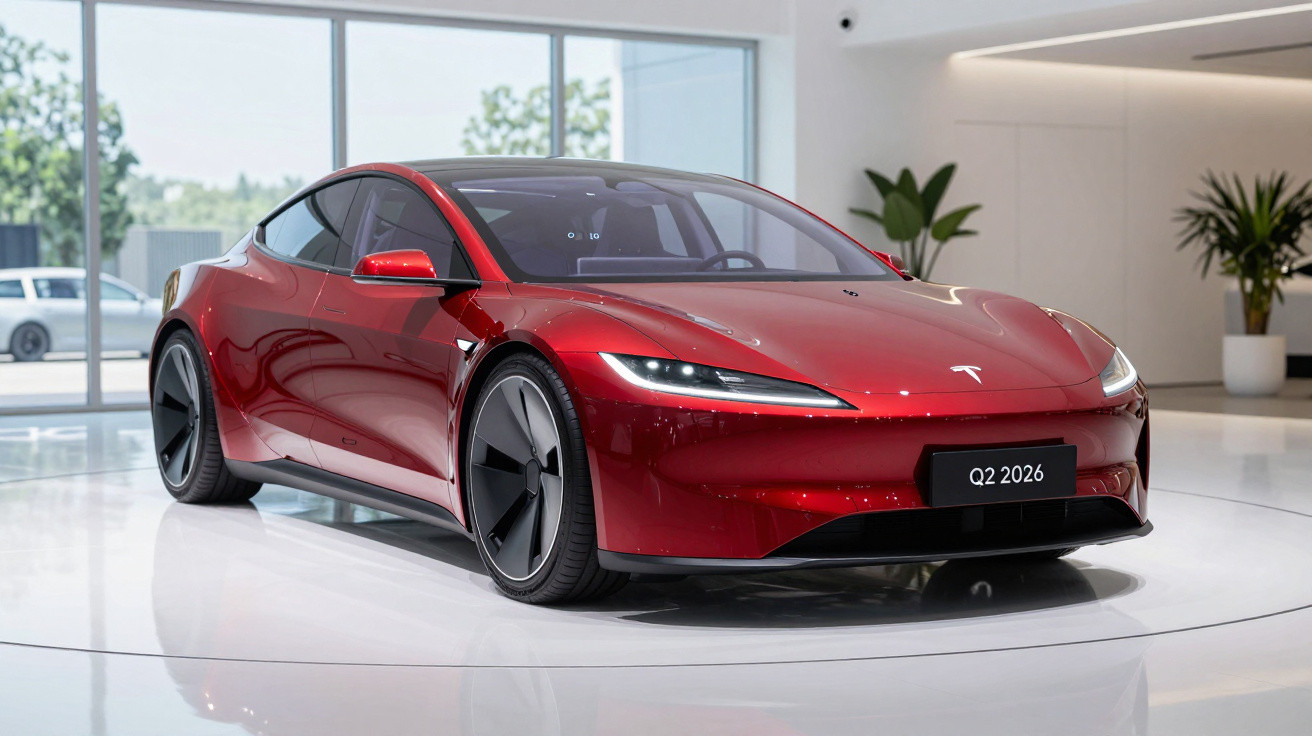
Tesla’s financial results for the second quarter of 2026 have now been released, revealing a financial paradox for the brand: the US manufacturer achieved record revenue and the highest delivery volume in its history, yet its business profitability weakened.
Its operating margin dropped to just 1.4% - the lowest figure of the past year - while profit declined despite the strong rise in sales.
Between April and June, Tesla generated $28.2 billion in revenue, up 26% on the same period in 2025. Deliveries also reached an all-time high, with 480,126 cars sold (+25%).
Even so, adjusted net income (non-GAAP) fell by 17% to $1.153 billion, while operating profit declined by 57% to only $398 million. How can a company sell more, generate more revenue and ultimately earn less?
Why did Tesla’s profits fall?
This seeming contradiction stems from three key factors: thinner margins in the automotive business, a sharp increase in research and development (R&D) investment, and lower revenue from the sale of emissions credits.
To maintain delivery growth in an increasingly competitive electric vehicle market, Tesla used promotional campaigns, discounts and more appealing finance options. Although this approach lifted sales and revenue, it reduced the margin made on every car sold, putting pressure on overall business profitability.
Higher investment in strategic projects
Operating expenses also rose by 47%, reaching $4.35 billion. Much of this increase came from investment in strategic areas, including the Optimus humanoid robot, the Robotaxi network and TeraFab, the project through which Tesla intends to develop and manufacture its own artificial intelligence semiconductors.
Pressure on the results was further intensified by the steep decline in revenue from emissions-credit sales, historically one of Tesla’s most profitable activities. From April to June, this revenue dropped from $439 million to $146 million, a fall of 67% that directly affected the operating margin.
What can be expected from Tesla?
Tesla expects the centre of its business to shift gradually. While it remains focused on raising vehicle production and sales, the company believes that, over the medium term, an increasing share of profitability could come from software, artificial intelligence and services linked to its vehicles.
To support this transition, it will continue investing in the expansion of its existing manufacturing capacity, the development of new models and the vertical integration of production, including batteries, semiconductors and AI infrastructure.
The company is also maintaining its timetable to begin production later this year of the Semi lorry, the next generation of Megapack 3 systems and the first production lines for the Optimus humanoid robot.
Despite the pressure on profits, Tesla makes clear that it intends to keep prioritising investment in technologies it considers vital to the next stage of its growth.




Comments
No comments yet. Be the first to comment!
Leave a Comment