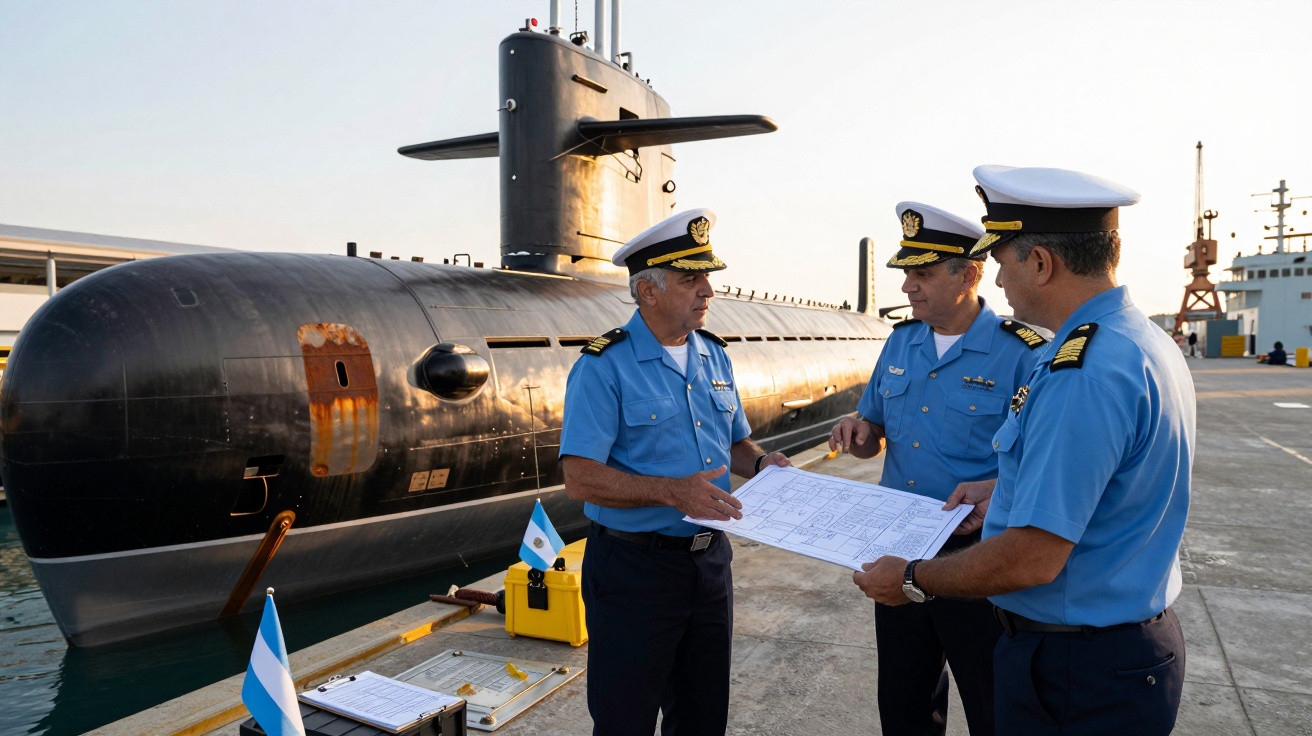
Over recent months and years, a range of options and assessments have been considered to restore the Argentine Navy’s submarine capability. Although the most significant proposals involve newly built submarines offered by European and Asian shipbuilders, other alternatives are also being examined by the authorities. More specifically, these concern the purchase of second-hand vessels that navies around the world are currently withdrawing from service.
This is not an entirely new issue. During the previous ministerial administration, when diplomatic relations with Brazil were following a normal path of closer ties and cooperation, options such as the Brazilian Navy’s Tupi submarines were under consideration. These vessels are already being retired to make way for the Riachuelo class, itself based on Naval Group’s French Scorpène design.
Further back, the cooperation relationship developed with Norway - reflected in the acquisition of P-3C/N Orion maritime patrol aircraft - also brought the Royal Norwegian Navy’s Ula submarines into consideration.
Norwegian Ula submarines and European capability needs
Yet, regardless of the interest in them and their condition following upgrades and life-extension work, Europe’s strategic circumstances meant that the northern European country did not consider transferring them to third countries. It sought to avoid losing capabilities needed to monitor the North Atlantic and the Arctic. Norway is currently working with Germany to build the new Type 212CD class, which will replace the Ula submarines towards the end of this decade and the beginning of the next.
Other possibilities can be found in the Mediterranean, notably the Italian Navy’s Sauro class. These submarines have served for decades and are approaching the end of their operational lives, while Italian shipyards led by Fincantieri have begun building their replacement: the Type 212 NFS class, with deliveries projected between 2029 and 2032.
Used submarines for the Argentine Navy
Another potential option that should not be overlooked is the Turkish Navy’s Type 209 submarines. Its earliest examples are being withdrawn from service as Turkish shipyards, like their European counterparts, progress with construction of the new Type 214 class, developed through cooperation with Germany’s TKMS.
So, what advantages and disadvantages would the Argentine Navy face by bringing used submarines into service?
When assessing the options, it is important to acknowledge the “double-edged sword” this route represents for the Argentine Navy. While it could allow the Submarine Force Command to be restored in the short term, with an operational vessel available to train personnel, the remaining service life, sustainment costs and political dimension combine to make many observers wary of the prospect.
A long-term submarine replacement plan
This is no minor matter. If this option is selected, it must be accompanied by a larger, substantial plan that includes and delivers the purchase of a newly built, ocean-going submarine platform with deterrent capability. Such a platform would secure the country’s ability to operate submarines for coming decades, rather than merely for the next few years.
Moreover, in the present climate of political short-sightedness, it is impossible to ignore a view within the leadership of the state that appears to follow a familiar rule of national politics: temporary or emergency decisions become lasting and permanent. Examples are plentiful and, undoubtedly, more than one will come to mind while reading these lines.
The second-hand submarine option, involving vessels with only a few years of useful service remaining and intended mainly for training, therefore emerges as a “double-edged sword” unless it is matched by the political determination to replace them with a new generation of conventionally powered attack submarines.
Finally, given how the official decision continues to be delayed month after month, and bearing in mind that, if completed, this would genuinely represent the most significant investment in defence policy of the past 40 years, another maxim of national politics also deserves consideration: delay the matter until somebody else must deal with it, leaving the acquisition and assessment of new submarines for the Argentine Navy to continue gathering dust in ministerial offices.















Comments
No comments yet. Be the first to comment!
Leave a Comment