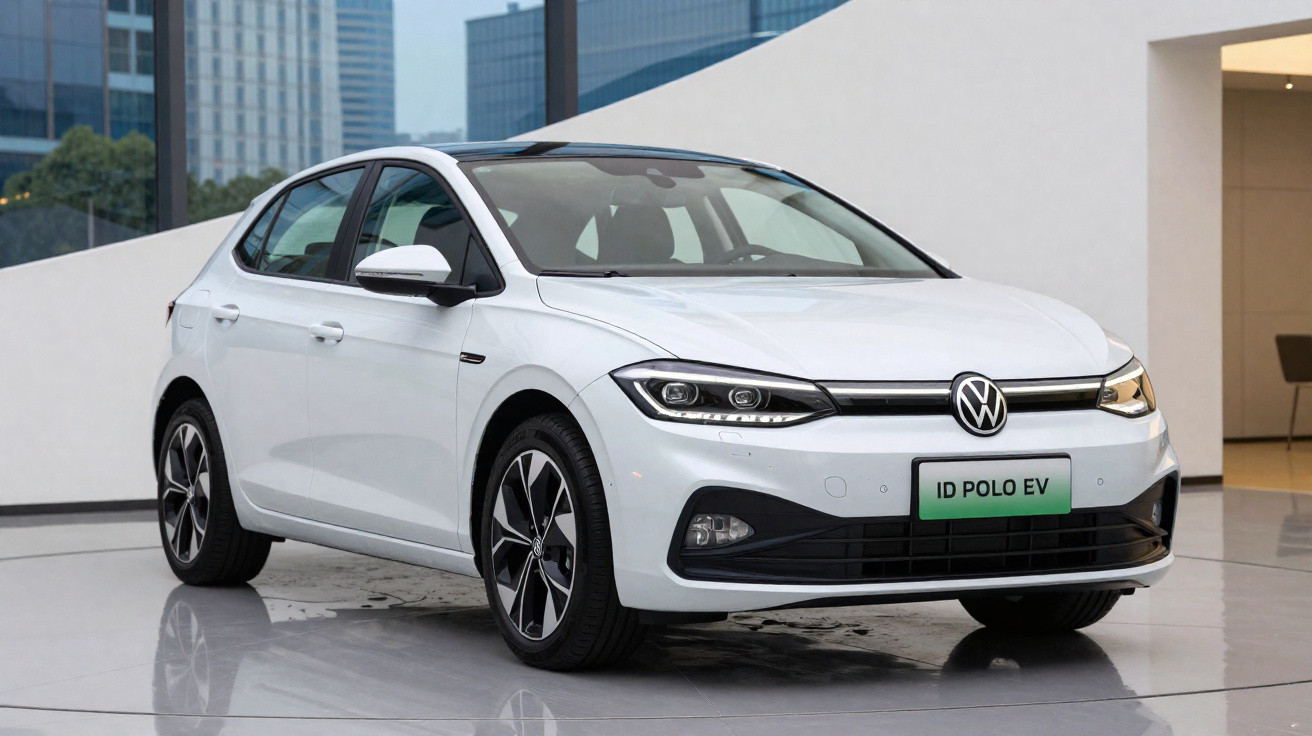
Volkswagen’s rival to the Renault Twingo and BYD Dolphin Surf was unveiled on 29 April, following years of anticipation. It is the German manufacturer’s most affordable electric car and its first model priced below €25,000: €24,995, or €10,000 less than an ID.3. Volkswagen has revealed the details of its new city car, which will take on the electric Renault Twingo.
Led by Andreas Mindt, Volkswagen is introducing its first all-new model for an era in which fully electric mobility costs under €25,000 (€24,995). Following the facelifted ID.3, which is considerably more expensive, attention now turns to the ID. Polo. This electric replacement for the Polo needs competitive pricing to challenge the models launched in recent months, which have been attracting the largest sales volumes.
Volkswagen revealed the new ID. Polo on Wednesday 29 April, after its ID 2all concept drew widespread attention in 2023. At the time, Volkswagen said that the production model would remain very close to the concept, something Andreas Mindt subsequently confirmed through sketches posted on LinkedIn. Volkswagen struggled to keep the project under wraps: last month, the interior of the new ID. Polo had already been revealed. All that remained was the final bodywork and technical specification.
Volkswagen ID. Polo: five seats and a 435-litre boot within a 4-metre length
Unlike BYD’s Chinese rival, the Dolphin Surf, Volkswagen’s new electric city car has five seats. Its boot also significantly outperforms that of the Renault Twingo, offering 435 litres against 360 litres in the French model; the Renault 5 has the same capacity. Yet the Volkswagen ID. Polo is 4 metres long, making it suited to city streets and straightforward to park. It is 1.81 m wide and only 1.53 m tall. Volkswagen also compares this fully electric model with the conventional MQB-platform petrol Polo, which is slightly more compact at 1.75 m wide and 1.45 m high.
Inside, the ID. Polo features a centre console with an angled space for placing a smartphone. Several physical shortcut buttons sit immediately above it. The only control on the centre console itself is the volume knob. Beneath this section is a concealed storage compartment, along with two USB-C ports. The steering-wheel controls are now physical too, replacing the haptic controls used elsewhere in Volkswagen’s ID range, which had caused problems.
The new ID. Polo’s cockpit can display a retro-style layout on request across its digital screens. The driver display measures 10 inches, while the central infotainment screen is 13 inches. A View button on the steering wheel adjusts the display. The steering wheel itself is flat at both the top and bottom.
The ID. Polo also benefits from the packaging advantages of electrification. Volkswagen claims 19 mm more interior room than in the conventional version. As noted, its boot is substantially larger too, at 435 litres versus 351 litres in the standard model, an increase of 24%. Folding the seats expands capacity to 1,243 litres. An ID. Golf is due to join the Volkswagen line-up later, although delays could mean it arrives after the originally planned 2028 date.
Three electric motors for the ID. Polo, with a GTI version to follow
Volkswagen has published the technical specifications for the new ID. Polo, which will be available with three electric motor outputs. The entry-level unit produces 85 kW, or 116 hp. The mid-range option delivers 99 kW, equivalent to 135 hp. At launch, the most powerful version develops 155 kW, or 211 hp. Trim levels will be named “Trend”, “Life” and “Style”.
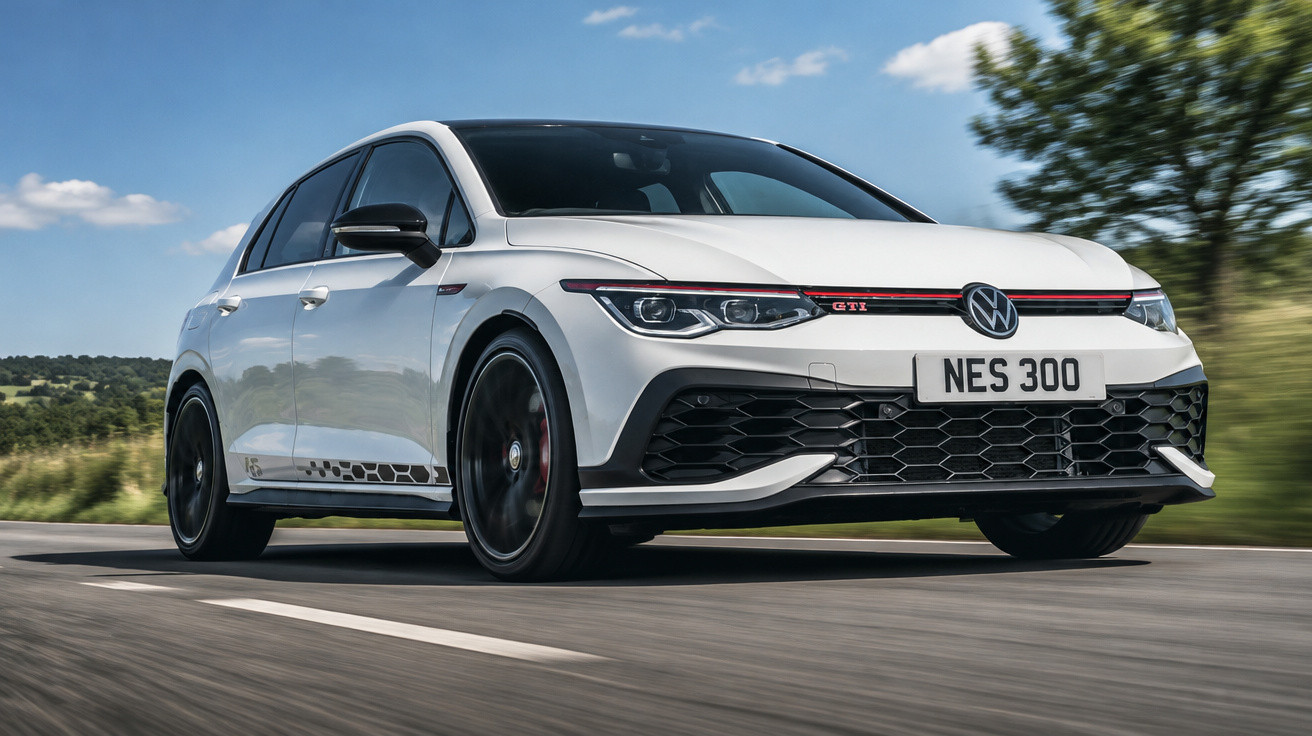
An ID. Polo GTI will later sit at the top of the range, using a new 166 kW motor with 226 hp. Naturally, the sub-€25,000 version of the new ID. Polo will be paired with the 116 hp motor. What about the battery?
Volkswagen reveals limited ID. Polo range details but offers reassurance on rapid charging
For the battery, Volkswagen offers a 37 kWh LFP (lithium iron phosphate) pack. A second option will also be available: a 52 kWh NMC (nickel-manganese-cobalt) battery, providing greater energy density and therefore more range. Only this version will offer enough versatility for regular long-distance journeys. However, unlike Renault, its French rival, Volkswagen does not make a major distinction in DC rapid-charging power between the two packs: the smaller 37 kWh battery charges at up to 90 kW, while the 52 kWh battery reaches up to 105 kW.
These charging figures are far from exceptional, but they are strong for this segment. Even BYD is behind the pace, with the Dolphin Surf limited to a maximum of 85 kW. Renault’s position is more restrictive still, as its rapid charging is just… 50 kW. At that level, even in the best conditions, each charging stop takes more than 50 minutes.
The Volkswagen ID. Polo does not have the shortest charging time, but it should be better suited to longer trips. Volkswagen states that charging the 37 kWh LFP battery from 10 to 80% takes 27 minutes, compared with 24 minutes for the larger pack. Forecasts suggest the smaller battery will cover 329 km between charges, while the larger unit can travel up to 455 km, although that figure applies solely to urban use. There is no information yet on the model’s combined range, although it is unlikely to exceed 400 km.
Importantly, only the 85 and 99 kW motors can be combined with the 37 kWh LFP battery. Choosing the larger battery automatically means moving to the 155 kW (211 hp) motor. The 85 kW motor will power the €24,995 entry-level ID. Polo. It will compete with the Renault 5 E-Tech from €19,250, the Citroën ë-C3 and BYD Dolphin Surf at €19,990, as well as the Kia EV2 at €26,670.


Comments
No comments yet. Be the first to comment!
Leave a Comment