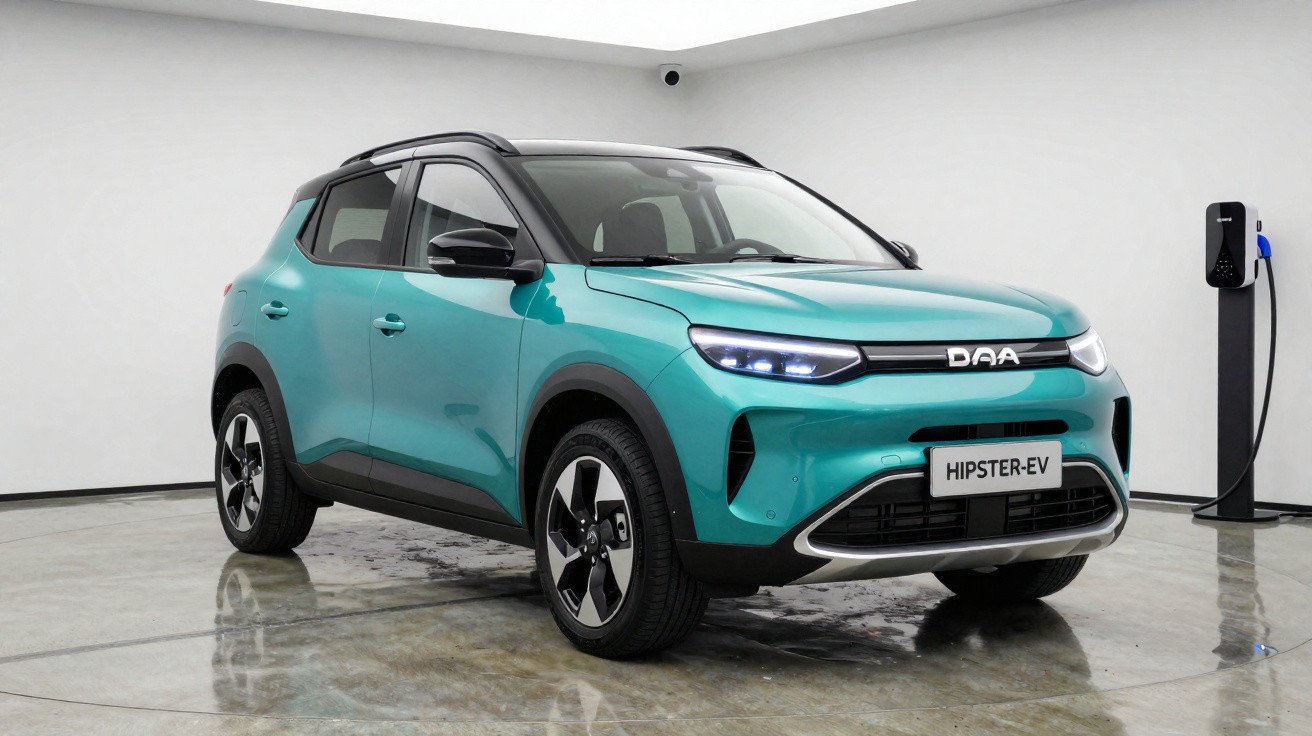
For anyone who still finds the Dacia Spring - the cheapest new electric car on the market - insufficiently affordable, Dacia has no intention of stopping there. Its plans are clear: introduce an even cheaper electric vehicle that is lightweight, efficient and designed for city use. This could happen sooner than previously expected.
The Hipster, which has so far been shown as a concept with no confirmation that it would ever enter production, is expected to reach the market as early as next year, at an estimated price below £10,000 - around €11,615 at the current exchange rate.
Autocar reported the news and also revealed that the Hipster will be built in China, at the Shiyan factory where the first-generation Spring was manufactured until recently.
An even smaller, cheaper electric car
If confirmed, the Hipster will sit below the Spring in Dacia’s range and take a different route from the current electric city car. Rather than aiming to provide more range or additional equipment, the focus will be on cutting weight, complexity and manufacturing costs.
According to the published information, the model is being developed to meet the requirements of the L7e category for heavy quadricycles. Among other restrictions, this classification sets a maximum output of 15 kW (20 hp), a maximum weight of 450 kg excluding the battery, and a top speed of 90 km/h.
A two-seat version, classified under the L6e category, has not been entirely ruled out. Final approval is still required before a decision is made on the configuration and series production.
Autocar also states that the Hipster could use a battery with a capacity of around 15 kWh. However, the battery chemistry and final configuration have yet to be determined, and both will affect the model’s price and driving range.
Technical development, supported by Renault’s team in China, creates the possibility of reusing components from the first-generation Spring.
What will change from the concept?
Although the production version may broadly retain the appearance of the prototype unveiled last year, several changes are anticipated. Recently registered patent drawings point to an evolution in the design, particularly at the front and rear.
Even so, the model is expected to keep the concept’s compact dimensions: approximately three metres long, 1.55 m wide and 1.53 m high. One of the most notable alterations is likely to be at the rear, where the prototype’s split opening is expected to be replaced by a side-hinged door.
When will it arrive?
According to sources quoted by Autocar, the production version is scheduled to be unveiled next year.
“The project is under development and now only requires final approval.”
- David Durand, Dacia design director
There is still no confirmation that it will be sold in Portugal, nor are there official prices. Final figures for range, equipment and performance also remain unknown.



Comments
No comments yet. Be the first to comment!
Leave a Comment