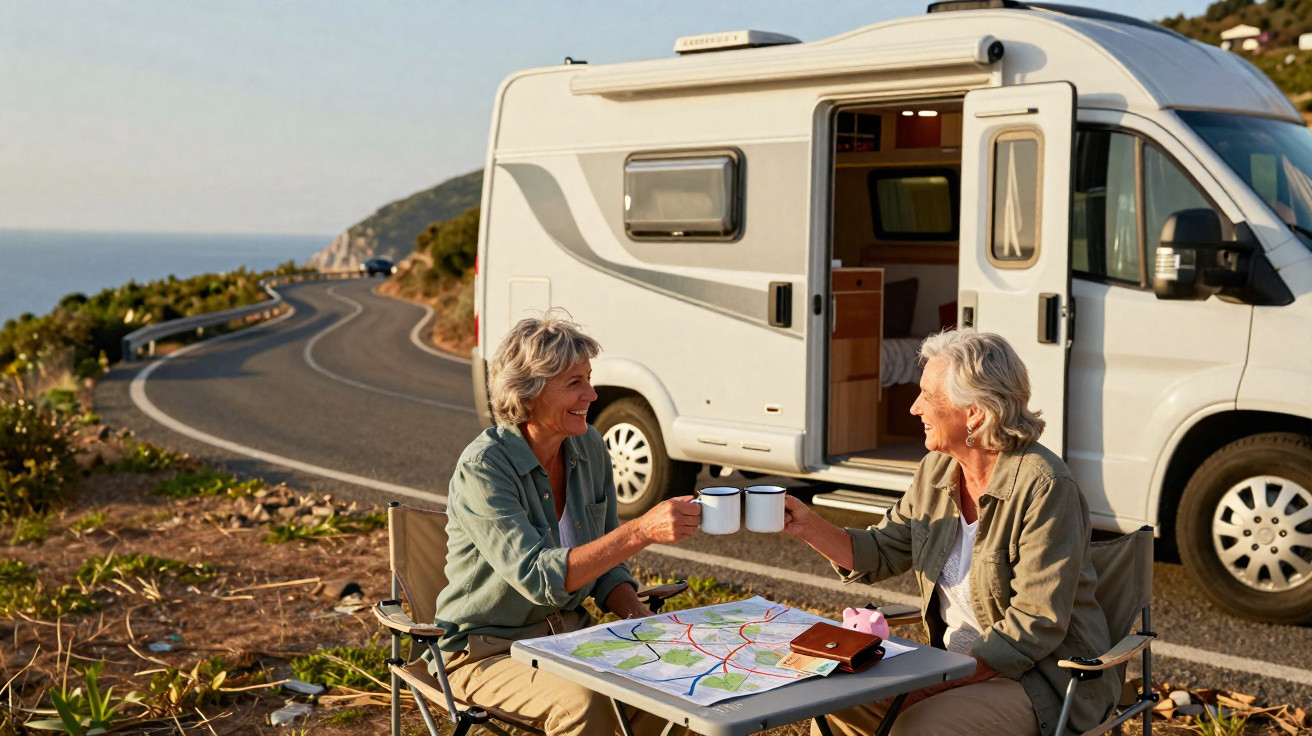
At dawn, in a quiet stopover lined with pine trees, Fernando folds away the two chairs set out in front of their motorhome. Anna puts the mugs away, checks the water level and smiles at the road, still empty. Their home is on wheels: it is seven metres long and has no corridor, guest room or overflowing cupboard. Retired and living on what they consider a modest pension, the couple chose to sell their overly expensive flat and live differently. They say it was not a sacrifice, but a way of regaining control over costs that had worried them every month. Their routine is not a permanent postcard scene. There is laundry, maintenance, rainy nights and parking areas that are less appealing than expected. Yet there is also the unusual feeling of being able to breathe a little easier. And their sums are surprising.
They swapped fixed bills for life on the road
Fernando, 68, clearly remembers when the finances stopped adding up in their former home. Rent, heating, electricity, insurance and food shopping consumed nearly all of their retirement income before the middle of the month. “We were not living badly, but every direct debit gave us a knot in the stomach,” he says. Their seven-metre motorhome has certainly not removed every expense. Far from it. Instead, it has changed how they view spending. Every euro now relates to a journey, a stopover or a practical need, rather than four walls that had become too costly.
The vehicle was bought second-hand after several months of searching and cost them €32,000. It was a substantial outlay, covered by selling furniture, using their savings and a small contribution from their former home. Their monthly budget for the two of them is about €1,250, including fuel, provided they drive sensibly. They divide their time between off-season campsites, municipal motorhome areas and stays with relatives. By remaining in one place for three or four nights, they reduce diesel use. Their luxury is not travelling far; it is being able to decide when to move.
Their decision often draws amused or concerned reactions. Some people picture retirement confined to a few square metres, with neither privacy nor comfort. Anna does not deny the limitations: they must pass one another in a narrow kitchen, empty waste water, monitor supplies and learn to manage with less. Even so, she sees a certain peace in it. Unnecessary possessions have gone, as have the household bills. The real shift is psychological: they no longer buy things to fill a flat; they spend money to make their days easier. This approach suits some retirees, but not everyone.
How Fernando and Anna keep their motorhome dream from becoming a hardship
Before setting off, Fernando and Anna did what many people put off: for six months, they wrote down every expense in a notebook. This covered not only rent and obvious bills, but also coffees bought out, forgotten subscriptions, emergency purchases and car-related costs. That snapshot of daily life enabled them to build a realistic budget. They now put aside a separate sum for motorhome maintenance-about €120 per month-even when nothing breaks down. This fund prevents panic when the first warning light appears.
Their most practical advice can be summed up simply: do not buy a vehicle on impulse. Anna suggests hiring several models before committing, so that you can test the bed, shower room, kitchen space and ease of driving. A seven-metre motorhome may look huge in a car park, yet feel stifling after three days of rain. Let us be honest: nobody truly manages every day in a flawless, perfectly tidy space. You need to accept temporary mess, compromises and minor irritations without turning them into a crisis.
They have also learnt to tell the difference between sensible saving and deprivation. Staying overnight for free is not always a success if the location is noisy, isolated or prohibits overnight parking. Fernando follows one straightforward rule, which he readily shares with curious people he meets at motorhome stops:
“We are not trying to spend as little as possible. We are trying to spend without making our lives miserable.”
- set aside money for mechanical repairs;
- avoid driving every day for no reason;
- check local parking rules;
- keep a completely separate health budget.
A modest pension, but freedom measured differently
Fernando and Anna’s choice should not be presented as a miracle solution. A motorhome ages, uses fuel, needs attention and does not provide the same security as a conventional home. During winter, heating adds pressure to the budget; in summer, desirable places fill up quickly. Medical appointments, an administrative address, insurance and the tiredness caused by travelling must also be considered. Freedom has a cost, even when it helps cut regular outgoings. Above all, their experience shows that a modest pension can still leave room for the unexpected, as long as you face the figures honestly.
The couple do not describe themselves as full-time nomads. They regularly return to their region, maintain their routines, visit their children and take extended breaks beside a lake or at a family campsite. Anna loves chatting to neighbours passing through, while Fernando would rather do some repairs beneath the awning as the sun goes down. This lighter life has reconnected them with very ordinary pleasures: cooking outdoors, walking in the morning and reading without hearing a neighbour’s television. We all know that moment when we wonder whether we work, save and worry in order to truly live, or merely to make it to the following month.
Their story raises a less dramatic question than it first seems: what do we really need in order to feel at home? For some, the answer will remain a house, a garden, a permanent address and a large table on Sundays. For others, it will take the form of a seven-metre motorhome parked beside a field or near an unfamiliar village. Fernando and Anna have not found a perfect existence. They have found a balance that suits them, with its savings, limitations and peaceful mornings.
| Key point | Detail | Benefit for the reader |
|---|---|---|
| Reducing fixed costs | The couple replaced rent and household bills with a closely monitored mobile budget. | Better understanding of the unavoidable costs of retirement. |
| Preparing the project | Trial hire, an expense notebook and a mechanical reserve help prevent unpleasant surprises. | Assessing whether motorhome living genuinely meets your needs. |
| Protecting comfort | They balance savings, safe stopovers and useful spending, without pursuing free options at all costs. | Understanding that a controlled budget should not mean deprivation. |















Comments
No comments yet. Be the first to comment!
Leave a Comment