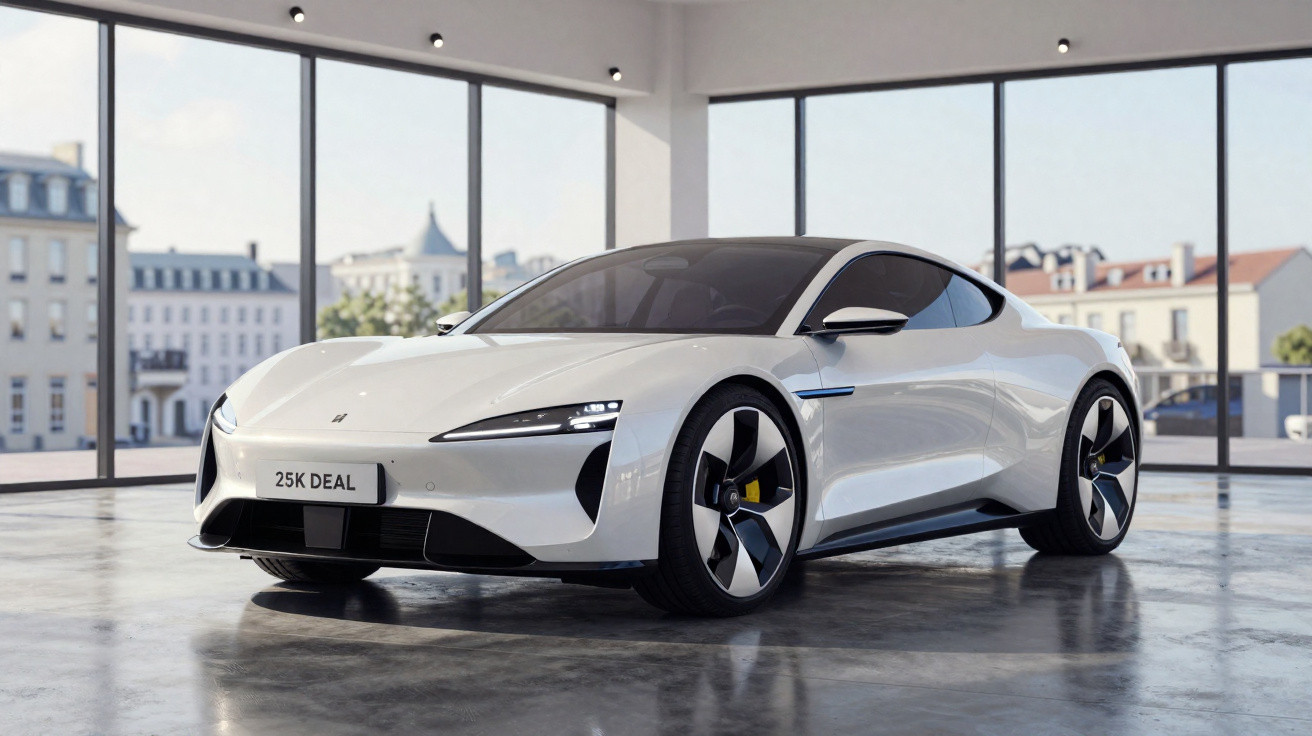
000 euros.
At first, it sounds like a crazy publicity stunt: anyone who gives up their car for good and surrenders their driving licence could be rewarded with a substantial sum of money. Behind it, however, is a serious pilot scheme through which a country aims to reduce traffic pressure and encourage people to swap their cars for buses, trains and bicycles.
What lies behind the 25,000-euro premium
The proposal is radical: rather than steering motorists solely through penalties and driving bans, the scheme relies on an incentive that seems almost absurd. Depending on the funding model, anyone who permanently hands in their driving licence and commits to no longer using a private car could receive up to 25,000 euros.
The premium is not intended as a one-off cheque. In most of the concepts under discussion, it would be paid over several years. This is designed to stop people from giving up their car only briefly before returning to their previous habits.
“This concept turns the tables: instead of a fine for bad behaviour, there is money for giving up the car completely.”
From the political perspective, the money should pay for itself over time through fewer traffic jams, less air pollution, fewer accidents and lower spending on road maintenance and the healthcare system.
How the 25,000-euro premium model would work
At their core, the programmes being discussed follow the same pattern: the state pays citizens who voluntarily give up their car and symbolically or legally surrender their driving licence. In return, they receive a mobility package.
- Long-term abandonment of private car ownership
- Surrender or invalidation of the driving licence
- A cash premium ranging from several thousand euros up to 25,000 euros
- Vouchers for buses, trains, car sharing or bicycle subscriptions
- In some cases, grants for e-bikes or cargo bikes
In some versions, the driving licence would not be withdrawn for life, but for a very long period, such as ten or fifteen years. Anyone registering a car again or taking their driving test again during that time would either have to repay the money or lose the remaining payments.
Who would actually be eligible for such an offer?
These projects are aimed primarily at groups for whom changing transport habits is realistic. Typical target groups include people living in large cities who already have good access to public transport.
Examples under discussion include:
| Group | Underlying rationale |
|---|---|
| Urban residents | Good public transport links and many alternatives to the car |
| Pensioners | Fewer work-related journeys and an increasing safety risk in later life |
| Young adults | Giving up the car early can shape behaviour in the long term |
| Frequent drivers with a high CO₂ footprint | A substantial climate effect if they switch modes of transport |
In rural areas with poor bus or rail links, the model would be far more difficult to implement. There, a car often remains indispensable, however high the premium might be.
Why a country would use such drastic measures
Pressure on transport policy is increasing. Climate targets, congested cities, noise and high accident figures are forcing governments to act. Traditional measures such as 30 km/h zones, city road charging or higher fuel taxes quickly meet resistance.
By offering a cash premium, politicians want to test a different approach: those who opt out voluntarily are rewarded rather than punished. The psychological lever is different, and it suits a time when many people are already reconsidering how they travel.
“25,000 euros are equivalent to several years of fixed car-related costs – from insurance and fuel to maintenance.”
Even today, a mid-range car can easily cost 400 to 800 euros per month once purchase costs, taxes, insurance, garage bills and fuel are added together. Over five to ten years, the total can come surprisingly close to the premiums being discussed.
Does it pay off for the state?
Supporters believe it does. Every person who permanently gives up private car ownership reduces public costs over the long term. Less road wear, fewer parking spaces, and lower noise and air-pollution exposure all reduce spending on infrastructure and healthcare.
At the same time, programmes of this kind create planning certainty: if enough people commit to leaving their cars behind, expanding rail, tram and bus services becomes much more worthwhile.
Opportunities and risks for participants
Anyone exchanging their driving licence for money is making a far-reaching life decision. The appeal of 25,000 euros should not obscure the consequences.
- No spontaneous weekend trip by car
- More planning required for travel and everyday journeys
- Dependence on timetables and connections
- More organisation when it comes to children, shopping and caring for relatives
On the other hand, the move can feel liberating. Without a car, there is no need to worry about an MOT, repairs, tyre changes or insurance. Many people only then realise how much money and stress a private car actually consumes.
The better the alternatives available, the more appealing the premium becomes. In cities with frequent local transport services and strong car-sharing networks, giving up a car appears far more realistic than it does in the countryside.
What such a programme does to society
Projects like these can spark discussions that extend far beyond individual motorists. A country that actively tempts its citizens away from cars is questioning its existing model of mobility.
New questions suddenly arise: who owns public space? How much room do cars really need? And how fair is it if wealthier people can easily afford a car while others have to get by using buses and trains?
When the state pays high premiums, this question of fairness also shifts. People on lower incomes suddenly have a strong incentive to give up their car and ease pressure on their finances.
What this could mean for drivers in Germany
In Germany, a premium this high is currently more of a prospect for the future, although the debate is likely to gather pace. Some cities are already experimenting with smaller incentives, including free public transport tickets for motorists, subsidies for commuter tickets and discounts for switching to a bicycle.
Lessons can be drawn from the experiences of other countries. Money alone is not enough. Only the complete package of reliable local transport, appealing cycle routes, car sharing and flexible working arrangements makes giving up a car feasible.
Anyone who wants to depend less on their car today can test how far they can manage without one: commuting by train, doing the shopping by cargo bike, or taking an intercity train for a weekend trip instead of driving. This quickly makes clear whether a theoretical 25,000-euro premium would be realistic in their own life – or whether a driving licence simply remains indispensable.


Comments
No comments yet. Be the first to comment!
Leave a Comment