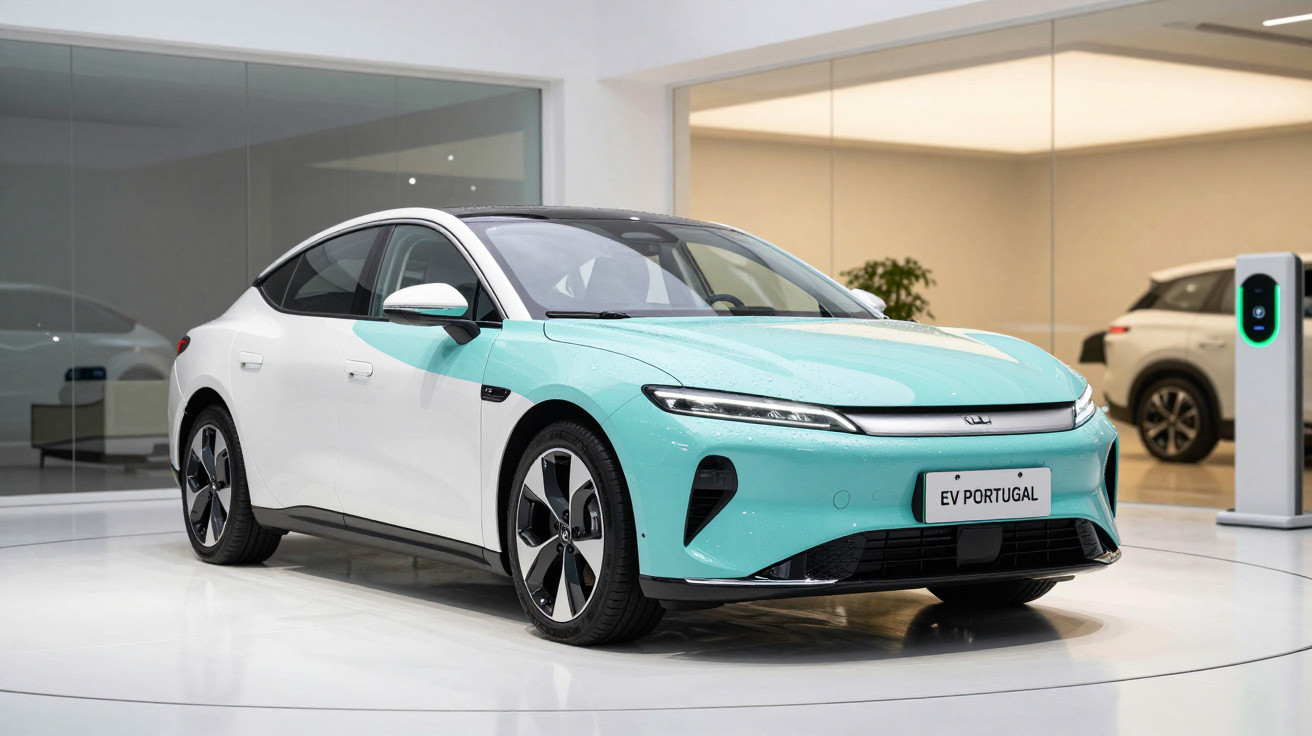
The high purchase price has been-and, to a large extent, remains-one of the biggest barriers to buying an electric car. However, that situation is gradually changing. The range of available models is expanding, competition is increasing and prices are falling.
Price parity with equivalent combustion-engined models has admittedly not yet been achieved, particularly in the lower segments. Even so, the latest models arriving on the market undoubtedly represent a decisive move in that direction.
This buying guide brings together the 10 cheapest new electric cars currently on sale in Portugal.
Dacia Spring - from €16,900
The Dacia Spring was among the first models in this new wave of more affordable electric cars to reach the market. It is the least expensive model here, although it also offers one of the shortest driving ranges on this list. Updated in 2024, it gained revised exterior and interior styling, more technology and additional safety equipment.
It is offered in four versions, differentiated chiefly by their equipment levels and electric motor outputs: the entry-level model has 33 kW (45 hp) and 125 Nm, while the remaining versions produce 48 kW (65 hp) and 113 Nm.
All versions share a battery with 26.8 kWh of usable capacity, providing up to 225 km of range on the WLTP cycle. Pricing starts at €16,900 for the 45 hp Essential, then rises to €18,900, €19,900 and €20,300 for the Expression, Extreme and Cargo versions respectively.
Leapmotor T03 - from €18,985
The Leapmotor T03 is the smallest electric car from the Chinese brand, which has recently arrived in Europe. It is now available in Portugal from €18,985-and we have already tested it.
For a price comparable with that of a better-equipped Dacia Spring, the T03 provides greater power, range and onboard technology. Its equipment includes a 10.1-inch infotainment display, panoramic roof and numerous driver-assistance systems.
Available with one powertrain only, the Leapmotor T03 pairs a 70 kW (95 hp), 158 Nm electric motor with a 37.3 kWh battery. Its claimed range is 265 km on the WLTP cycle, or as much as 395 km in urban driving.
BYD Dolphin Surf - from €20,890
The BYD Dolphin Surf “landed” in Portugal a couple of months ago and made its first public appearance at ECAR Show 2025. It is the Chinese giant's most affordable electric car in Portugal, with prices starting at €20,890.
Compared with the Leapmotor T03, it stands out for its longer range, technology and more appealing design, although the latter is naturally subjective.
In entry-level Active specification, the Dolphin Surf uses a 65 kW (88 hp), 175 Nm motor and a 30 kWh battery, delivering up to 220 km of WLTP range. The Boost and Comfort versions instead receive a 43.2 kWh battery, enabling up to 322 km in the combined WLTP cycle or 507 km in urban use. The latter also gains a more powerful 115 kW (156 hp), 220 Nm motor.
Citroën ë-C3 - from €23,300
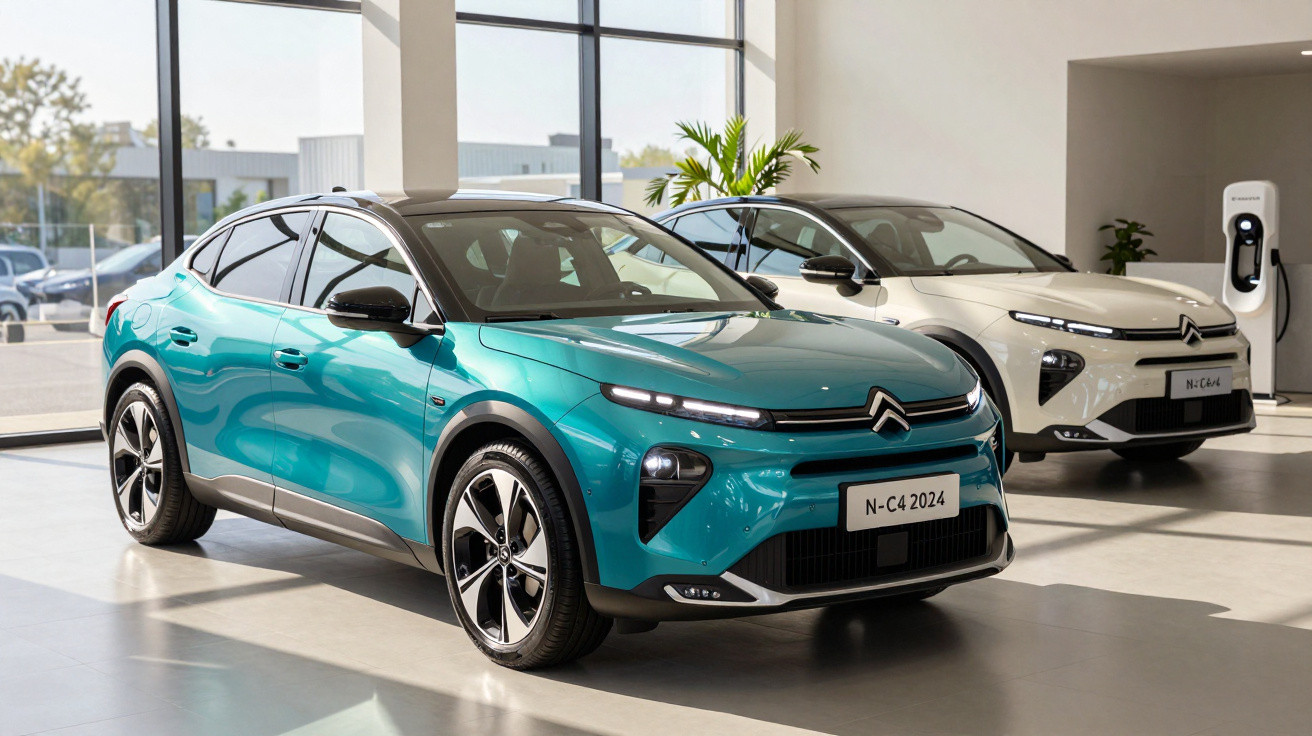
For buyers seeking an electric car focused on comfort, the Citroën ë-C3 is one of the most compelling choices on this list. Positioned in the supermini segment (B-segment), it takes the form of a crossover, with five seats and enough room for everyday requirements.
The ë-C3 achieves a highly competitive price for its class by concentrating on the essentials, though its options list still includes items such as a 10.25-inch touchscreen, automatic air conditioning and a rear parking camera.
A version priced below €20,000, fitted with a 30 kWh battery, is scheduled to arrive this year. For now, however, it is available only with a 44 kWh battery powering an 83 kW (113 hp), 125 Nm motor. Claimed range is up to 314 km on the WLTP cycle, and prices begin at €23,300.
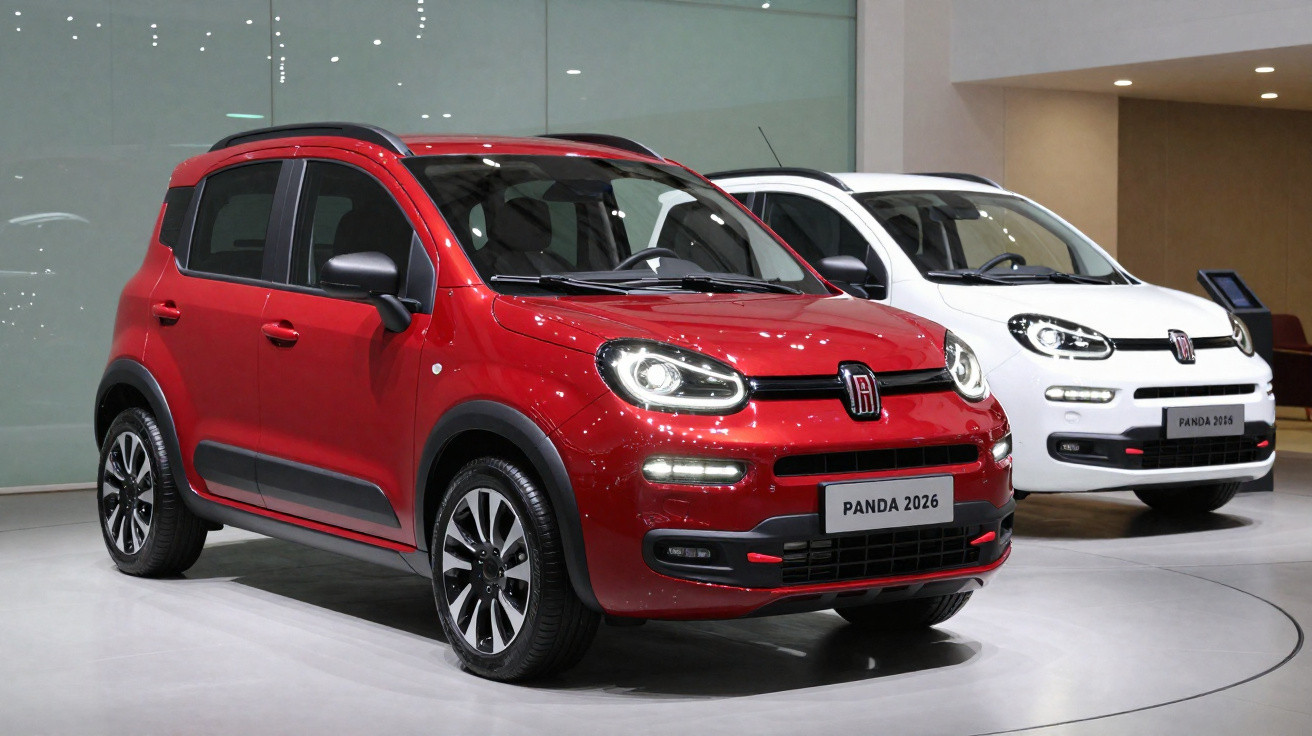
FIAT Grande Panda - from €23,550
Despite its retro-futuristic design, which gives it a strong identity, the FIAT Grande Panda shares almost everything with the Citroën ë-C3, from its platform to its powertrain.
It therefore also uses the same 44 kWh LFP battery and 83 kW (113 hp), 125 Nm electric motor, with a WLTP range of up to 320 km.
This Italian crossover starts at €23,550 in RED specification, rising to €26,550 for the better-equipped La Prima version.
Hyundai Inster - from €24,900
The Hyundai Inster is the South Korean manufacturer's contender in the electric city-car market. Although it measures 3.8 metres in length, space is its principal selling point, while its available driving ranges also stand out. We have tested it too:
Two batteries are available: 42 kWh and 49 kWh, for WLTP ranges of 327 km and 370 km respectively. Depending on the version, motor output is either 71 kW (97 hp) or 85 kW (115 hp).
As this list of the cheapest electric cars makes clear, despite being a city car, its price places it alongside proposals from the segment above. It starts at €24,900 for the Comfort and reaches €29,900 for the Style Plus.
Renault 5 - from €24,900
The Renault 5 is one of the most sought-after electric cars of the moment, thanks to its combination of highly appealing styling inspired by the original, a competitive price and extensive technology.
It is now offered in the new entry-level “Five” version, priced from €24,900. As standard, it combines a 70 kW (95 hp) electric motor with a 40 kWh battery, allowing up to 300 km of WLTP range. Equipment highlights include several driver-assistance systems and a 10.1-inch infotainment screen running a Google-based system.
For those requiring more range, other versions combine a 52 kWh battery with more powerful motors producing up to 110 kW (150 hp), allowing the Renault 5 to cover up to 412 km between charges. In these versions, however, the French compact can easily exceed €30,000.
Citroën ë-C3 Aircross - from €26,490
The Citroën ë-C3 Aircross is the largest model on this list, although unlike its combustion-engined counterparts, it is not available with seven seats. The French SUV's credentials were recently strengthened by a longer-range version, which adds almost 100 km to reach 400 km on the WLTP cycle.
Like the ë-C3, it impresses with comfort, but this format provides considerably more space. Its 460-litre boot is a particular highlight, making it well suited to more family-focused needs. Those who prefer a more Teutonic style can look at its “German cousin”, the Opel Frontera, with which it shares almost everything.
Available from €26,490, entry-level versions retain the ë-C3's 44 kWh battery and 83 kW (113 hp) electric motor, for a claimed WLTP range of up to 307 km. With the 54 kWh battery, range increases to 400 km and the price to €28,490.
Dongfeng Box - from €26,790
The new Dongfeng Box is the spearhead of newcomer Dongfeng in Portugal. The Chinese brand made its debut at the end of 2024 and, for the time being, offers only this 100% electric supermini.
It is notable for its interior space, standard equipment-despite the lack of FM radio-and restrained energy consumption. However, its performance and charging power left something to be desired when we tested it.
It comes with a 70 kW (95 hp) motor, a 42 kWh battery and up to 340 km of WLTP range. Its promised starting price is €26,790.
FIAT 500E - from €28,140
Small, stylish and 100% electric, the FIAT 500E was launched in 2020 and remains the only powertrain option available until a combustion engine arrives, which is expected in 2026.
With four trim levels, it can be specified in two forms: a 70 kW (95 hp) motor with a 21.3 kWh battery, offering up to 190 km of WLTP range; or an 87 kW (118 hp) motor with a 37.3 kWh battery, offering up to 331 km of WLTP range.
Pricing is where the FIAT 500E is less enviable. Starting at €28,140, the Italian city car is not only the most expensive model on this list, but also the one offering the least space and, for its price, the shortest range.


Comments
No comments yet. Be the first to comment!
Leave a Comment