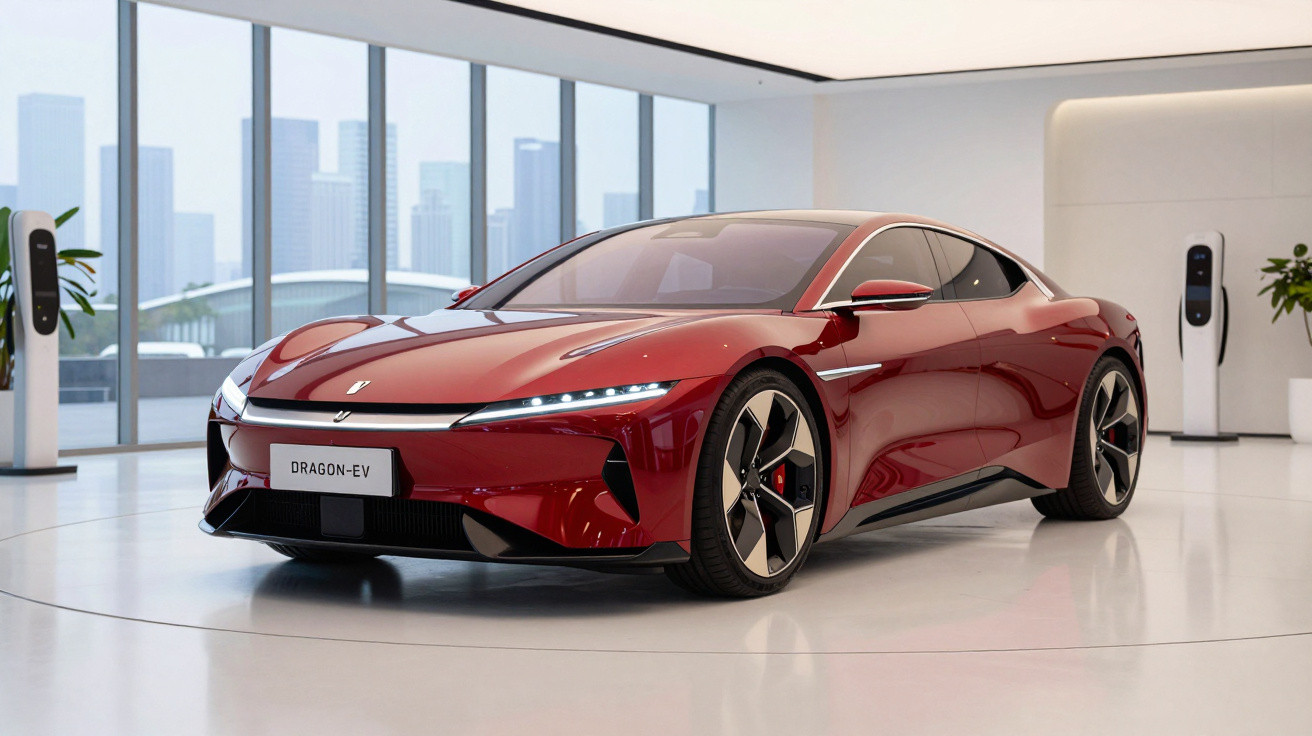
Foreign car makers have been losing ground in China for some time. In recent years, Chinese brands have moved into the spotlight, driven by the rapid rise of electric cars and consumers who are increasingly open to domestic manufacturers.
The result of this shift is historic: in the first half of this year, foreign manufacturers’ market share fell to 28% (including joint ventures with Chinese partners). The scale of the change is clear when compared with 2020, when these brands accounted for more than 60% of the Chinese car market, according to figures from the China Association of Automobile Manufacturers (CAAM).
German manufacturers are among those hit hardest. For decades, China was the true El Dorado for brands such as Volkswagen, Mercedes-Benz and BMW, accounting for around 40% of these manufacturers’ global sales between 2019 and 2021.
Foreign car makers’ sales decline in China
The situation is now markedly different. In the first half of the year, Volkswagen’s Chinese sales dropped by 26%, while Mercedes-Benz, Audi and BMW reported declines of 28%, 19% and 20% respectively, according to Yicai. The pressure is not confined to European brands: Toyota’s sales fell by 17%, Nissan’s by 15% and Honda’s by 35%.
The balance has shifted
The transition to electric cars has been one of the forces behind this transformation, according to Wang Qian, deputy general manager of Chinese car manufacturer Dongfeng.
For decades, foreign manufacturers led the Chinese market through their technological advantage, while local partners handled manufacturing and distribution. Electrification has changed that balance.
Rather than following European, American and Japanese manufacturers, Chinese brands have taken the technological lead in electric cars. They have benefited from a more established battery supply chain, competitive production costs and faster development cycles.
Manufacturers including BYD, Geely, Li Auto, Xiaomi, Aito and Xpeng now compete not only on price, but also on technology, range, software and driver-assistance systems - areas in which foreign manufacturers were regarded as the benchmark until only a few years ago.
A new strategy for China
To regain competitiveness, foreign manufacturers are moving away from selling global models adapted for China and are instead investing in cars developed from the outset for that market.
Volkswagen is one example through its ID. UNYX range, while Audi has even created a China-exclusive brand - AUDI, without the iconic four rings - designed specifically to meet the demands of Chinese consumers.
Chinese manufacturers expand into Europe
This preference for Chinese cars is no longer limited to the domestic market. In Europe, for instance, Chinese manufacturers have significantly increased their presence.
In the first half of this year, Chinese manufacturers’ share of the European market reached 10.9%, and Chinese manufacturers already occupy the plug-in hybrid sales podium.




Comments
No comments yet. Be the first to comment!
Leave a Comment