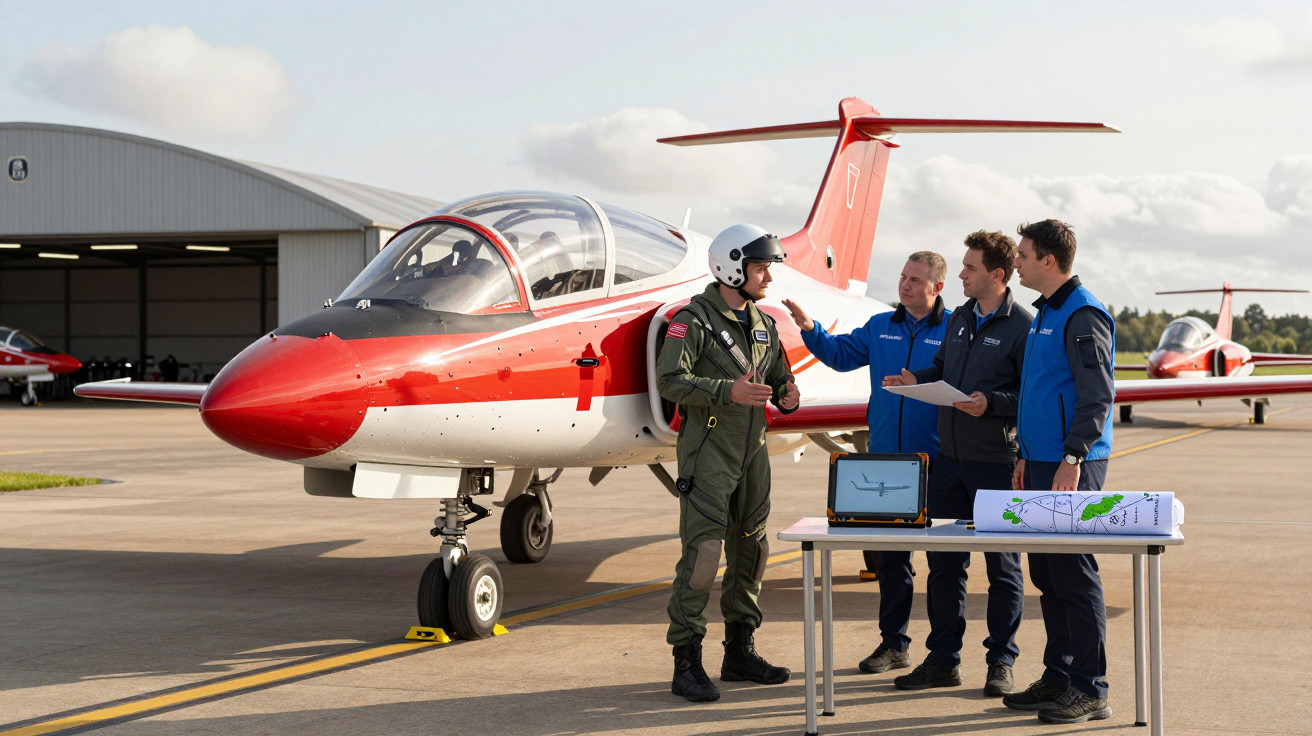
BAE Systems, Boeing and Saab back the T-7 for the RAF
The campaign to replace the Hawk jets, which the Royal Air Force (RAF) now considers obsolete, has moved forward with BAE Systems, Boeing and Saab signing a partnership agreement. The document formalises the co-operation launched in 2025 to put forward the Boeing T-7 as the United Kingdom’s future advanced training system.
As reported by Aviacionline, the new agreement not only strengthens collaboration between the companies but also turns the earlier Memorandum of Understanding (MoU) into a more substantial industrial partnership. It includes plans for a final assembly and aircraft integration line to be established in the UK.
The arrangement further bolsters the proposal’s industrial element, with a commitment to create hundreds of highly skilled jobs and build a domestic supply chain able to support the programme throughout its entire life cycle.
T-7 training system and UK industrial capability
According to the companies, the project is intended to ensure the United Kingdom retains sovereign control over fighter-pilot training, in keeping with the priorities set out in the recent Defence Investment Plan.
The proposal also aims to provide a complete training ecosystem tailored to the requirements of future British combat aviation. Built around the T-7, the system combines live flying instruction with advanced simulation capabilities and has been designed to prepare pilots to fly the Eurofighter Typhoon, F-35 and, later, the sixth-generation aircraft envisaged under the GCAP programme.
The announcement comes at a significant point in the T-7’s development. Boeing said the trainer remains in flight testing with the United States Air Force and that, at the end of April, the programme reached the so-called Milestone C. This stage authorised the start of Low-Rate Initial Production (LRIP), and is viewed as an indication of Pentagon confidence in the design’s maturity.
Strong British industry involvement is likely to become one of the proposal’s principal advantages over its rivals. Since the MoU was signed in November 2025, the companies have been assessing potential sites for the future final assembly plant and identifying local suppliers that could join the production chain, with the aim of increasing the economic benefits for the United Kingdom.
Competition to replace the Hawk aircraft remains open
The competition for the contract is nevertheless still open. Leonardo’s M-346 is regarded as one of the T-7’s main competitors, while other aircraft, including the KAI T-50, could also compete in the selection process.
British firm Aeralis, which had intended to enter a domestically developed modular trainer, entered insolvency proceedings in May this year after running out of funding. Unless it secures new investors, its ability to remain in the competition is now uncertain.




Comments
No comments yet. Be the first to comment!
Leave a Comment