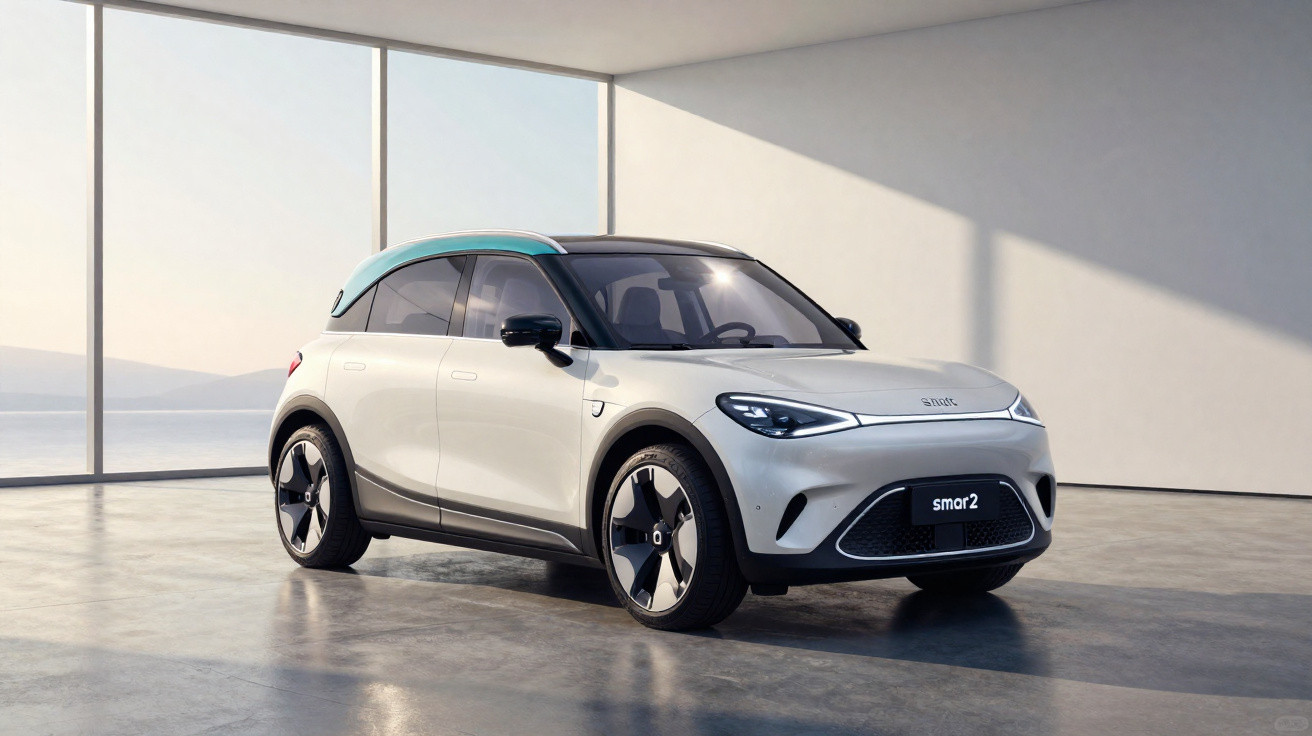
Today’s Smart bears little resemblance to the brand we once knew. Created to transform urban mobility with a two-seat city car, it has reinvented itself in recent years as a maker of electric SUVs, each larger and further removed from the idea that made it an icon. That transition has not gone as planned.
In 2025, Smart sold just 13 100 vehicles in Europe - a fall of almost half compared with the previous year. In a fiercely competitive market, squeezed by tariffs on electric vehicles built in China and by EV uptake that has been less straightforward than anticipated, it became clear that something needed to change.
Against that backdrop, 2026 is shaping up to be a pivotal year. For the time being, the marque remains 100% electric in Europe - although it has already unveiled a plug-in hybrid in China - but it is preparing a clear return to its roots. Called the Smart #2, it follows the fortwo formula: a two-seat city car intended to restore the brand’s identity, profile and, above all, relevance in one of the world’s most demanding markets.
A return to the format that defined Smart
After years focused on SUVs - the #1, #3 and, more recently, the #5 - Smart is once again investing in a car designed from the outset for city use, compact both in its dimensions and its philosophy. The Smart #2 is therefore far more than another new model; it is an effort to reconnect with the brand identity that had become blurred since the fortwo was discontinued in 2024.
There is not long to wait for the #2’s unveiling. It will take place in April at the Beijing Motor Show, running from 24 April to 3 May. Despite the launch being so close, little is yet known about the new #2.
The sole confirmed detail is the debut of a new platform, named Electric Compact Architecture (ECA). It was developed specifically to retain the ultra-compact proportions and dimensions that defined the original fortwo.
Its outline will be instantly familiar, while Smart promises “a completely redesigned interior and exterior” and a “fully renewed identity”. No further specifications are currently known. This will be the real test of Smart’s new strategic direction.
A shift in demanding conditions
This change of course also comes with new leadership. Wolfgang Ufe took charge of Smart Europe on 1 March. His brief is straightforward: to rebuild sales volumes and relevance in one of the world’s most competitive markets.
The transition is taking place in difficult circumstances. Beyond the decline in sales, Smart faces a structural hurdle: European tariffs imposed on electric vehicles manufactured in China. Every model in the brand’s range is built there and is subject to an additional 18.8% charge, on top of the standard 10% - a significant burden for an exclusively electric line-up.
Even so, Smart is holding its course and remains 100% electric in Europe. The difference will lie in its focus: rather than expanding through larger models, the #2 once again places urban specialisation at the centre of its appeal. Smart is returning to where it began… in order to move forward.

Comments
No comments yet. Be the first to comment!
Leave a Comment