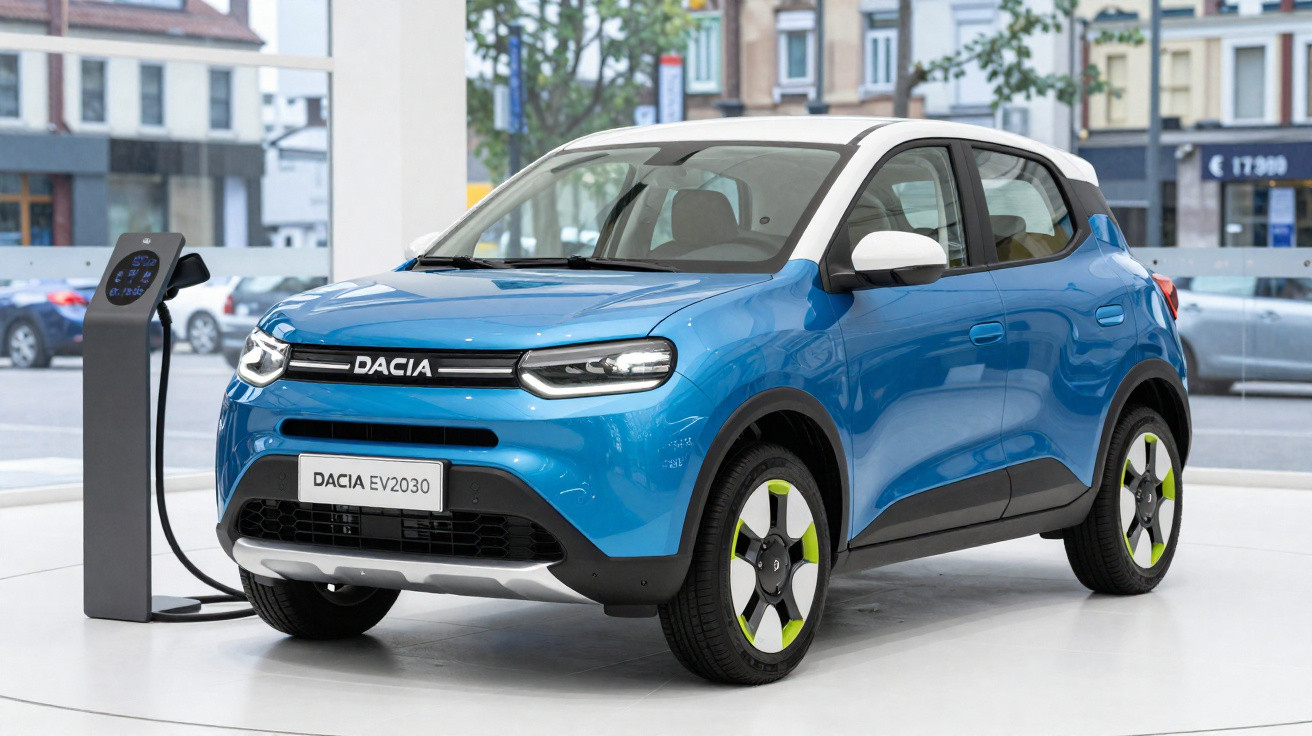
Dacia, long recognised as a value leader in the European car market, is reshaping its electric strategy. As part of Renault’s “futuREady” group programme, the brand has announced no fewer than four battery-electric vehicles by 2030 - alongside a starting price likely to unsettle many established manufacturers: a new electric city-car platform priced below €18,000, built in Europe and therefore likely to qualify for incentives.
Dacia sets an ambitious electric target
Until now, Dacia has played only a minor part in electric mobility. Its sole fully electric model is the Spring, a compact EV manufactured in China that is not eligible for environmental purchase incentives in countries such as France or - depending on subsidy criteria - Germany.
The revised strategy changes that significantly. By 2030, the manufacturer intends to:
- offer four fully electric models;
- generate two-thirds of its sales from electric vehicles;
- retain its core promise of “a lot of car for the money”, despite the move to electric power.
Dacia aims for around 66 per cent of its sales to come from electric vehicles by 2030 - without abandoning its reputation for value.
This places the brand in direct contrast with many established manufacturers, whose electric cars frequently start well above the €30,000 mark.
New electric city car: an electric small car below €18,000
The central project in the updated plan is a new compact EV based on the next-generation Twingo. From a technical perspective, it will draw on the forthcoming electric Twingo, while its design and character are intended to be unmistakably Dacia: tough, uncomplicated and practical.
The crucial factor is its price. Dacia has announced an entry point below €18,000. In countries offering purchase grants, the effective buying price could fall considerably further. In France, the figure is already expected to move towards €15,000 after incentives. Across German-speaking markets, this will depend on future subsidy rules, but the principle remains the same: a genuinely affordable electric car.
European production is another key element. Unlike the Spring, which is built in China, the new small car is due to be manufactured on the continent. That is attractive both politically and logistically, while also improving its prospects of qualifying for incentive schemes in as many markets as possible.
Why European production matters so much
Many support schemes now link grants to factors including CO₂ footprint, manufacturing location and supply chains. An EV built in Europe can therefore gain important advantages.
- Better prospects of qualifying for environmental incentives or tax relief
- Shorter delivery times thanks to reduced transport distances
- Less political risk than relying solely on China
Dacia understands the pressure involved: to be seen as affordable in future, a brand must do more than offer a low list price; its cars must also be able to benefit from incentives.
Four electric models by 2030: what is already emerging
Although not every detail has been disclosed, existing statements and the current model range point to a broad roadmap.
| Model / project | Status | Target entry price | Production location | Key points |
|---|---|---|---|---|
| New electric small car (based on the future Twingo) | Confirmed | Below €18,000 | Europe | likely to qualify for incentives in several countries |
| Dacia Spring | Already on sale | currently varies by market | China | not eligible for incentives in some countries |
| Sandero as a fully electric model | In planning | not yet confirmed | not yet confirmed | LFP battery technology likely |
The Duster, meanwhile, is not included for the time being. The popular SUV will receive electrified versions, but it is not expected to switch exclusively to battery power in the near future. Dacia is taking a more cautious approach here, partly because larger electric SUVs quickly become much more expensive and would no longer fit the brand’s traditional value proposition.
The philosophy remains: simple, durable, affordable - now with a plug
Despite its decisive shift towards electric mobility, Dacia does not intend to abandon its founding principle. The brand stresses that it still wants to offer the “most competitive offering” in each segment. In practical terms, that means:
- prioritising essential functions rather than high-tech extras;
- straightforward equipment packages that are easy to manufacture;
- durable, cost-effective technology such as LFP batteries where appropriate.
LFP battery packs are regarded as particularly durable and comparatively inexpensive, although their energy density is slightly lower than that of more costly nickel-manganese-cobalt systems. For everyday cars such as the Sandero or an electric city car, this is not an issue as long as real-world ranges of 200 to 300 kilometres remain achievable.
Dacia is focusing on affordable battery chemistry and consistently simple equipment for its electric vehicles - rather than prestige and maximum range.
Why affordable electric cars matter so much for Europe
European manufacturers are particularly at risk of being unable to match Chinese brands on price in the entry-level segment. EVs below €20,000 remain scarce, with many models instead priced between €30,000 and €40,000.
Dacia is positioning itself precisely in this gap. The brand is targeting households that have previously driven an affordable petrol or LPG Dacia and do not want to be pushed into a completely different price bracket when switching to electric power. If it succeeds, Dacia could become a kind of “people’s EV” brand - at least at the lower end of the market.
Opportunity and risk: what buyers should know
For anyone considering an affordable EV, this strategy creates new options. An electric small car priced below €18,000 noticeably lowers the barrier to entry. Even so, buyers should keep several factors in mind:
- Charging infrastructure: A low-cost EV cannot compensate for the absence of a charging point. Those able to charge at home or at work have a clear advantage.
- Equipment: Dacia deliberately forgoes luxury features. Anyone expecting high-end multimedia, a panoramic glass roof and full leather upholstery will probably need to look elsewhere - or pay extra.
- Residual value: The affordable EV segment is still young and developing rapidly. Residual values can fluctuate, particularly during fast technology cycles.
On the other hand, simple electric concepts offer tangible benefits: less complicated technology, potentially lower repair costs and, with LFP batteries, a durable basis for many charging cycles. For commuters, urban drivers and owners seeking a second car, this could make for a practical overall package.
How Dacia’s move could reshape the market
With a clearly stated target price below €18,000, Dacia is putting pressure on its rivals. Manufacturers currently pricing their entry-level EVs at €25,000 or more will have to explain why they cost substantially more - or respond accordingly.
Sooner or later, this is also likely to affect the used-car market. Once the first generation of affordable Dacia EVs reaches second owners, prices could emerge that currently apply to older small cars with combustion engines. That changes the calculation for many households that have so far remained with petrol cars for cost reasons.
The key question will be how consistently Dacia translates this approach into production models. Will the starting price genuinely remain below €18,000? Will incentives be available in key markets? And what effect will this have on equipment levels and everyday usability? One thing is clear: the manufacturer is sending a strong signal that electric mobility does not have to be reserved for premium customers and company fleets, but can also be relevant to people on limited budgets.

Comments
No comments yet. Be the first to comment!
Leave a Comment