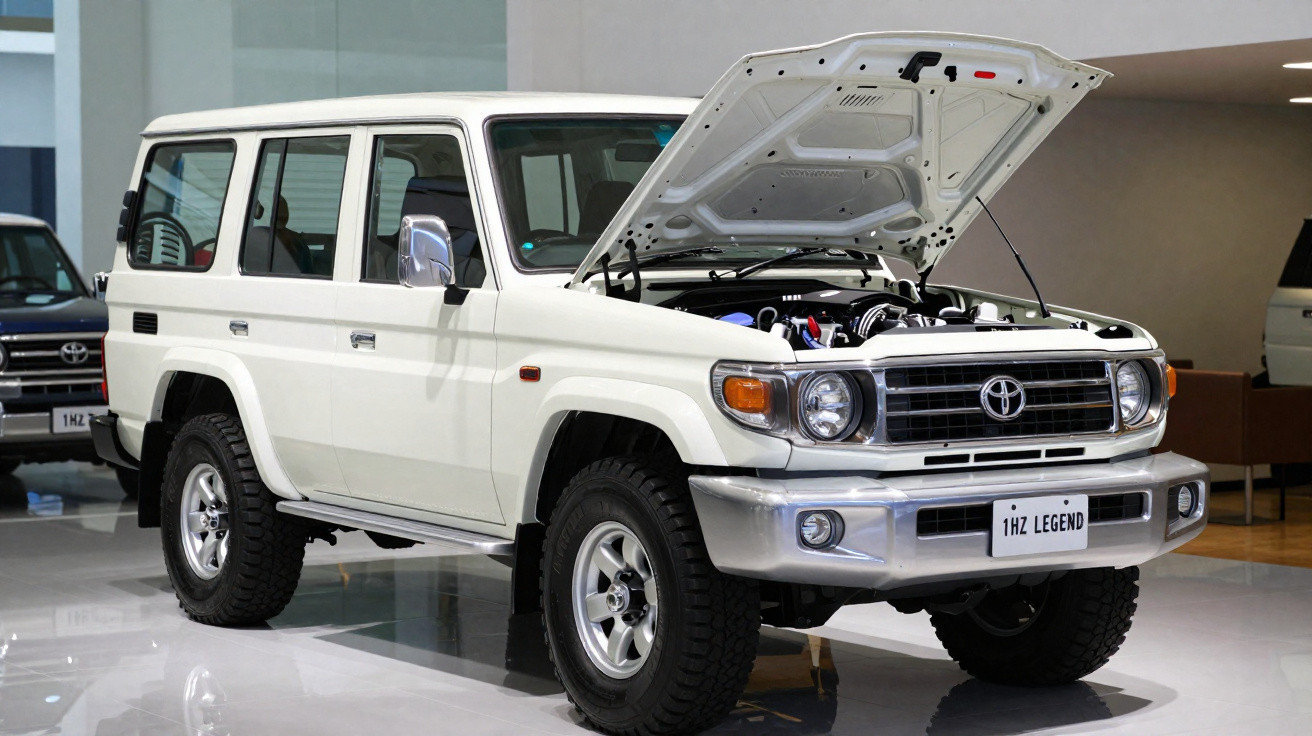
In a world where engines are shrinking in capacity while gaining turbochargers, hybrid systems and increasingly complex filters, one engine is happily whistling its own tune - like the song by Carlão, formerly of Da Weasel; apologies for the reference.
It is called the 1HZ, it is made by Toyota, and it first appeared in the early 1990s. It remains in production and is nowhere near retirement. This is a naturally aspirated 4.2-litre inline-six Diesel engine, with a cast-iron block, mechanical injection and a philosophy that places durability above everything else.
At a time when phrases such as “planned obsolescence” and “artificial intelligence” shape everyday life, this engine could not care less. “You’re all right, you’re all right…”
Toyota 1HZ: built for endurance
Toyota introduced the 1HZ Diesel engine in 1990 for the Toyota Land Cruiser 70 Series. It was not designed to dazzle on paper, but to keep going in places where technical support is not available through the My Toyota app. In some cases, it simply does not exist at all.
Depending on the specification and market, it produces 130 bhp and around 285 Nm of torque. Those are restrained figures for a 4.2-litre engine. Yet its lack of a turbocharger, high compression ratio and straightforward mechanical injection pump give it a remarkable ability to cope with lower-quality fuel and basic servicing.
Still in production
The 1HZ engine does not meet European standards. Whether we like it or not, sustainability is a concern for developed countries - which is why economic growth matters so much: without it, there can be no environmental policies.
As a result, the natural market for this Toyota Diesel engine is in parts of the world where fundamental dependability and ease of repair take priority. In mining fleets, humanitarian organisations and isolated rural areas, mechanical predictability matters more than outright efficiency. It can genuinely be a matter of life and death.
Toyota itself sells the Land Cruiser 70 Series in more modern versions in other markets, using the 204 bhp 2.8 turbodiesel (1GD-FTV), which meets current environmental requirements. This engine is a reminder that the world does not move at one speed. There are places where progress is slower - and so are the engines.
Sometimes, that is exactly how we like it. And speaking of slow, dependable cars…



Comments
No comments yet. Be the first to comment!
Leave a Comment