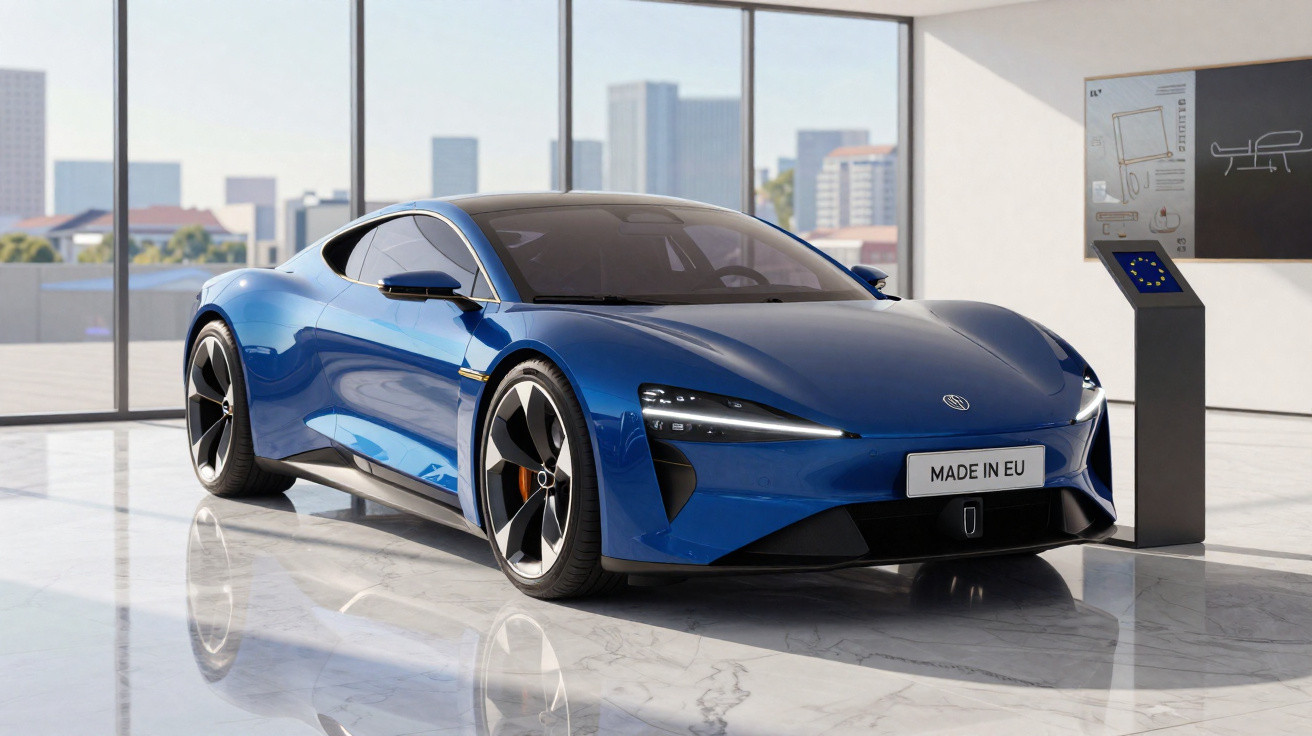
The European Union (EU) yesterday, 4 March 2026, unveiled a new initiative designed to strengthen local production and revitalise European industry. The “Made in Europe” strategy, part of the Industrial Accelerator Act, will require new cars manufactured in Europe to include a minimum proportion of materials and components of European origin.
This measure is intended to shield the continent’s industry from intense international competition, particularly from China, reinforce Europe’s manufacturing capacity, increase demand for locally made clean technologies and products, and safeguard one of the Union’s largest industrial bases.
By 2035, the target is for industrial production to account for 20% of EU GDP, compared with the current 14%. The plan aims to prevent the loss of up to 600,000 jobs in the automotive sector while creating around 150,000 new roles in other industrial fields.
Made in Europe requirements for strategic sectors
The Industrial Accelerator Act will introduce specific local-content requirements for strategic industries including steel, cement, aluminium, automotive manufacturing and net-zero technologies. The framework could also be expanded to other energy-intensive sectors, such as chemicals.
The Commission notes that these industries are currently facing competitive and structural pressures, declining production in Europe, slow investment in decarbonisation, and market distortions such as unfair subsidies outside the EU.
Foreign investment and European employment
The regulation permits foreign direct investment, although it sets conditions for major projects. For instance, where a single country controls more than 40% of global capacity in a strategic sector and an investment exceeds €100 million, the project must create high-quality jobs, promote innovation and growth, and deliver genuine value within the EU through the transfer of technology and skills, as well as compliance with local-content requirements.
In addition, such projects must ensure “a minimum European employment level of 50%, ensuring that companies and citizens benefit alongside investors”. Through this approach, the European Union intends to ensure that investment provides tangible benefits to the local economy, strengthening economic security and the resilience of supply chains.
The Industrial Accelerator Act also introduces a single digital permitting process to streamline and speed up industrial projects across the EU, cutting red tape without compromising quality or sustainability.
Next steps
The proposed regulation will now move to negotiations between the European Parliament and the Council of the EU before it can be approved and enter into force.
Car manufacturers remain split on the measures. Some European producers reliant on China for batteries and components have raised concerns about costs and competitiveness, while other manufacturers have backed the new rules, arguing that they could safeguard local production and strengthen employment.
“In the face of unprecedented global uncertainty and unfair competition, European industry can rely on the provisions of this act to boost demand and secure resilient supply chains in strategic sectors.”
Stéphane Séjourné, Executive Vice-President for Prosperity and Industrial Strategy
Implementation will be phased in over three years, giving industry time to adjust gradually to the new local-content and clean-production requirements.









Comments
No comments yet. Be the first to comment!
Leave a Comment