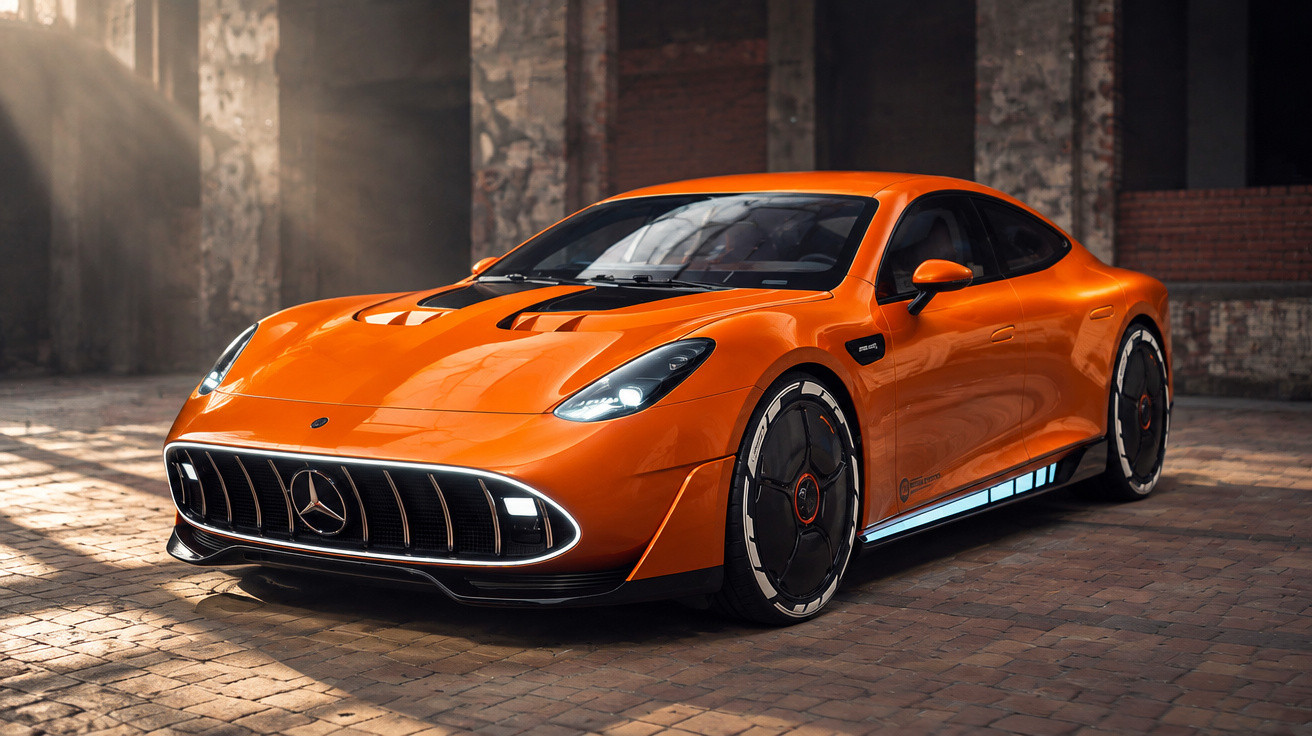
Meet the Concept AMG GT XX: a low-slung four-door previewing AMG’s first dedicated electric car. Setting aside the 2013 SLS Electric Drive, of which just nine examples were produced, the production model is expected to arrive next year and is intended to lead a much-needed Mercedes comeback.
Mercedes, the company that created the motor car, has made an awkward transition to electrification. Demand for its smoothly rounded EQ-badged models has been underwhelming, and its intention to become fully electric by 2030 has long since been abandoned. Yet the optimism of that period still shapes the GT XX. It uses AMG’s bespoke EV architecture, constructed from steel, aluminium and carbon composite materials. The same platform will also underpin an SUV aimed at the Ferrari Purosangue, and, with any luck, another hypercar.
Mercedes has since cancelled a further electric-only architecture intended exclusively for luxury models. Consequently, the GT XX is already somewhat out of step, conceived during an era when an internal-combustion comeback appeared even more improbable than Elon Musk becoming a pariah.
Concept AMG GT XX design and aerodynamics
Visually, the GT XX is not entirely unfamiliar. It combines cues from the 2022 Vision AMG concept with the more outlandish Vision One-Eleven that followed a year later, while also recalling Mercedes’ spectacular C111 prototypes of the late 1960s. The Sunset Beam orange finish, electroluminescent sill panel and dramatically inclined windscreen deliver all the expected concept-car theatre.
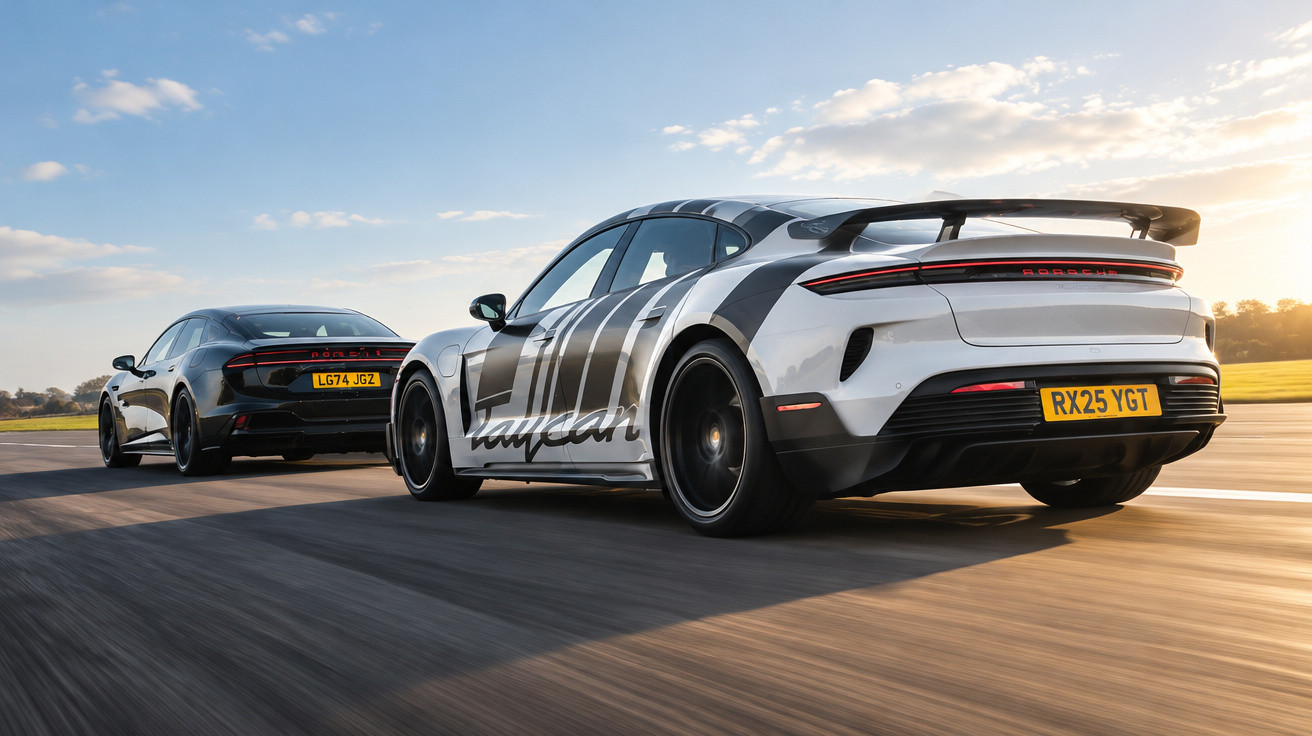
Crucially, though, it is a close indication of a car customers will genuinely be able to buy. Regard it as an electric successor to today’s GT 4dr and the idea becomes clear. Porsche’s Taycan and the Lucid Air reached this territory first, but the GT XX has now arrived. Its six round rear lamps are particularly appealing in an age of ubiquitous full-width light bars, giving it a curiously old-school character.
Measuring 5.2m long, it has considerable presence. A graphic division separates the main bodywork from the lower sill section, whose electroluminescent paint can indicate the battery’s state of charge. Up front, the AMG face is conspicuously assertive, with a distinctly concept-car attitude. Vertically arranged headlights provide another visual break from convention. Built-in loudspeakers, including a passive membrane to improve low-frequency response, are fitted within them. Their main task is pedestrian protection, although they could serve other functions. AMG knows full well that the booming bass soundtrack of its V8s is a major USP. It surely has something planned for its BEVs.
Numerous bonnet cooling vents are functional, but they also prevent the body from appearing overly smooth and soapy. The power domes are a welcome reference to the combustion era. Aerodynamic efficiency is exceptional too, with a drag coefficient of only 0.20. The front splitter extends into side air curtains, while vanes beneath the floor reduce lift. AMG’s active air-control panel returns to manage cooling, and a rear air brake deploys when required. Alongside the rear lamps sits a light panel containing 700 programmable RGB (red, green and blue) LEDs. Mercedes says it can display various forms of ‘content’. More content: exactly what the world needs.
The concept also wears active 21in aero wheels. Each has five movable blades, controlled by a central unit and actuators housed in the wheel hubs. Should the brakes require extra cooling, the blades reposition themselves. There is another neat feature: every actuator incorporates a small generator that recovers electrical energy from the wheel. Sadly, this system is not yet ready for production.
AMG GT XX electric powertrain and charging
The real headline, however, is beneath the skin. Total output of one megawatt - approximately 1,340bhp - commands attention, as does the GT XX’s claimed ability to charge at up to 850kW. In five minutes, it can add roughly 250 miles of range to the battery. “Drive hard, charge hard” is the new mantra. Mercedes-AMG has so far struggled to establish itself at the sharp end of software-defined, fully electric cars, but the GT XX is intended to put it back among the leaders.
Its technical recipe starts with an 800V electrical architecture and axial-flux motors. These are two thirds lighter than radial-flux alternatives while occupying one third of the space. Three motors are packaged within two ‘High Performance Electric Drive Units’, in Mercedes terminology. The rear-mounted unit weighs 140kg, incorporating two motors, a planetary gearset and a silicon-carbide inverter inside one oil-cooled casing. At the front, the 80kg drive unit contains a motor, spur-gear transmission and inverter. The rear EDU performs most of the work; the front unit joins in only when greater torque or traction is necessary. At other times, it disengages to improve efficiency.
British specialist Yasa, acquired by Mercedes in 2021, deserves the credit for this technology. Motor production will take place at a Mercedes facility on the edge of Berlin, using 100 distinct manufacturing processes. Mercedes says 65 are new to the company, while 30 are the subject of pending patents. New laser-welding techniques are part of the process, alongside - naturally - AI.
Further specifications will have to wait, but Mercedes claims a top speed beyond 223mph and a 0-124mph time of five seconds. That places it in Koenigsegg Jesko territory. Other than confirmation of the 4MATIC+ all-wheel-drive system, AMG has not yet explained how it will distribute and vector such immense power. Given the badge, a vast selection of driving modes and some algorithmic wizardry seem inevitable. A tyre-destroying drift mode must surely be part of the plan.
The underfloor battery pack is equally significant. Its cells are tall and narrow, reducing the distance between the core and outer casing so heat can escape far more quickly when the car is working hard. Each cell sits in laser-welded aluminium, which is lighter than steel and offers superior conductivity. There are more than 3,000 cells, arranged in plastic modules and cooled by electrically non-conductive oil. Cooling is deployed as required, with every cell module kept in the ideal condition so performance does not fade.
how fast you can charge a car is just as important as how fast or how far you can drive it
You are probably thinking that 850kW charging points do not currently exist, but Mercedes-AMG says it has a plan. It has joined forces with high-power charging specialist Alpitronic to develop next-generation infrastructure. The firm has created a prototype capable of handling this level of energy through an ordinary CCS cable. AMG says the aim is to build chargers capable of one megawatt. As it stands, the GT XX can begin charging immediately at 350kW, irrespective of battery temperature or state of charge, and can maintain that speed beyond 80 per cent. This may prove a major inflection point: how quickly a car can charge matters as much as its speed or range.
Concept AMG GT XX interior technology
Inside, the central principle is to expose the technology while stressing efficiency and lightweight design. The cabin arrangement alludes to a conventional engine bay and includes an extruded crossbeam structure. High-voltage cables are deliberately visible, ensuring nobody mistakes it for a combustion-engined car. Its stripped-back atmosphere is reinforced by the front seats. They use carbon-fibre shells and 3D-printed pads made from Labfiber, a biotech material incorporating vegetable proteins and recycled racing tyres. One tyre yields four square metres of this leather-effect material. TopGear.com spent some time feeling it, and it makes a convincing imitation of leather.
Black is the foundational interior colour, allowing the silver and orange detailing to stand out. A ‘shrink lacquer’ crackle treatment appears on the centre console and in other areas. Fabric loops replace conventional door handles, while chequered-flag graphics decorate the door cards.
The steering wheel resembles that of the AMG One: a shortened rectangular yoke inspired by Formula One. Mercedes has confirmed that it is ready for production, and it operates through a steer-by-wire system with no physical metal connection between the driver’s hands and the front tyres. Recall the days when bellowing V8 AMGs resisted travelling in a straight line? Now the computers are supposed to handle that.
The eventual production car will inevitably moderate the wilder styling details. Everything underneath, however, is confirmed for volume production. Perhaps the v2.0 Mercedes-AMG electric plan will finally be the one that succeeds.


Comments
No comments yet. Be the first to comment!
Leave a Comment