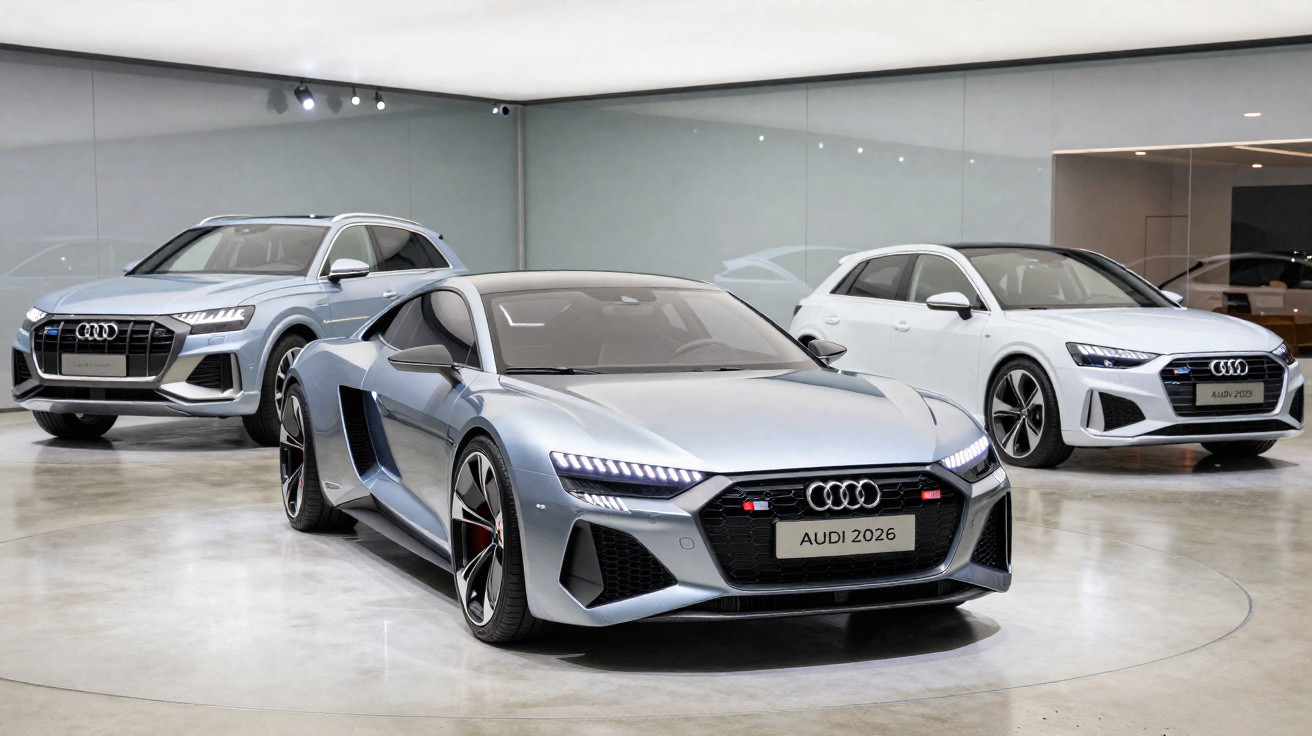
Despite the stream of new products introduced this year, Audi remains in a difficult spell: sales are still falling, profits are declining and operating margins are tightening.
However, this is not the moment to throw in the towel. During the presentation of its third-quarter 2025 results, the Ingolstadt marque outlined its plans for 2026, which include three highly significant launches that cannot afford to fail.
They are a new-generation Audi Q7, the all-new and, at last, confirmed Q9, plus a new entry-level electric model that has yet to receive a name. The production version of the Concept C, the prototype previewing the brand's electric sporting future, will not arrive until 2027.
Will it be called the Audi A2?
Audi is one of the few Volkswagen Group brands that still lacks a compact electric car in its line-up, but that will change with the arrival of what could become the new Audi A2, the future entry-level EV from the four-ring brand. We have already spotted it undergoing tests.
Details remain limited, but all indications suggest it will use the familiar MEB platform - already found beneath models such as the Volkswagen ID.3, Audi Q4 e-tron and Skoda Elroq. With the highest-capacity batteries (79 kWh usable in the ID.3, for example), its range could approach 600 km.
Combustion engines will remain
Audi's future will not be electric-only: in 2026, it will introduce two large SUVs that will continue to use combustion engines. Like other manufacturers, Audi has stepped back from its original plan to become 100% electric by 2033.
The first will be a new generation of the Audi Q7 - the current model is already a decade old - followed by the even larger, all-new Q9. Both will sit on the same Premium Platform Combustion (PPC) architecture, which should also mean shared powertrains.
The final engine line-up has not yet been confirmed, although some units are expected to be shared with the combustion-engined A6 already on sale. These include plug-in hybrids (using a 2.0-litre engine as their basis, with 299 hp and 367 hp) and 48 V mild-hybrid versions.
The latter are also expected to retain the Diesel engine which, although “on the way out”, continues to matter in these European market segments. On the petrol side, the 3.0-litre turbocharged V6 should remain the preferred choice. Above these, higher-performance versions - the SQ7 and SQ9 - are anticipated, potentially using a plug-in hybrid system incorporating a twin-turbo V8.
A strong RS line-up for 2026
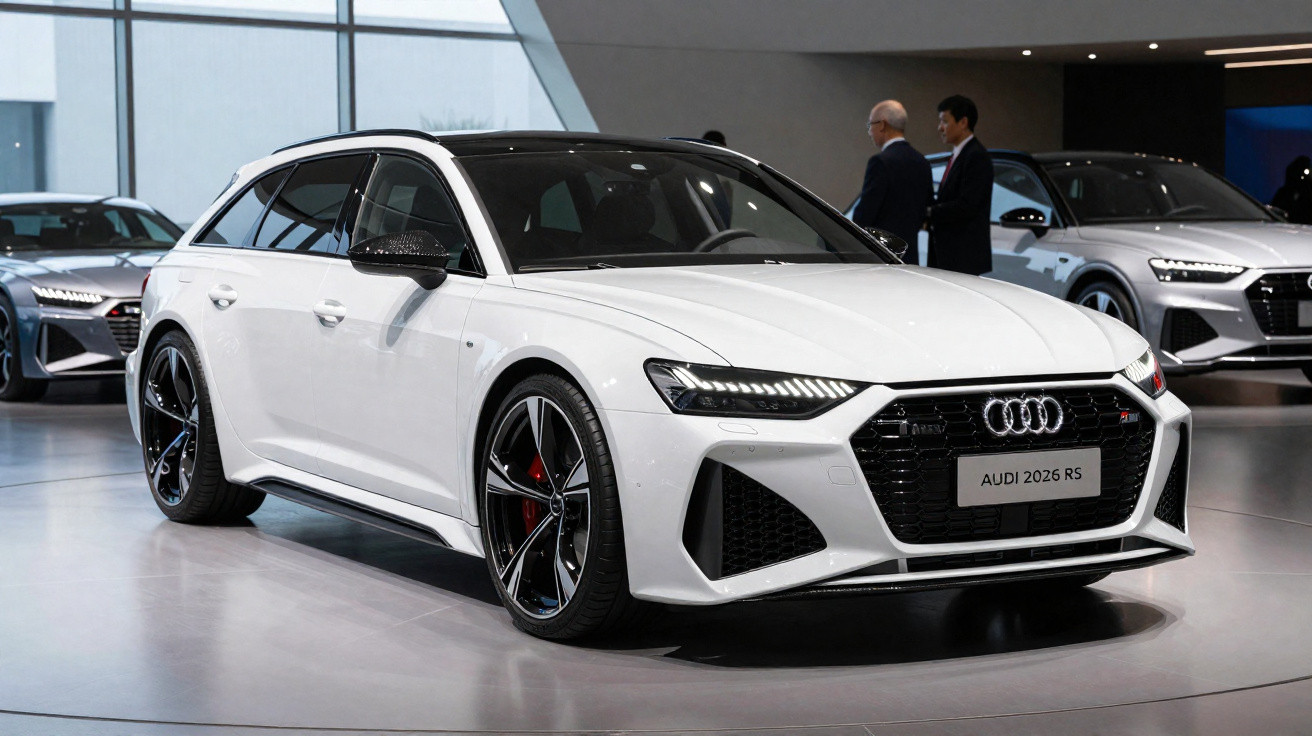
Audi's 2026 news will not be limited to entirely new models. The brand is also developing new RS versions, and we have already spotted several prototypes, including the forthcoming RS 5 and RS 6.
Their emissions targets will require them to adopt plug-in hybrid systems, although this will not mean abandoning their respective twin-turbo V6 and V8 engines.
Among the planned RS models, Audi has apparently abandoned the electric RS 6, based on the A6 e-tron - which we have already tested. Find out why it made that decision:


Comments
No comments yet. Be the first to comment!
Leave a Comment