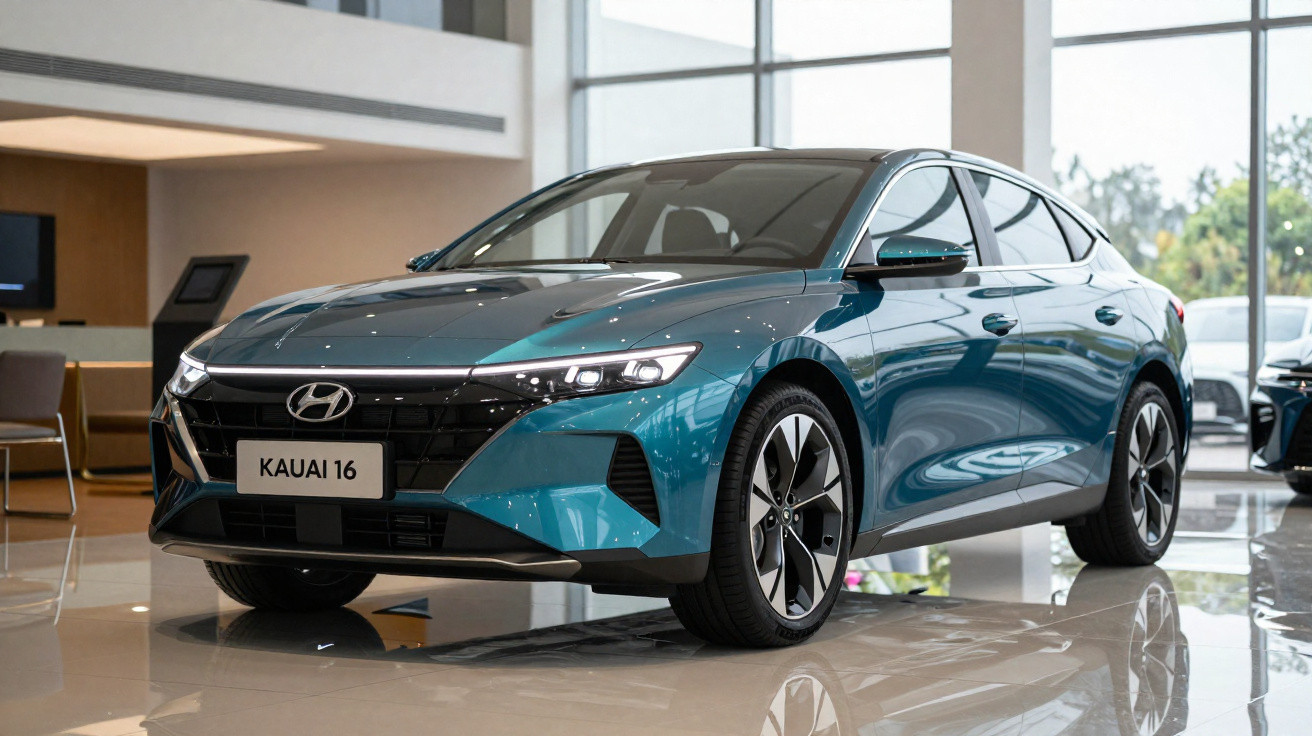
Despite testing a relatively conventional Hyundai Kauai 1.6 CRDi diesel, it is clear that there is a Kauai to suit almost every preference. Among B-SUVs, it may well be the model with the broadest range of versions.
Buyers can choose between petrol and diesel engines, manual and automatic (DCT) gearboxes, front-wheel drive and all-wheel drive - still an unusual option in this class - as well as electrified choices such as the Kauai Hybrid and Kauai Electric.
The electrified Kauai models have understandably attracted most of the attention, as they fit perfectly with the zeitgeist, or spirit of the times. Yet the versions powered solely by internal-combustion engines still deserve close consideration.
That includes this Kauai 1.6 CRDi, one of the two diesel powertrains offered. It is the more powerful option, producing 136 hp and available exclusively with a seven-speed DCT dual-clutch gearbox and two-wheel drive; the other, with 115 hp, uses a manual gearbox.
The increasingly relevant question is whether choosing a diesel engine still makes sense now that the range includes a hybrid option able to match it on price and fuel consumption. What arguments remain for the Kauai 1.6 CRDi?
A winning Hyundai Kauai 1.6 CRDi combination
It had been some time since I had last driven a Kauai. Although I had sampled several examples since attending its international launch, this was the first time I had got my hands - and feet - on a diesel-powered version.
The 1.6 CRDi engine and DCT gearbox pairing was not entirely new to me, however. It had already made a very favourable impression at the international launch of the Kia Ceed in Portugal, where I drove a Ceed 1.6 CRDi DCT from the Algarve to Lisbon.
Installed in the Kauai, though, the engine and gearbox once again surprised me - both negatively and positively. On the downside, the 1.6 CRDi's lack of refinement is more apparent when combined with the Kauai's generally modest sound insulation. Curiously, one of the electrified Kauai models' strengths - their quietness - is rather lacking in combustion-engined versions. The engine is quite audible, and not especially pleasant, while wind noise becomes noticeable from as little as 90–100 km/h.
On the positive side, the Ceed had already impressed me with the engine's eager response and its seemingly perfect match with the DCT - it always appears to be in the right gear, is quick enough, and remains pleasant to use even in Sport mode - but it was even more striking in this particular Kauai 1.6 CRDi. Why?
Although this test took place in 2020, the car tested was registered in May 2019. This Kauai 1.6 CRDi had already covered more than 14,000 km - probably the press-fleet car with the highest mileage I have tested. Normally, the cars we test have covered very few miles, and their engines can sometimes still feel slightly tight.
Not this Kauai… I cannot remember testing a diesel with this level of responsiveness and vigour - this engine was genuinely “run in”! Clearly, not all of those more than 14,000 km had been covered at a restrained pace.
Had someone told me this was a new, more powerful version, I would have believed them. The official performance figures even seem modest given the determination with which the reasonably compact Kauai heads towards the horizon. Its performance feels a step above the very healthy quoted 136 hp and 320 Nm.
It is a diesel, so is it economical?
Yes, although not quite as economical as expected. During the test, the Kauai 1.6 CRDi returned between 5.5 l/100 km and 7.5 l/100 km. To go beyond seven litres, though, either the accelerator must be used heavily or the car must spend its time caught in a major traffic jam. In mixed city and dual-carriageway driving, with moderate to heavy traffic, consumption sat between 6.3 l/100 km and 6.8 l/100 km.
These are good rather than outstanding figures, but have you seen the size of the Kauai's wheels? Every combustion-engined Hyundai Kauai sold in Portugal comes as standard with large 235/45 R18 wheels - even the 120 hp 1.0 T-GDI…
They are a win for styling, but clearly excessive considering the modest power outputs. A 235 mm-wide tyre is the same width fitted, for instance, to the Golf (7) GTI Performance… which has 245 hp! It is not unreasonable to suggest that fuel consumption would be lower with narrower tyres - it is now possible to pair large-diameter alloy wheels with narrower tyres.
The chassis matches the mechanical package
The engine and gearbox are very good and, fortunately, the Kauai 1.6 CRDi's chassis is up to the same standard. Better still is the steering, which may not be the best in the segment but comes very close. It has the right weighting and excellent precision, while also communicating very effectively with the driver, helped by an immediately responsive front axle.
When driving briskly, it is easy to forget that you are at the wheel of a B-SUV. Grip levels are high - with these tyres, naturally… - yet it is not an inert or one-dimensional vehicle. There is an organic, natural quality to the way it responds to driver inputs when threading along a road at higher speeds. It never loses its composure, body movements are very well controlled, and it remains comfortable throughout - despite the oversized wheels, it absorbs most road imperfections very effectively.
Is it the right car for me?
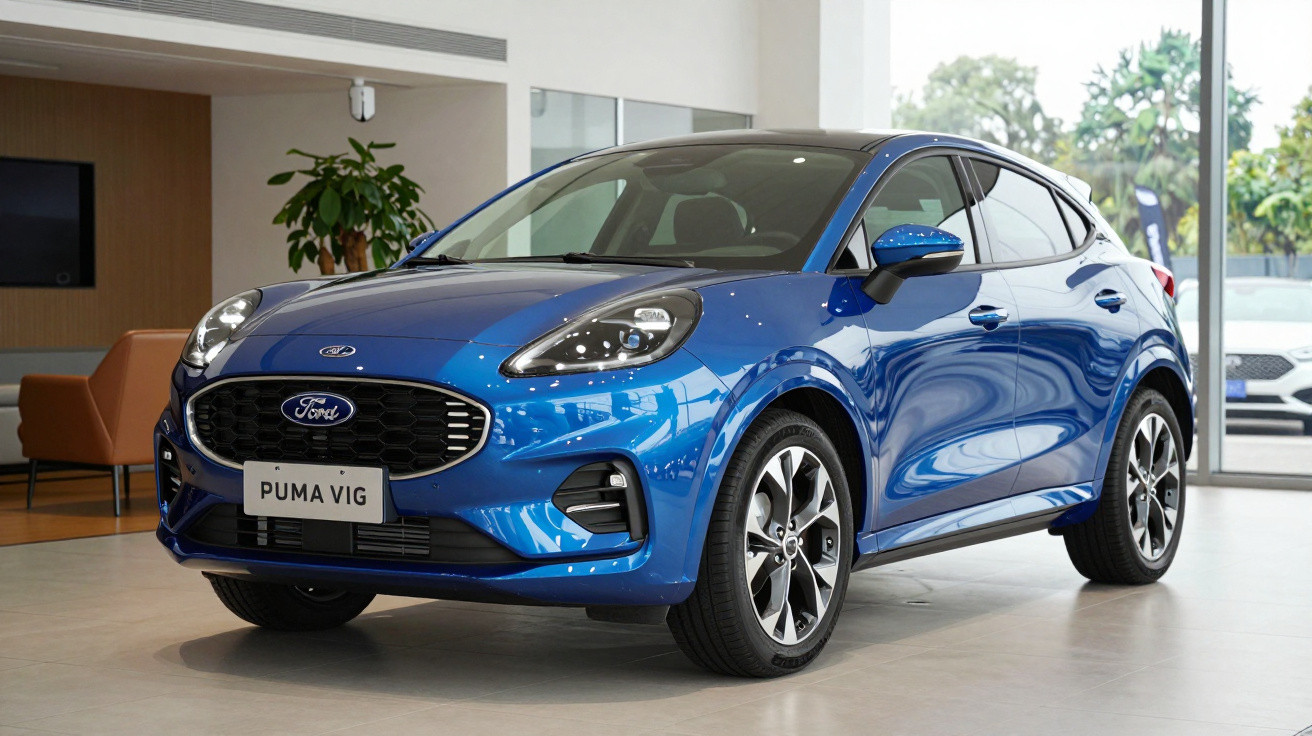
That will depend greatly on what you are looking for in this segment and how you intend to use it. The new generation of B-SUVs - the Renault Captur, Nissan Juke, Peugeot 2008 and the all-new Ford Puma - has brought qualities to the class that the Kauai is finding increasingly difficult to counter.
Available space is one of them. The Kauai is not cramped - far from it, as it carries four occupants comfortably. Its rivals have simply started offering considerably more generous dimensions in these new generations, having grown substantially externally. This is even more apparent in the Korean model's boot capacity, which is just 361 l. It was never a benchmark figure, but it is now falling further behind its competitors.
The other issue is price. First, a note: this example dates from 2019, so the prices in the technical data refer to that time. In 2020, the tax burden on diesel engines changed, making this 136 hp Kauai 1.6 CRDi more expensive. It is now available from €28,000 and, to match the equipment specification of the test car, the price rises to almost €31,000.
That is a somewhat high figure, though it is in line with much of the competition, such as the Peugeot 2008. It is even better value when compared with, for example, the similarly priced SEAT Arona TDI, which offers only 95 hp.
The Kauai 1.6 CRDi's biggest rival, however, is its own sibling, the Kauai Hybrid, which is comparably priced but offers slightly lower performance. Since these B-SUVs are generally used predominantly in urban areas, the Hybrid leaves it with little chance. As well as achieving lower fuel consumption in this environment, it is far more refined and better insulated. In most cases, the Hybrid will be the better choice.
Choosing the 1.6 CRDi, whether in 136 hp form or the 115 hp version, which costs several thousand euros less, makes progressively more sense the more kilometres you cover.
Whichever Kauai is chosen, all models now also come with a seven-year, unlimited-mileage warranty, which is always a point in their favour.





Comments
No comments yet. Be the first to comment!
Leave a Comment