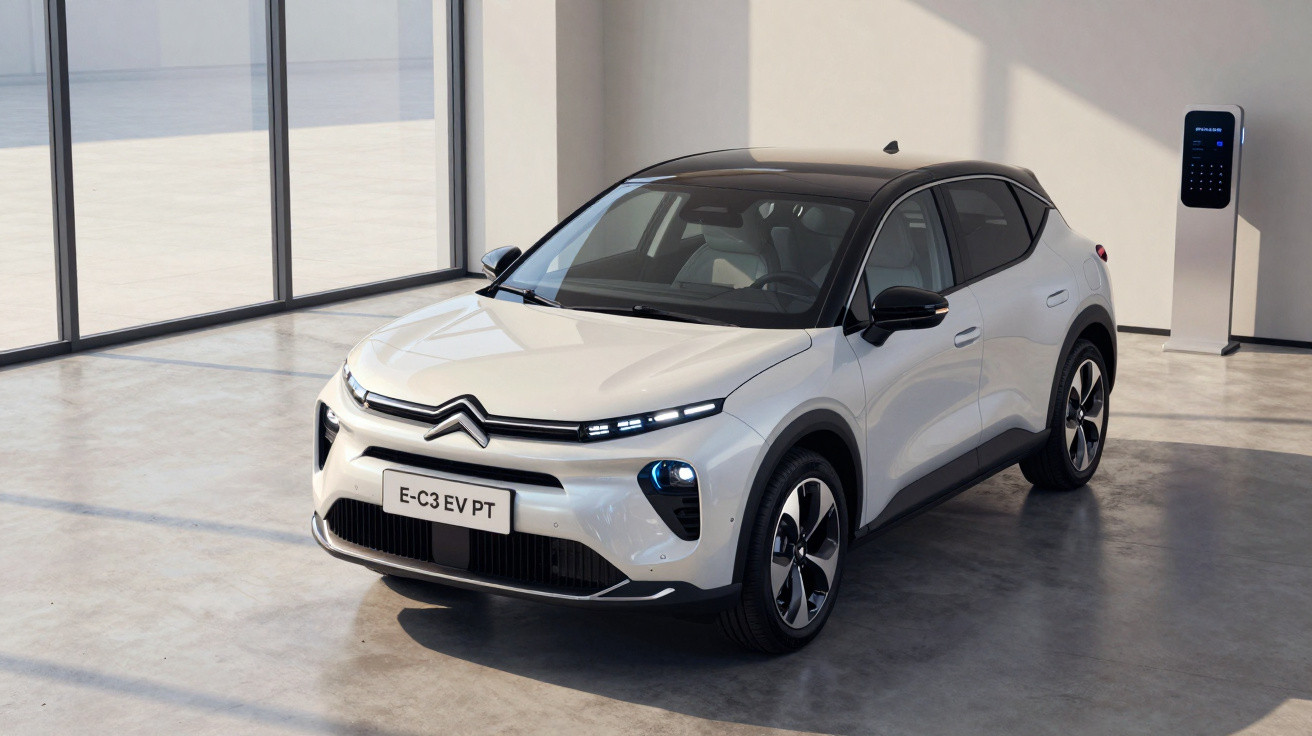
The electric Citroën ë-C3 occupies an unusual position in today’s market, moving closer to the territory traditionally held by petrol city cars at a time when electric vehicles still tend to carry high prices.
Rather than simply being another electric-mobility alternative, it presents itself as a direct proposition for the wider market, aiming to remove one of the key barriers to adoption.
This generation is not a straightforward conversion of an existing model. It was designed from the outset for this purpose, using a new technical base and simpler solutions, with a clear emphasis on keeping costs under control without sacrificing the qualities that matter in everyday motoring.
What is the Citroën ë-C3?
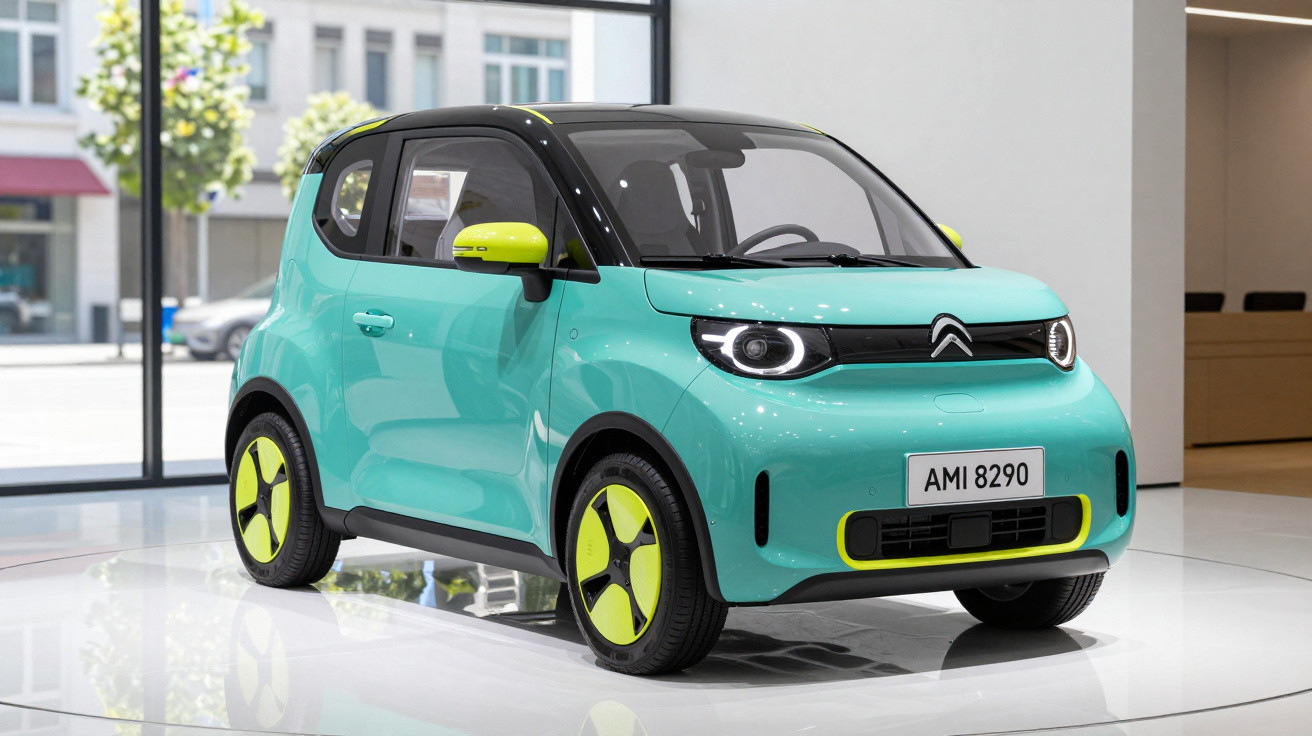
The Citroën ë-C3 is a B-segment supermini measuring 4.01 metres in length. It is built on Stellantis’s Smart Car platform, which was developed with production efficiency and cost control in mind.
It is manufactured at the Trnava plant in Slovakia, an established Stellantis facility for vehicles in this segment that supplies the European market.
This approach has resulted in a model conceived as an accessible electric car, capable of directly replacing a combustion-powered supermini while retaining a straightforward and predictable day-to-day ownership experience.
Citroën ë-C3 range and battery
The electric ë-C3 uses an LFP battery with 43.8 kWh of usable capacity, offering up to 325 km of combined WLTP range. Alternatively, it is available with a battery providing 29.4 kWh of usable capacity and up to 212 km of combined WLTP range, figures intended to suit the most common usage requirements.
In real-world use, it can handle daily routines with a comfortable margin and allows trips beyond urban areas without requiring constant planning. This battery chemistry helps provide greater thermal stability and durability, while also contributing to control of the car’s final cost.
Charging
With the 44 kWh battery, fitted to versions called Comfort Range, DC charging is supported at up to 100 kW, allowing the battery to be replenished from 20% to 80% in around 26 minutes. This makes occasional longer journeys viable without excessively long stops. The 30 kWh battery, used in Urban Range versions, supports DC charging at up to 30 kW, enabling a charge in 36 minutes.
For AC charging, a 7.4 kW onboard charger is fitted as standard, while an 11 kW unit is available as an option, making charging easier to integrate at home or at work.
Motor and performance
The electric motor produces 83 kW, equivalent to 113 hp, and 125 Nm of torque. As expected from an electric motor, torque is delivered immediately, matching the urban and extra-urban driving role for which the model is intended.
Dimensions, space and everyday usability
At 4.01 metres long, approximately 1.76 metres wide and 1.57 metres high, the electric ë-C3 retains typical B-segment proportions, although its taller stance gives it a crossover/SUV-like appearance.
Its wheelbase of roughly 2.54 metres supports a balanced use of interior space. Meanwhile, the boot offers around 310 litres, meeting the most common day-to-day needs without significant compromises.
Interior and technology
The interior approach depends on the equipment level, reflecting different ways of using in-car technology.
In the You version, the ë-C3 does without a central screen and instead uses a smartphone holder, moving most digital functions to the driver’s own device. The Max variant adds a 10.25-inch central display with wireless connectivity, while retaining a simple and direct interface.
The limited-edition Collection also stands out, adding specific upholstery, mats and decorative details, together with black 17-inch alloy wheels, tinted rear windows, a parking camera and rear parking sensors. It also includes LED headlights, roof rails, a 10.25-inch touchscreen, Citroën Advanced Comfort seats, a trimmed steering wheel, and rain and light sensors.
Across the range, the conventional instrument cluster is replaced by a horizontal digital strip positioned close to the windscreen, providing essential information without distractions. Wheel options range from 16-inch steel wheels to 17-inch alloy wheels.
Citroën Advanced Comfort suspension remains one of the model’s distinguishing features, using progressive hydraulic dampers designed to improve comfort over uneven road surfaces.
Who is this model for?
The Citroën ë-C3 is aimed at people seeking an electric car as a direct alternative to a conventional supermini, without having to significantly change their usual driving habits.
Its combination of range, charging capability and ease of use places it as a rational choice in the current market, especially for buyers who place priority on entry costs and everyday convenience.
However, the ë-C3’s range of applications does not end there, as it is also offered in a commercial version called the ë-C3 Van, approved as an N1 goods vehicle.
With its two-seat layout and a partition separating the cabin from the load area, it offers up to 1,220 litres of load capacity and a payload of up to 300 kg.
How much does the Citroën ë-C3 cost in Portugal?
In Portugal, the Citroën ë-C3 with the 113 hp electric motor and 44 kWh battery is priced at €19,950 in You specification and €22,450 in Max specification, before incentives. The ë-C3 Van is available from €23,450.
The main distinction between versions is the equipment provided, particularly the presence of a central screen and the level of connectivity. However, it is the overall positioning that stands out most. The ë-C3 enters a price bracket where electric cars remain uncommon, bringing it clearly closer to combustion-powered B-segment models.
The Citroën C3 range also includes a petrol powertrain with a 100 hp turbocharged engine, as well as a 110 hp hybrid version. Both options are available in four trim levels - YOU, PLUS, BUSINESS and MAX - and in the special COLLECTION series.




Comments
No comments yet. Be the first to comment!
Leave a Comment