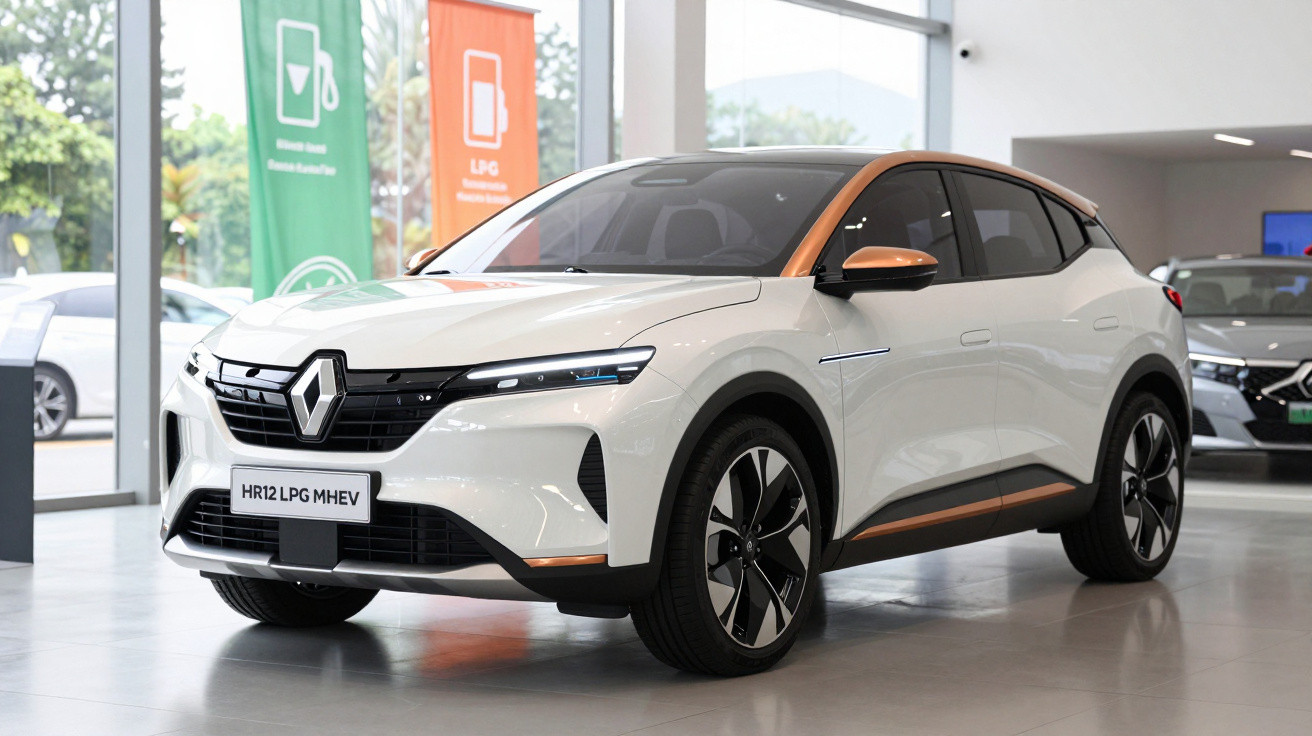
Horse Technologies, a joint venture created by Renault and Geely in 2023, has started building the HR12 LPG MHEV, an engine set to stand apart in the bi-fuel segment.
It is the world’s first mass-produced engine to combine direct LPG injection with a 48 V mild-hybrid system. Based on the familiar turbocharged 1.2-litre inline three-cylinder unit, it is related to the engine used, for instance, in the Renault Austral hybrid.
Production of the new HR12 is already under way in Mioveni, Romania, at a plant capable of producing 450,000 units annually. The first vehicle to receive it is the Dacia Bigster, for which Portuguese pricing has already been announced: this powertrain starts at €24,544, making it the entry-level version of the SUV.
What sets the HR12 LPG MHEV apart from other LPG engines
Until now, nearly all bi-fuel petrol and LPG cars have used indirect-injection systems, in which the fuel is vaporised before reaching the cylinder.
The new HR12 LPG instead uses a liquid-phase direct-injection arrangement, spraying fuel straight into the combustion chamber. To make this possible, Horse developed an electronic vaporiser and strengthened parts including the valves and valve seats to ensure the required durability.
The result is more accurate combustion, improved efficiency, lower fuel consumption and emissions, as well as sharper engine response. The cooling effect created when LPG vaporises inside the cylinder, known as charge cooling, lowers the risk of knocking and enables the powertrain to deliver greater performance.
More power and lower emissions
The figures underline these benefits. The HR12 LPG produces 140 hp at 5500 rpm and 230 Nm from just 2100 rpm. That is considerably more than the 100 hp and 170 Nm delivered by the 1.0 TCe ECO-G (HR10), fitted to several current Renault and Dacia models.
When running on LPG, it can cut CO₂ emissions by around 9% compared with petrol operation. The engine already meets the Euro 6e standard and has been developed to comply with the future Euro 7 requirements.
The 48 V mild-hybrid system - the lightest form of electrification - incorporates a belt-driven electric motor-generator. It helps lower consumption and emissions further, while also making the Start&Stop system smoother in urban driving.
Portugal is a market with potential
This launch is particularly relevant in Portugal. LPG remains one of the most affordable fuel options, averaging €0.86/l in the second quarter of 2025, substantially less than petrol.
The refuelling network is extensive, with more than 250 active filling stations across the country. Although LPG vehicles account for only around 1.2% of Portugal’s car parc, LPG remains an economical choice, and its pairing with hybrid technology could strengthen its appeal to private buyers and fleets seeking lower running costs.
Which models will receive this engine?
The first model, as noted, is already known. Orders for the Dacia Bigster mild hybrid-G 140 opened in Portugal at the beginning of summer, with prices starting from €24,544. In keeping with the brand’s usual approach, the LPG version is even €900 cheaper than the mild hybrid 140, which uses the same engine but runs solely on petrol.
No further models equipped with the HR12 LPG MHEV have yet been confirmed. However, it is expected to feature in other Dacia models, such as the Jogger, which is due for an update, and the Duster. Renault is also preparing to unveil the sixth-generation Clio, and it would not be surprising to see this new engine join its range.
Horse Technologies’ global ambitions also create the possibility of this bi-fuel engine being used by other brands, including Nissan and Mitsubishi, which remain in the Renault Alliance, or even by manufacturers beyond the group.
While it is currently responsible for developing and producing hybrid and combustion powertrains, as well as transmissions, for Renault Group and Geely, Horse also aims to supply more marques worldwide. For example, Horse manufactures Mercedes-Benz’s new M 252.
Romania’s role in HR12 LPG MHEV production
The decision to build the new HR12 LPG MHEV at the Mioveni factory in Romania was no coincidence. The site has extensive experience of manufacturing three-cylinder engines: alongside the petrol HR12, it builds the 1.0 TCe (HR10), including its LPG version. It now takes on a central role in Horse’s global strategy as the first facility to mass-produce an LPG engine with direct injection.
At a time when electrification dominates the automotive industry, the arrival of a direct-injection LPG engine demonstrates that there is still scope for meaningful development in combustion engines.
The HR12 LPG brings together a rare combination of lower costs, reduced emissions and technology designed for future environmental challenges.



Comments
No comments yet. Be the first to comment!
Leave a Comment