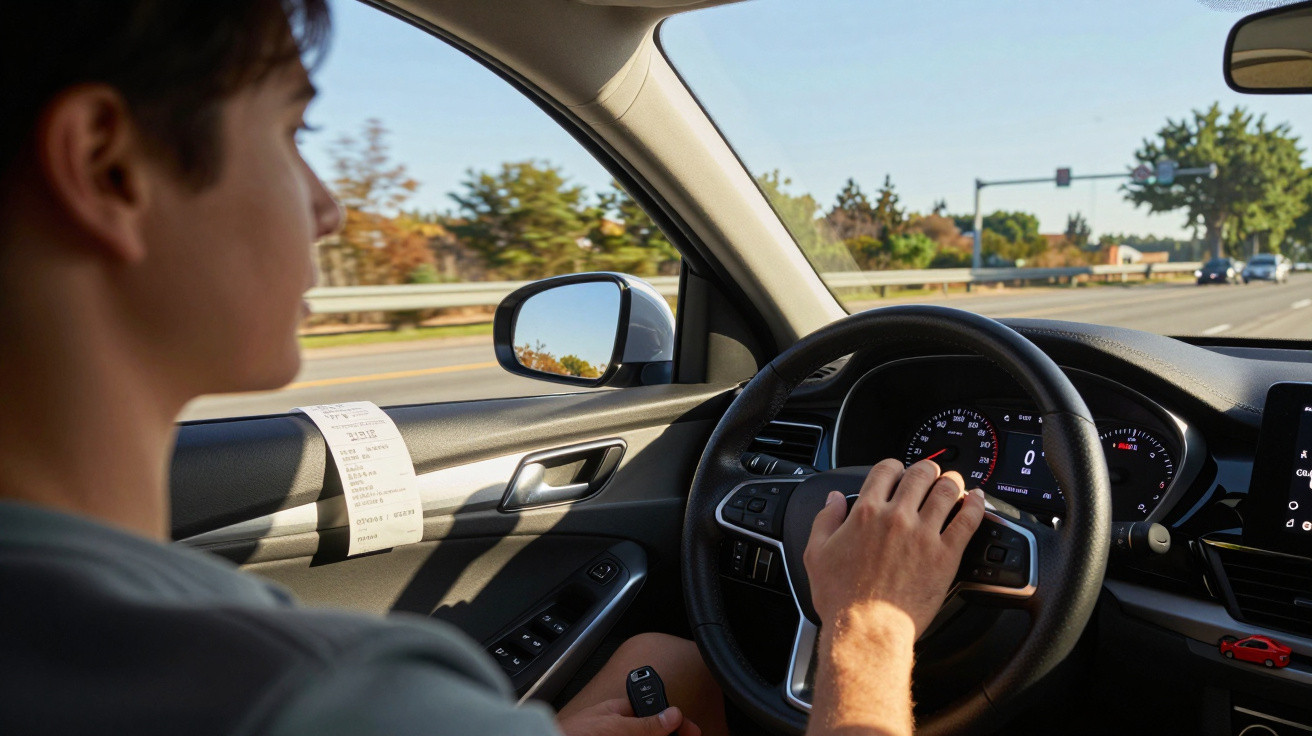
Many motorists exceed the speed limit without giving it much thought. The added pace can seem to save time, cutting a few minutes from a journey.
That perceived exchange is central to a fresh examination of driving in the United States. It poses a straightforward question: what does speeding actually cost everyone using the roads?
The two engineers responsible for the research are based at the University of Minnesota Twin Cities. Rather than relying on laboratory tests and broad fuel-economy estimates used in previous studies, they sought figures based on genuine journeys.
Fuel costs fluctuate sharply from one year to the next, while the long-term direction of electric cars remains uncertain.
Changing driving behaviour, however, provides a rare immediate option that requires neither new technology nor a replacement vehicle.
How drag drains fuel
The main issue is air resistance. Drag increases in proportion to the square of a vehicle's speed, meaning that even a modest increase in speed can rapidly damage fuel economy.
Vehicles use fuel most efficiently at roughly 64 to 89 km/h. Beyond that range, the engine must force the car through an increasingly substantial, though invisible, barrier of air.
That efficient speed range was not accidental. It influenced the motorway limits introduced in the 1970s, the country's first major effort to curb fuel consumption.
The motorway cost is substantial. Travelling only 16 km/h above the limit can increase fuel use and carbon emissions by up to 21%.
Fuel and money savings
To produce a real-world estimate, the researchers used more than 120 million vehicle journeys recorded across four days in 2021, with one day representing each season.
They linked every route with its road category, posted speed limit and elevation information from the United States Geological Survey (USGS).
The team then modelled each journey in two scenarios. One used the speeds actually driven, while the other kept every vehicle at or below the legal limit.
The difference was considerable. Obeying posted limits could save approximately 25.4 million litres of fuel, 57,000 metric tonnes of carbon dioxide and around $22 million in just one day.
“We already understand the physics of how speed affects fuel consumption, but quantifying the exact magnitude of those savings at a national scale gives us a clearer picture of the actual impact,” said Bharat Jayaprakash, lead author on the paper.
Driving fast is easier than ever
So, what does that restraint really cost motorists? In truth, very little.
Remaining within the limit adds roughly 54 seconds to an entire day of driving. Over a full week, this amounts to just 6.3 minutes, while an earlier Australian study put the real benefit of speeding even lower.
“While internal combustion engine-powered vehicles have become significantly more efficient in the past decades, they have also become much more powerful. Driving fast is easier than ever,” said study co-author William Northrop.
“Our study examines an obvious yet difficult-to-implement intervention for major fuel savings that can be achieved without replacing our cars: driving slower.”
Where car speed exceeds limits
Speeding is unevenly distributed around the country. Of the journeys examined, about 43% involved at least one section travelled above the posted limit.
The Southeast was particularly notable. North Carolina exceeded 60%, followed closely by Georgia and Florida, where more than half of journeys went beyond the limit.
The more open western states showed the reverse pattern. Montana, Wyoming and Idaho ranked near the bottom, probably because their existing speed limits are already high enough for most motorists.
Vehicle category also mattered. Agile two-seaters exceeded limits by the greatest margin, averaging 24 km/h over, whereas small SUVs and pick-ups generally stayed close to the limit.
Electric cars save more
Electric cars follow the same trend, but more strongly. In California, the only state with enough electric vehicles for reliable measurement, battery-powered cars delivered energy savings of more than 9%.
Petrol cars tested under the same conditions saved nearer 3%. Electric motors maintain their efficiency over a far broader range of speeds.
Braking also has a meaningful effect. Electric vehicles recapture energy while slowing down, reducing the cost of lifting off the accelerator.
Their drivers were less likely to speed in the first place, too. Journeys in battery-powered cars exceeded the limit much less often than equivalent petrol-car journeys.
Higher speeds cost lives
Fuel calculations represent only one part of the issue. The human toll of speeding is far greater than the few seconds it may save.
In 2023, speeding was linked to 11,775 deaths on US roads. Even a small reduction could prevent some of those fatalities.
Over a complete year, the fuel saving would reach about 9.1 billion litres. That is equivalent to the annual petrol consumption of a fleet of roughly 5.5 million cars.
Money not spent at the petrol pump is generally returned to the broader economy. Combined climate and safety benefits readily exceed the minor fall in fuel-tax revenue used to fund roads.
What comes next
The research does not yet provide the complete picture. The team examined only motorways and arterial roads with speed limits of 72 km/h or above, meaning its estimate is likely conservative.
“Key remaining challenges of our research are to expand our framework to more diverse roadways and understand the impacts of aggressive accelerations on fuel use and emissions,” Northrop said.
“Exploring both speed and acceleration reductions will give us an even more complete picture of real-world fuel savings potential.”
The next stage involves an electric car equipped with sensors to capture detailed real-world driving data. The project is intended to reveal how minor driving habits influence energy use across an entire vehicle fleet.






Comments
No comments yet. Be the first to comment!
Leave a Comment