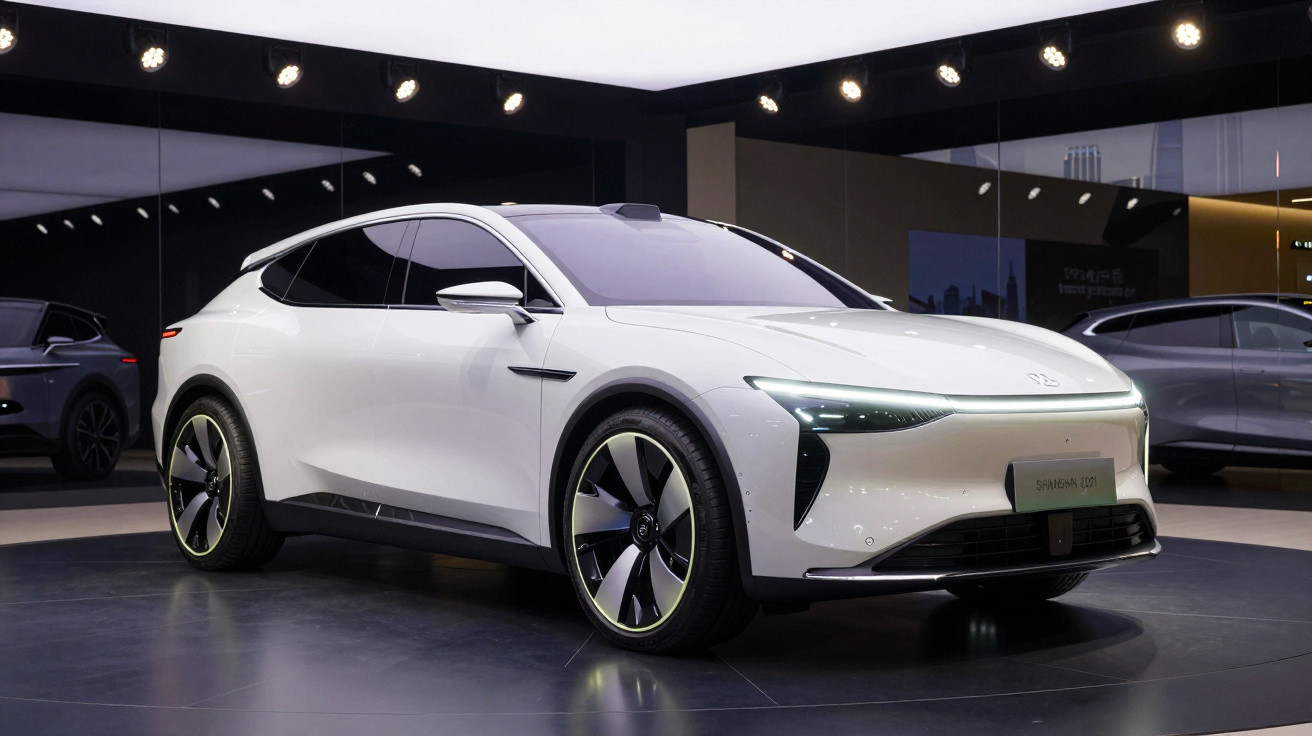
Global manufacturers are becoming ever more reliant on the success of the Chinese market. Unlike Europe and North America, where the effects of Covid-19 are still being felt, China has continued to show highly encouraging signs.
Chinese dealerships alone sold 2.53 million cars in March, representing an increase of 74.9% compared with the same month a year earlier.
These striking figures underline the importance of this market to global car makers, which were keen to unveil their latest developments at the Shanghai Motor Show, the year’s first major automotive event.
Officially known as the Shanghai Auto Show 2021, the event featured an SUV “offensive” from foreign manufacturers, a genuine parade of electric-mobility proposals and the customary announcement of “long-wheelbase” versions of models also sold in Europe.
The outcome was an event packed with new products, in which the presence of home-grown - that is, Chinese - models has become increasingly noticeable (and relevant...).
European manufacturers go “full throttle”
The significance of the Chinese market for European car brands was evident in several ways. BMW displayed a special edition of the BMW M760 Li xDrive, featuring a two-tone body finish reminiscent of Mercedes-Maybach models, while also giving its electric iX SUV its Chinese debut. Sales of the iX in China will begin during the second half of the year.
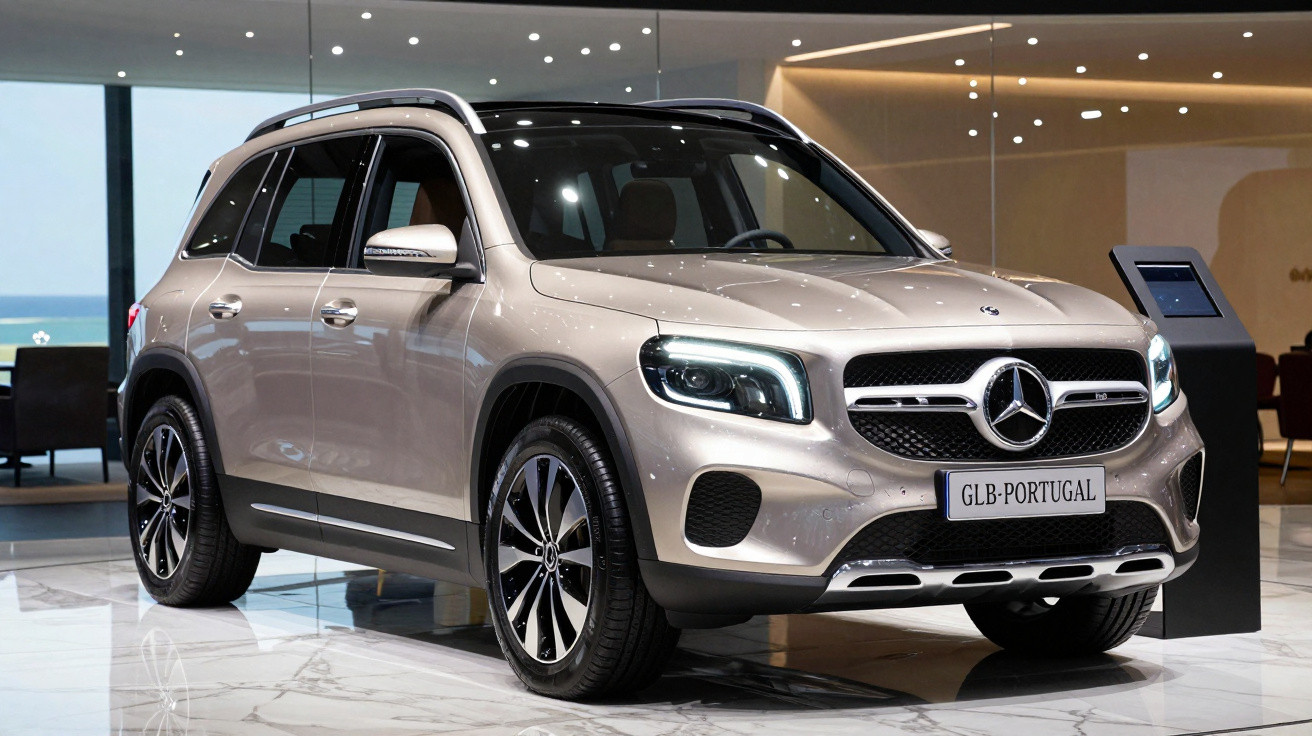
Following its virtual unveiling, Mercedes-Benz used the Chinese show to present the EQS in public for the first time, alongside the recently introduced EQB. The new C-Class was also shown in its China-exclusive “long-wheelbase” form.
Audi arrived at the Shanghai Motor Show with the electric A6 e-tron concept, which promises more than 700 km of range, as well as a “long-wheelbase” saloon version of the familiar Audi A7 Sportback.
The Ingolstadt manufacturer also displayed the longer Q5, called the Q5 L, and a concept for a new fully electric SUV - its counterpart to the Volkswagen ID.6 - on a stand it shared, for the first time, with both of its Chinese partners: FAW and SAIC.
Volkswagen was equally busy, reserving the Shanghai Motor Show for the debut of the ID.6, which will be offered in two versions. This seven-seat electric SUV appears to be an enlarged ID.4, the model that was awarded the 2021 World Car of the Year trophy that day.
Europe was also represented at the Chinese event by Maserati, which introduced the hybrid Levante, and Peugeot. The French brand used the occasion to launch its new China strategy, named “Yuan +”, reveal its new logo and present its latest SUV pair: the 4008 and 5008.
The US was also “present”
The American contingent also made its presence felt at the Shanghai Motor Show 2021, largely thanks to Ford. As well as showing the Chinese-built Mustang Mach-E, it introduced the Evos, a crossover with muscular styling and sporty proportions that may hint at a future replacement for the Mondeo in Europe and the Fusion in North America.
These two models were joined on the Shanghai Motor Show stage by the new Ford Escape - Europe’s Kuga - the Ford Escort, which does still exist in China, and the Ford Equator, a seven-seat SUV.
General Motors (GM) also had a notable presence in China, announcing the Cadillac Lyriq, an electric crossover, and revealing the updated Buick Envision.
What about the Japanese brands?
Honda attended with the e:prototype electric SUV, which, like the Honda e, is expected to reach production with styling very close to that of the concept. It also showed the plug-in hybrid version of the Breeze, an SUV based on the CR-V.
Toyota, meanwhile, unveiled the bZ4X Concept, the first model from its bZ family of electric vehicles, while Lexus was present with the revised ES.
Nissan also answered the call, uncovering the X-Trail, the new generation of the SUV already revealed in the United States as the Rogue. It is also expected to arrive in the European market in summer 2022.
And the home-grown manufacturers?
At the Shanghai Motor Show 2021, the home-grown manufacturers demonstrated once again that they are no longer supporting players, but are ready to take the leading role.
The days when news stories regularly featured Chinese brands “cloning” European models are long gone. China now wants to target its huge - and profitable - domestic car market with distinctive and innovative products. Even Xiaomi, the Chinese technology giant, does not want to “miss the ride”, with the group’s founder, Lei Jun, confirming plans to launch a car.
Its rival Huawei is not looking to “do any less”, having already said it will invest US$1 billion, around €830 million, in autonomous-driving technologies as it embraces its future role as a supplier to the automotive industry.
Another highlight from the Asian event was the Xpeng P5, the brand’s third model. It offers autonomous-driving functions through the new XPilot 3.5 system, comprising 32 sensors, two LiDAR units - integrated into the recesses where the fog lamps would normally sit - 12 ultrasonic sensors, 13 high-resolution cameras and a high-precision GPS sensor.
Zeekr, a new car brand from the ever-expanding Geely group - owner of Volvo, Polestar and Lotus - also chose the Shanghai Motor Show 2021 to reveal its first model, the Zeekr 001. This electric shooting brake measures 4.97 m in length and is capable of covering 700 km on a single charge.
Great Wall, which has a joint venture with BMW, showed a concept with the radical name Cyber Tank 300 - seemingly a blend of a Ford Bronco and a Mercedes G - along with a modern interpretation of Volkswagen Beetle design, the Ora... Punk Cat - we are not joking.
Wuling, General Motors’ partner, presented the latest version of its Hong Guang MINI EV Macaro “micro-electric” car in Shanghai. This small city car offers 170 km of range and costs the equivalent of €3500 in that market - and it has already reached Europe as the Dartz Freze Nikrob.
Finally, FAW Hongqi ensured it did not go unnoticed by presenting the S9 hypercar, whose concept had already whetted appetites at the 2019 Frankfurt Motor Show. Its lines were penned by Walter da Silva, the Italian designer responsible, for example, for the Alfa Romeo 156 and who led Volkswagen Group design for several years.
Thanks to a hybrid system incorporating a V8 engine, the S9 delivers a combined output of 1400 hp. It takes less than 2s to accelerate from 0 to 100 km/h, while its top speed is set at around 400 km/h.

Comments
No comments yet. Be the first to comment!
Leave a Comment