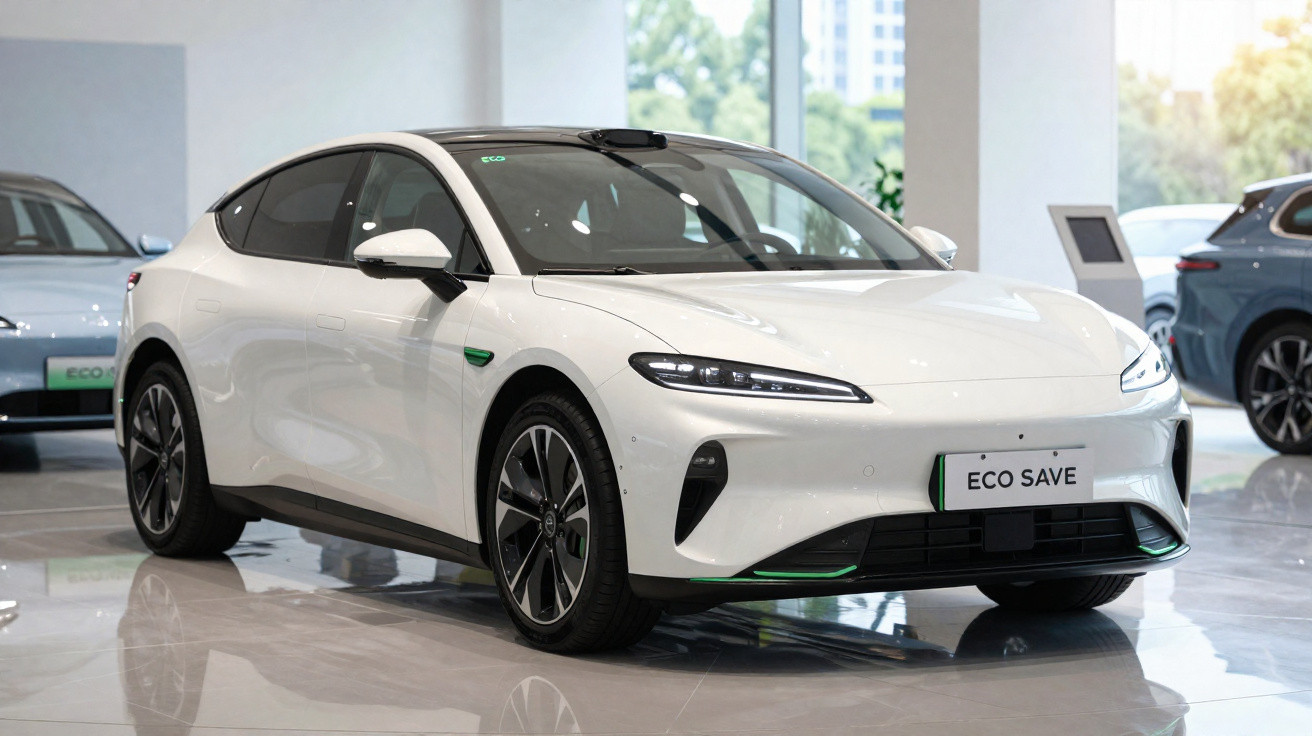
The queue at the petrol station was longer than you’d normally expect, and you could read it on people’s faces.
It was that familiar blend of boredom and low-level panic when the price on the sign has crept up again without anyone quite noticing. A man in a grey hatchback drummed his fingers on the wheel, watched the digits climb on the pump, then gave a half-laugh that wasn’t really a laugh.
He pulled out, slipped back into the flow of traffic, and did something most drivers never even consider. His right thumb pressed a button on the steering wheel. A small symbol changed on the dashboard. The engine note softened slightly, the car settled down, and the fuel consumption figure dropped.
Same car, same driver, same route. Less fuel.
There’s a setting in many cars that quietly decides whether you’re burning money or holding on to it. And a lot of people leave it in the most wasteful option without ever realising.
The invisible switch that changes how your engine behaves
If your car is under ten years old, there’s a strong chance it has a small bit of technology with an outsized effect: the drive mode selector. It might be a button marked “ECO”, “Comfort”, “Sport”, or a little dial by the gear lever. In some cars it’s tucked away in a touchscreen menu that nobody opens after the first week.
What that setting actually changes is how eager the car is to respond: how quickly it accelerates, when it shifts gear, and even how hard the air conditioning works. Put simply, it influences how thirsty the car feels. Most vehicles leave the factory set to a middle mode-neither the most frugal nor the most relaxed-just… average.
And that “average” costs you quietly, day after day.
Time and again, manufacturer data and independent tests land on roughly the same headline: moving from “Normal” or “Sport” into “Eco” mode can cut fuel consumption by around 5 to 12 per cent. In some hybrids the difference can be bigger still. It doesn’t look dramatic on paper, but across a year of commuting it can be the gap between shrugging at fuel prices and wincing every time you pass a forecourt.
Speak to fleet managers and taxi drivers and you’ll hear a familiar refrain. People who spend their lives behind the wheel can become almost evangelical about that ECO button. A minicab driver in Birmingham told me he trained himself to press it before his first fare each morning. “It’s like a tax rebate,” he laughed. Less fuss pulling away, fewer harsh gear changes, and noticeably fewer trips to the pump.
They’re not suddenly driving like saints. They’re simply letting the car help them stop wasting energy at every set of lights.
Technically, what’s happening is straightforward but smart. ECO or “Efficiency” modes dull the throttle response so the engine doesn’t deliver a surge the moment you brush the pedal. Automatics tend to upshift earlier, keeping the revs down where engines sip rather than gulp. The air conditioning backs off a touch-something your bank balance tends to notice more than your skin. Some systems even rein in all-wheel drive or active suspension to reduce drag and mechanical losses.
The engine doesn’t become magically more efficient. It just stops indulging every impulse to rush forward. Less instant drama, more quiet savings. And because it’s software-led, you feel it immediately the second you change the setting.
How to use ECO mode so it actually saves you money
The key isn’t merely knowing the setting exists-it’s getting used to using it at the right times. Begin with the journeys you do most often: the morning commute, the school run, the supermarket trip. Any route where you already know the usual traffic is ideal for ECO mode.
Think city driving, suburban roads, slower ring roads. Press the ECO button before you set off, or select “Eco” / “Efficiency” in the drive mode menu. The throttle will feel a bit lazier, as if the car takes a breath before it moves. That’s deliberate. It encourages smoother pull-aways and fewer pointless bursts of speed.
On a steady A-road or motorway cruise, ECO mode can be a quiet workhorse as well. Used with cruise control, it helps keep revs down and keeps your right foot from getting carried away. You’re not crawling-you’re simply not lunging at every gap.
This is where the real adjustment happens. In theory, ECO mode is an easy win. In practice, you might try it once, decide the car feels “sluggish”, and switch straight back. That reaction is completely normal. We’re used to cars jumping when we ask, so anything calmer can feel wrong at first.
At a busy roundabout or when joining a fast slip road, ECO can feel like it’s holding you up. In those moments it can make sense to flick out of it, take the gap, then switch back into ECO once you’re settled again. This isn’t a moral test-it’s a tool you use when it suits you.
Let’s be honest: hardly anyone does that every day. Most drivers pick one mode and then never touch it again. If that sounds like you, go for a middle ground. Leave ECO on for town driving and slower roads. Switch to Normal only when you genuinely need the sharper response. Over a month, that small habit can quietly add up to a meaningful amount of fuel money saved.
The way carmakers describe this setting often ignores the emotional reality of driving. “Sport” is sold with mountain roads and golden-hour corners. ECO mode gets a green leaf icon and a promise of savings that can feel abstract when you’re running late. But talk to people who’ve stayed with it for a few weeks and the tone shifts.
“At first it felt like the car was sulking,” a reader from Leeds told me, “then I realised I arrived less stressed. And my fuel gauge moved slower. I’m not going back.”
There’s a subtle relief in not sprinting from one traffic light to the next. On a long day, it can feel less like driving and more like being carried along. And if your monthly fuel spend is already making you anxious, that little icon on the dash becomes strangely reassuring.
- Try ECO mode for a full week on your usual routes and track your fuel use.
- Turn it off only for short, specific moments when you need a sharper response.
- Combine ECO with gentler acceleration and lifting off the throttle earlier.
- Expect it to feel odd for the first few trips-then it fades.
- Treat it less as “losing power” and more as switching off waste.
Why this tiny change matters more than you think
In a spreadsheet, ECO mode is just a percentage-a tidy line on a chart. In day-to-day life it’s something different: the moment near month-end when you realise you still have half a tank, rather than limping towards payday. It’s the quiet satisfaction of knowing you’re not quite turning as much of your wages into heat.
On a packed urban dual carriageway, everyone is technically in a rush, but most of that urgency ends up as brake lights and irritation. ECO mode nudges you into another pace: lifting off a touch earlier, leaving slightly smoother gaps, and making stop-start traffic feel less aggressive. Often your passengers notice the calm before you do.
Zooming out, that single choice ripples further than you’d think. If millions of drivers each shave a few per cent off their fuel burn, that means fewer tankers, fewer emissions, and a little less strain on the system. Up close, though, it’s about control. Fuel prices don’t ask permission. Roadworks don’t either. The ECO button does. It offers a small, practical way to push back.
It isn’t glamorous, and it won’t make your car sound like a racing game. But it’s one of the few things you can change today-in the next traffic jam, in the next queue at the pump. One press of your thumb, a different symbol on the dash, and over time a slightly different story about what driving actually costs.
| Key point | Detail | Why it matters to you |
|---|---|---|
| Switch on ECO mode | Softer acceleration, lower engine revs, gentler air conditioning | Cut fuel use immediately without changing your car |
| Use it at the right times | Best for urban trips, traffic jams, and familiar daily routes | Save fuel day-to-day without compromising safety in tricky situations |
| Adopt a smoother rhythm | Progressive acceleration, anticipation, fewer harsh braking moments | Reduce stress at the wheel while spending less at the pump |


Comments
No comments yet. Be the first to comment!
Leave a Comment