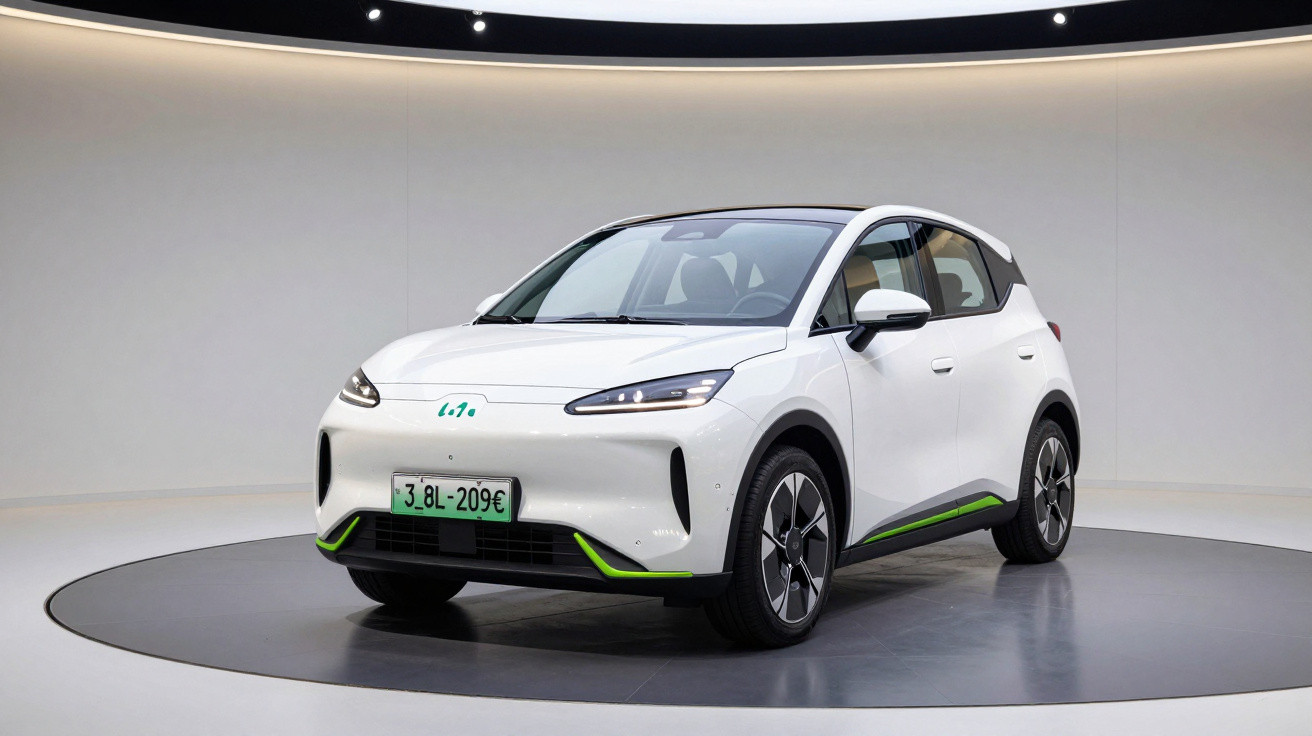
Rather than pursuing ever-larger battery packs and daunting price labels, Toyota is placing its faith in a compact hybrid hatchback that uses little fuel, copes easily with high mileage and can cost less per month than many urban EVs.
Europe pushes pure electric while Toyota backs hybrids
The EU’s trajectory is unmistakable: emissions regulations are becoming progressively stricter, while new combustion-engined cars face an effective ban from 2035. Manufacturers are investing billions in dedicated electric platforms, and many European marques now focus their messaging almost entirely on battery range, charging times and software upgrades.
Toyota, however, continues to argue that the majority of customers want cars that are straightforward, affordable and dependable. With more than 25 years of hybrid experience, the company now tops the French market by sales volume, ahead of home-grown heavyweights Renault and Peugeot, as well as Volkswagen.
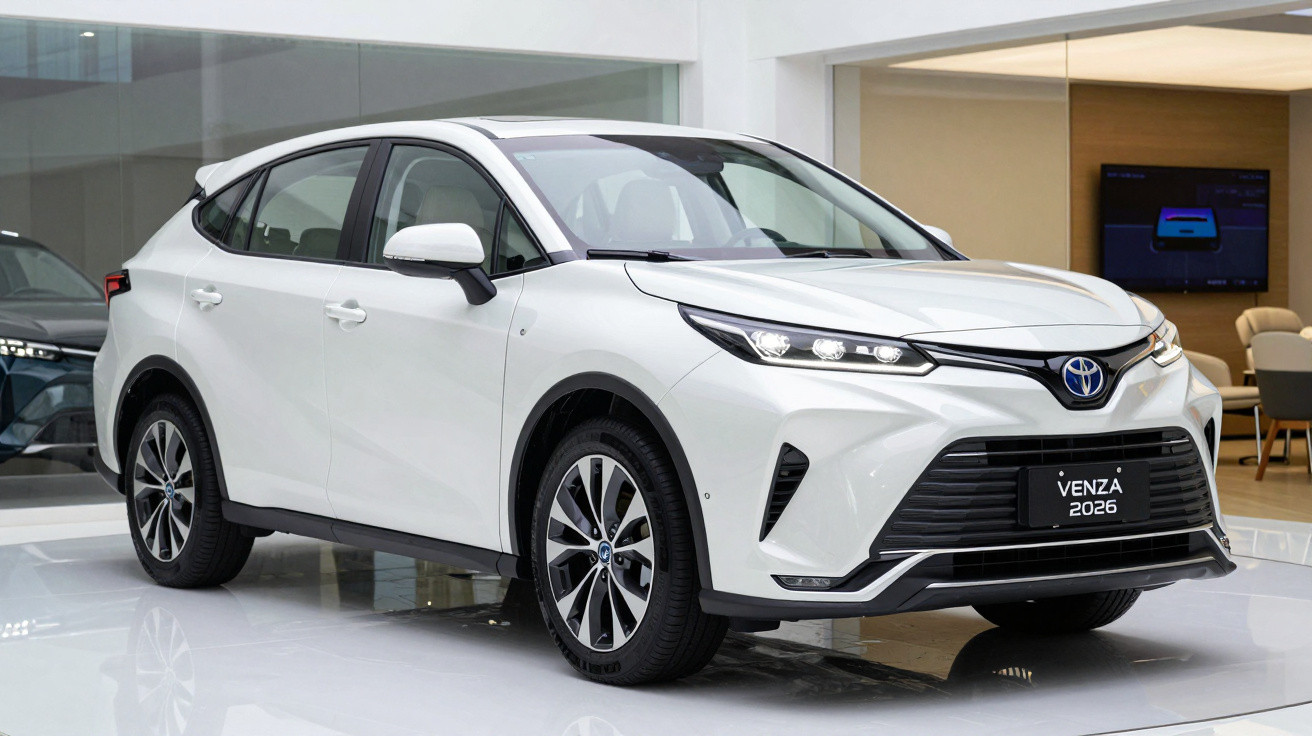
A well-known model sits at the heart of that approach: the Yaris hybrid. Small, automatic-only and intended for everyday conditions, it is presented as a pragmatic response to Europe’s occasionally idealistic electric-car agenda.
The Yaris hybrid uses just 3.8 litres of fuel per 100 km in city driving – roughly 62 mpg – without ever needing to plug in.
In France, Toyota markets the car through lease-style finance from €209 per month. That places it against smaller battery-electric city cars, which frequently cost more while still relying strongly on inconsistent charging infrastructure.
Toyota Yaris hybrid: a compact car for city living
On paper, the Yaris hybrid is a conventional European supermini. It is broadly comparable in size with a Renault Clio, giving it a small footprint suited to narrow roads and limited parking spaces. The cabin prioritises usability, with uncomplicated controls, an easy-to-read digital display and smartphone connectivity fitted as standard on most versions.
There are two self-charging hybrid powertrains:
- Hybrid 116: 116 hp petrol-electric, e-CVT automatic gearbox
- Hybrid 130: 130 hp version for higher trims, including sportier GR Sport
Each pairs an Atkinson-cycle petrol engine with an electric motor and a compact battery that replenishes itself while the car is being driven. There is no charging socket, no cable to store and no requirement for a home wallbox.
The car behaves like a normal petrol automatic, but can glide silently on electric power for long stretches in town.
The hybrid system is particularly active in slow-moving, stop-start conditions. Energy recovered during braking and deceleration is stored, then used either to support acceleration or to propel the car at low speeds.
3.8 L/100 km: economical consumption outside the laboratory
Official urban-cycle consumption for the Yaris hybrid starts at 3.8 litres per 100 km. In contrast with many laboratory claims, owners often report figures close to this level, particularly in urban and suburban driving, where the system can make the most of electric operation.
This restrained fuel use also provides considerable range. On a full tank, the Yaris can travel more than 800 km, taking away much of the concern around range. Long motorway trips do not require planned charging stops: a brief stop at an ordinary filling station is enough.
| Car | Powertrain | Official urban consumption | Typical range |
|---|---|---|---|
| Toyota Yaris hybrid | Self-charging hybrid | 3.8 L/100 km | 800+ km |
| Typical small petrol hatch | 1.0–1.2 turbo petrol | 5.5–6.5 L/100 km | 600–700 km |
| Small city EV | Battery-electric | N/A (electric) | 250–350 km real-world |
For many families living beyond densely populated city centres, this mix of low operating costs and freedom from charging concerns can appear less risky than moving directly to a full EV.
“Indestructible” engine and extended warranty
Toyota also places considerable emphasis on its durability credentials, not just fuel economy. The Yaris hybrid has a comparatively uncomplicated petrol engine, without a turbocharger, a complex particulate filter or a urea (AdBlue) system. Its automatic transmission is an e-CVT with a planetary gear arrangement, containing fewer parts prone to wear than a dual-clutch transmission.
These parts have featured in millions of Toyota hybrids around the world, ranging from Prius taxis to family SUVs. That history has given the cars a strong standing in the used market, where hybrids with high mileages continue to achieve robust prices.
Toyota extends the Yaris hybrid warranty to as much as 10 years or 185,000 km through its “Relax” programme.
In France and several other European markets, every authorised service renews Relax cover for a further year, until that maximum is reached. This assurance matters to drivers concerned about hybrid repair bills, especially as many competing brands end their cover after five or seven years.
Price and monthly cost: the source of the €209 figure
In France, the Yaris hybrid line-up officially begins at €23,450 for the entry-level Dynamic model. Design versions in the middle of the range rise above €26,600, while the flagship Collection specification, commonly matched with the 130 hp powertrain, approaches €30,000 when options are added.
To make the headline price easier to absorb, Toyota advertises a “location avec option d’achat” (a lease with an option to buy) from €209 monthly over 48 months, subject to a deposit and vehicle-return conditions. For numerous customers, the important question is not the list price but whether the monthly outlay remains manageable alongside rent, energy costs and groceries.
Electric alternatives seldom seem inexpensive by comparison. Even after subsidies, a small EV offering similar equipment and space to the Yaris will generally cost more than €25,000, often bringing higher monthly payments unless a sizeable deposit is paid.
Competitors that find the package hard to equal
The Yaris hybrid is not the only contender in this segment. Renault’s Clio E-Tech full hybrid likewise uses a self-charging system and delivers good fuel economy. Its French starting price is slightly lower at around €22,531, although it does not offer a comparable long-term warranty arrangement. Chinese-owned MG sells the MG3 Hybrid+ from approximately €16,990, an attractive figure, but with less established evidence for its technology and residual values over the longer term.
- Renault Clio E-Tech: competitive pricing, French badge, shorter warranty
- MG3 Hybrid+: bargain entry point, newer brand image and tech in Europe
- Toyota Yaris hybrid: higher starting price, strong resale and durability focus
Toyota’s advantage is its maturity. Its hybrid technology has developed across several generations rather than being hurried into production to satisfy a regulatory deadline. For more cautious customers, this can matter as much as an attention-grabbing touchscreen or a large battery figure in a specification sheet.
Why hybrids remain relevant in a charging-focused era
EU policymakers frequently discuss the number of public chargers per inhabitant, yet the expansion of infrastructure is still uneven. Outlying suburbs and rural areas remain well behind major cities. For people living in flats without assured parking, operating an EV can be inconvenient, however good the vehicle itself may be.
Hybrids such as the Yaris occupy this middle ground. They produce fewer CO₂ emissions and pollutants than typical petrol-only cars, qualify for a Crit’Air 1 sticker that allows them into French low-emission zones, and do not demand charging plans. For motorists travelling 10,000–15,000 km annually, mainly on local journeys, this compromise can reduce fuel use and emissions without forcing an immediate change in everyday habits.
What 3.8 L/100 km and €209 per month look like in practice
Consider a typical commuter who drives 12,000 km each year. At 3.8 L/100 km, the vehicle consumes around 456 litres of fuel annually. At €1.90 per litre of petrol, this amounts to approximately €866 per year in fuel spending. A similarly sized petrol model returning 6.5 L/100 km would use roughly 780 litres, costing nearly €1,500 annually. Fuel savings from the hybrid alone exceed €600 each year.
Add a €209 monthly payment – about €2,500 annually – and the overall cost can start to resemble, or in some cases undercut, that of a small EV with a higher purchase price but cheaper electricity. Electricity prices by region, overnight tariffs and access to charging will move the balance in one direction or the other for individual households.
Key buyer terms and trade-offs
Two expressions are particularly relevant: “self-charging hybrid” and “total cost of ownership”. A self-charging hybrid combines an internal-combustion engine with an electric motor, using a battery charged solely by the engine and regenerative braking. It has no external charging port. Owners benefit from improved fuel economy, but cannot cover long distances using electric power alone.
Total cost of ownership includes every expense: finance instalments, insurance, fuel or electricity, maintenance, tyres, taxes and resale value. By this measure, a Toyota hybrid with an extended warranty and strong used values can be unexpectedly competitive with EVs that are cheaper to power but cost more to buy and have uncertain future resale values in rapidly shifting markets.
For many European motorists, the next decade is unlikely to bring an abrupt change from petrol to fully electric driving. Instead, it may involve a gradual transition through hybrids and plug-in models. Cars such as the Yaris hybrid demonstrate why Japan’s more cautious, efficiency-led strategy continues to appeal on a continent officially placing its bets on batteries.





Comments
No comments yet. Be the first to comment!
Leave a Comment