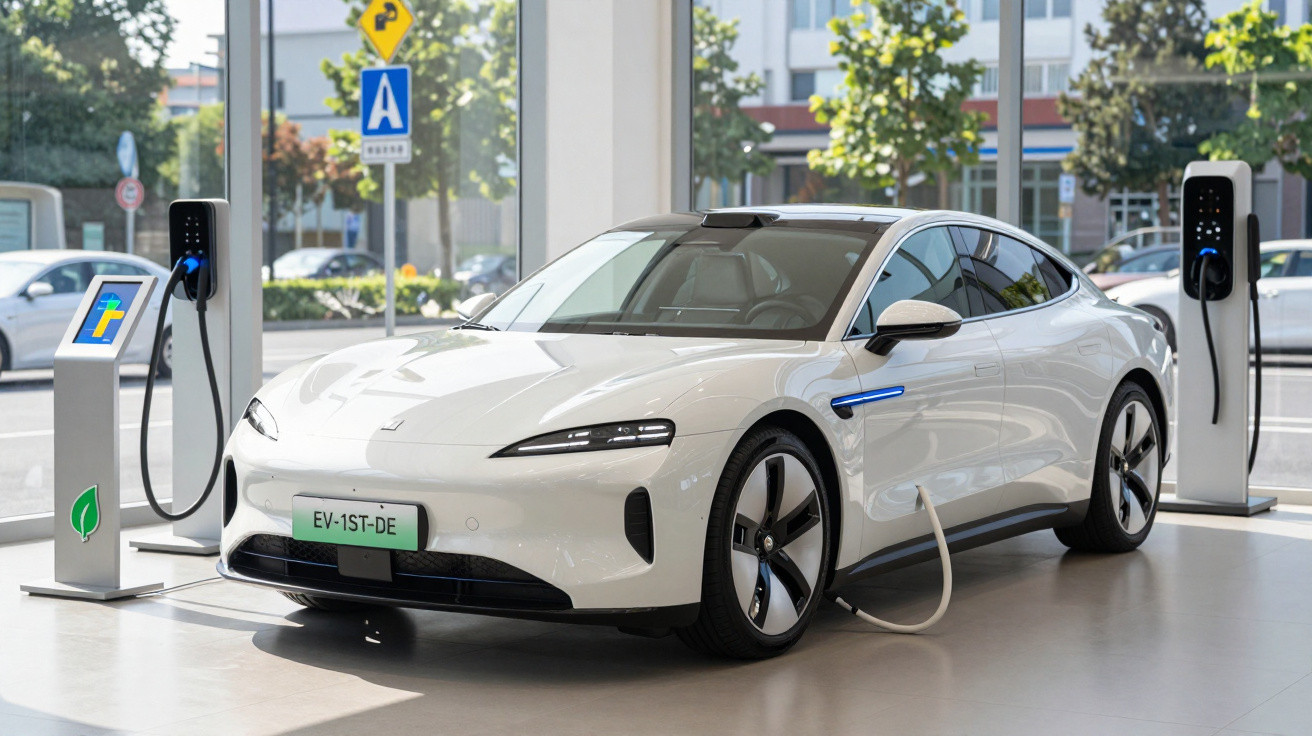
Electric cars take the lead in Germany
Electric cars are continuing to gain ground in Germany, taking the top spot in the country’s monthly sales rankings for the first time. A total of 84,057 electric cars were registered, up 78.2% on the same month in 2025, giving them a 28.4% market share, according to KBA data.
This performance allowed electric cars to move ahead of hybrids, including mild hybrids, which had previously led the market. In June, hybrid models recorded 83,315 registrations, 14% more than in the equivalent period last year, accounting for a 28.1% market share. In the same month of 2025, around 47,000 electric cars (+8.6%) and 73,000 hybrids (+1%) were registered.
Other powertrains in June
Petrol was June’s third most popular powertrain, with 60,796 registrations and a 20.5% market share, despite a 16.8% decline. Diesel followed with 33,862 units (-5.1%), while plug-in hybrids registered 32,212 vehicles (+25.8%), representing shares of 11.4% and 10.9% respectively.
Although plug-in hybrids remain at the bottom of the German market - unlike in Europe, where they have already overtaken diesel - they were among the powertrains posting the strongest growth.
Overall, 296,378 new passenger cars were registered in June, an increase of 15.7% compared with the same month in 2025.
And in the first half of the year?
Across the first six months of the year, hybrids regained the lead, with more than 427,000 registrations (+6.9%). Electric cars ranked second with roughly 368,000 units (+24.8%), followed by petrol cars, which reached approximately 325,000 registrations (+21.9%). While electric cars were not the best-selling powertrain, they were the fastest-growing one.
Diesel models recorded 193,000 units (+13%), while plug-in hybrids reached 163,700 registrations, 11% more than in the first half of 2025. In total, more than 1.4 million cars were sold in Germany during the first six months of the year.
The return of incentives
New incentives for buying electric cars, in force since the start of the year and backed by a €3 billion budget, help to explain at least part of this growth. It is worth remembering that electric-car sales fell sharply when Germany ended its previous incentives.
The current scheme is aimed at households with an annual taxable income of up to €80,000. It provides support ranging from €1,500 to €6,000 per vehicle, depending on the powertrain type, household composition and income level. According to the German government, the available funding should be sufficient to support up to 800,000 vehicles throughout the programme. The incentives cover different electrified solutions, in line with the applicable support arrangement.
This trend has not come as a surprise. Demand for electric cars has been strengthening since the beginning of the year. Between January and March, the German market recorded a 41.3% rise in electric-car registrations, reaching 159,630 units, according to ACEA. Learn more:


Comments
No comments yet. Be the first to comment!
Leave a Comment