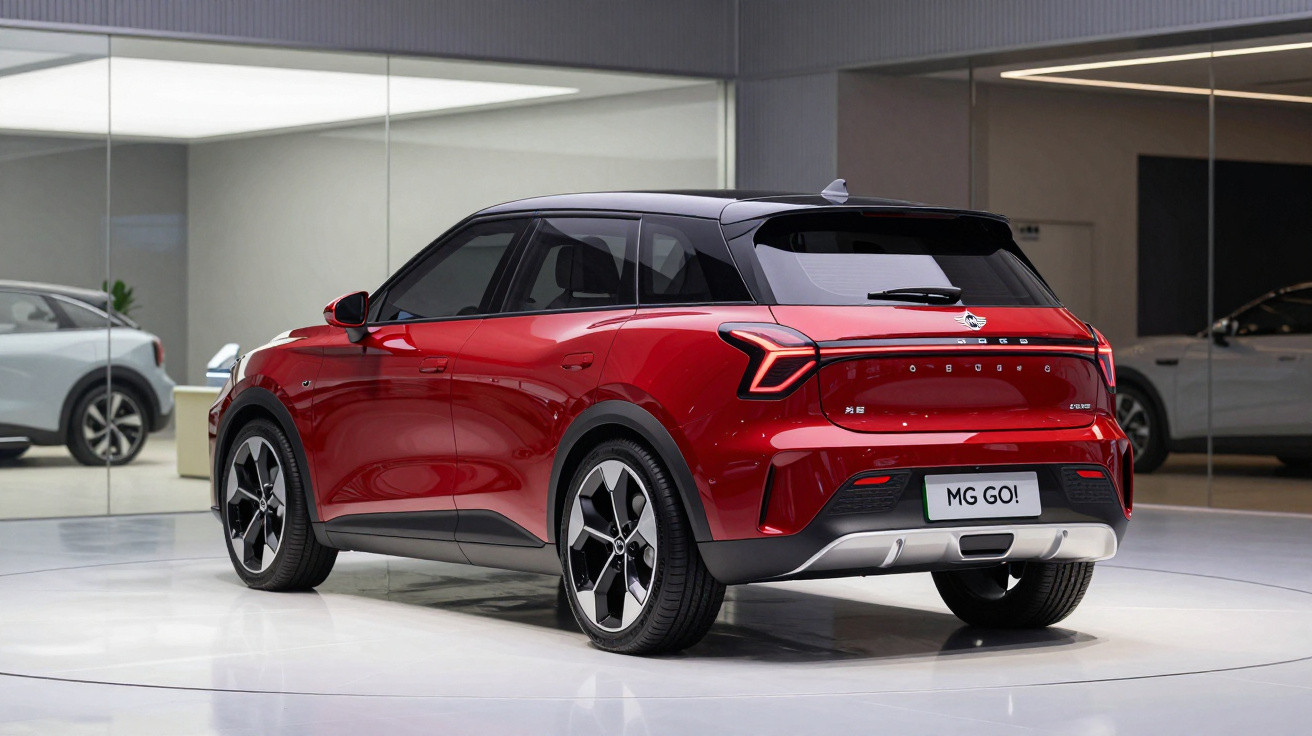
The first images of the MG Go! were enough to flood social media with comparisons to MINI. Its compact proportions, pronounced wheel arches, uncomplicated shapes and retro styling were quickly taken as evidence of a lack of originality. Before reaching that verdict, though, it is worth taking a step back.
We are living through a period in which car design is fixated on the past. Renault has revived the 5 and 4, FIAT continues to rely on the 500, Citroën is set to bring back the 2CV, and almost every manufacturer is digging through its own archives for models that helped define its identity. It was only a matter of time before MG did likewise.
The complication is that MG has drawn inspiration from the same chapter of British motoring history as MINI. That alone makes controversy almost inevitable.
Two brands with a shared origin
MG and MINI now sit within entirely separate groups: the former belongs to SAIC Motor, while the latter is part of the BMW Group. That was not always the case. Long before this divide, both developed under the same roof, first at the British Motor Corporation (BMC) and later within British Leyland.
It was in this setting that Sir Alec Issigonis created the original Mini in 1959. It was a revolutionary car not only because of its engineering, but also because of the resulting simplicity of its design.
Tiny wheels positioned at the far corners of the body, a flat roof and uncluttered surfaces gave the Mini an aesthetic honesty driven mainly by function - the original Mini’s grille was its only deliberately styled feature. The Mini went on to become one of the most recognisable symbols of a particularly productive era for the British motor industry.
Cars such as the MG Midget and MGB emerged from the same industrial and cultural environment. Although they were aimed at completely different buyers, they shared the same visual principles of simplicity and honesty. What is now described as “Mini-like” styling was, in reality, a design language used by several BMC brands and, later, by British Leyland.
Why the MG Go! and MINI resemblance was inevitable
Since BMW revived the marque, MINI has very successfully built a strong identity around its past. It is therefore understandable that any car reviving these visual cues is immediately linked to it.
That does not make this entire heritage the exclusive property of MINI. By the same reasoning, MG cannot claim it as something belonging solely to itself either.
The reality is more straightforward: both marques spent decades growing within the same industry, under the same corporate groups and surrounded by similar influences. Although their paths have since diverged sharply, they remain connected to a shared period in British automotive history.
This legacy belongs to both because it came from a common history. When two brands share engineers and designers, mechanical components and technologies for decades, it should not be surprising that they revisit similar references more than sixty years later. It would be more remarkable if that closeness never resurfaced.
The MG Go! is more than a MINI comparison
None of this means every MG Go! design choice is automatically original or excused by history. There are clear similarities to the modern MINI, and it will be fair to debate them once the final model is revealed.
However, dismissing the Go! as a copy overlooks the context from which it emerged. MG is not simply stepping onto someone else’s territory, nor can MINI claim exclusive ownership of a past that is not its alone.

Comments
No comments yet. Be the first to comment!
Leave a Comment