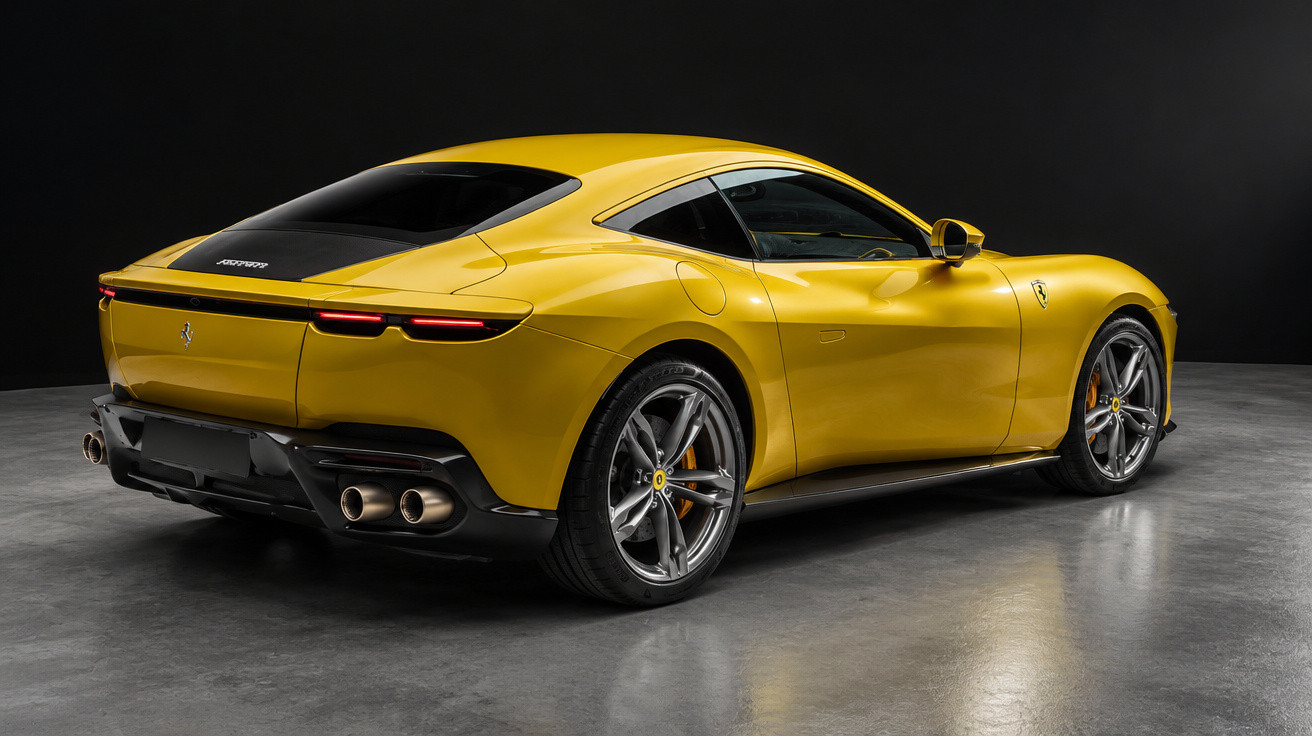
A new Ferrari has arrived with a badge that you can genuinely say out loud.
Following tongue-twisters such as Purosangue and Dodici Cilindri, the new Amalfi is a welcome change. It takes its name from the exclusive holiday spot on Italy’s southern coastline – and it is not the only sensible decision made with this Roma-replacing coupé.
Ferrari Amalfi powertrain and driving modes
It has stepped away from the power race, too. The current Aston Martin Vantage produces more than 650bhp, while the forthcoming Porsche 911 Turbo is expected to exceed 700bhp, yet Ferrari has given the Roma’s 3.9-litre twin-turbo V8 only an extra 20bhp. The Amalfi therefore makes 631bhp, reaching 0-62mph in a restrained 3.3 seconds. By modern standards, that is nearly sensible. Stay on the throttle and it will clear 125mph in exactly nine seconds, before reaching a 200mph maximum. Steady now.
Its mechanical package is evolutionary rather than revolutionary. The Amalfi retains the rear-mounted eight-speed twin-clutch transmission and sends power exclusively to the rear tyres. There is neither a hybrid set-up nor elaborate active AWD. Ferrari says the camshafts are lighter and the exhaust has been revised to make the V8 more eager to rev and sharper in response, while its engineers have also worked on the drive modes to provide a broader range of characters.
This is Ferrari’s entry-level model, after all: an introduction to the kingdom. Wet and Comfort modes are said to be calmer than they were in the Roma, preventing newcomers from being intimidated. At the same time, Sport and Race have become more forceful, allowing ambitious would-be ‘piloti’ to feel still more heroic as sixth-generation Side Slip Control helps keep everything shiny side up.
Amalfi exterior design and aerodynamics
The exterior is supposedly entirely fresh, with only the glass carried over from the Roma. Some of the Amalfi’s changes may, however, divide opinion. The rear is unlikely to cause much argument: it gains more severe-looking taillight surrounds and a tidier rear wing offering three positions, producing up to 110kg of rearward downforce.
The sides do not abandon tradition either. Sculpted haunches and clean flanks create an elegant silhouette, while the old bonnet’s slightly awkward power dome has been smoothed away. The nose, though? That will require a little acclimatisation.
Ferrari design chief Flavio Manzoni does not like cars that have ‘faces’. He would rather you did not interpret headlights as eyes and a grille as a mouth. That is why the F80 and 12Cilindri use their black blindfold to achieve a minimalist ‘visor’ appearance.
The Amalfi adopts ideas from the Purosangue’s nose to conceal its parking sensors more elegantly than the Roma managed. Cuts through the headlights direct air where Ferrari’s wind-tunnel boffins decided it should go. The end result, though, is a car whose expression is difficult to decipher. It is like staring into The Stig’s cold, lifeless eyes. Assuming he even has eyes.
Ferrari Amalfi cabin brings back buttons
So the styling is cleaner, it is claimed to be un-intimidating to drive – we will discover whether that is true next year – and its name needs no linguistics degree. Yet the Amalfi’s most rational design decision lies within.
Ferrari has, at last, listened to owners and to us, and restored proper buttons. The cluttered steering wheel no longer relies on awful touch-sensitive controls, although those controls have been retained for the mirror adjustment. Oh well. Perhaps that will be fixed next time.
Owners frustrated by the touch-sensitive Engine Start in current models can now enjoy a proper button as in the old days, although the remainder of the Amalfi cabin is still completely digitised. There are no physical climate controls, while a new 10.25in landscape touchscreen and the optional passenger show-off display are both prominently illuminated. Apple CarPlay now sits centrally, meaning there is no need to pick between viewing a map or a rev-counter.
Ferrari has also comprehensively revised the layout of its 2+2-seater cabin. The Roma’s steep, waterfall-style dashboard has been replaced by a wider arrangement that appears roomier. Avoid specifying excessive carbon fibre inside, though, or you will forgo the anodised aluminium ‘bridge’ console.
For anyone who appreciates beautifully machined metal, crouch beside the precisely milled wheels. Then drool. Notice the sections removed between the outer ends of every twisted spoke to reduce weight. Each wheel is an engineering marvel. Keep that in mind before ordering them in black – and before kerbing them.
The first Amalfi customers will receive their cars in early 2026, each having paid more than €260,000 (£222k) for the privilege.
That leaves ample time to consider the important matters. Is the Amalfi attractive enough, or was the Roma preferable? Should other manufacturers follow Ferrari’s example of deciding “that’s enough horses now” when it comes to power?
And have we, finally, moved beyond the nadir of irritating interiors? Welcome back, buttons. We have missed you…
11 minutes 39 seconds


Comments
No comments yet. Be the first to comment!
Leave a Comment