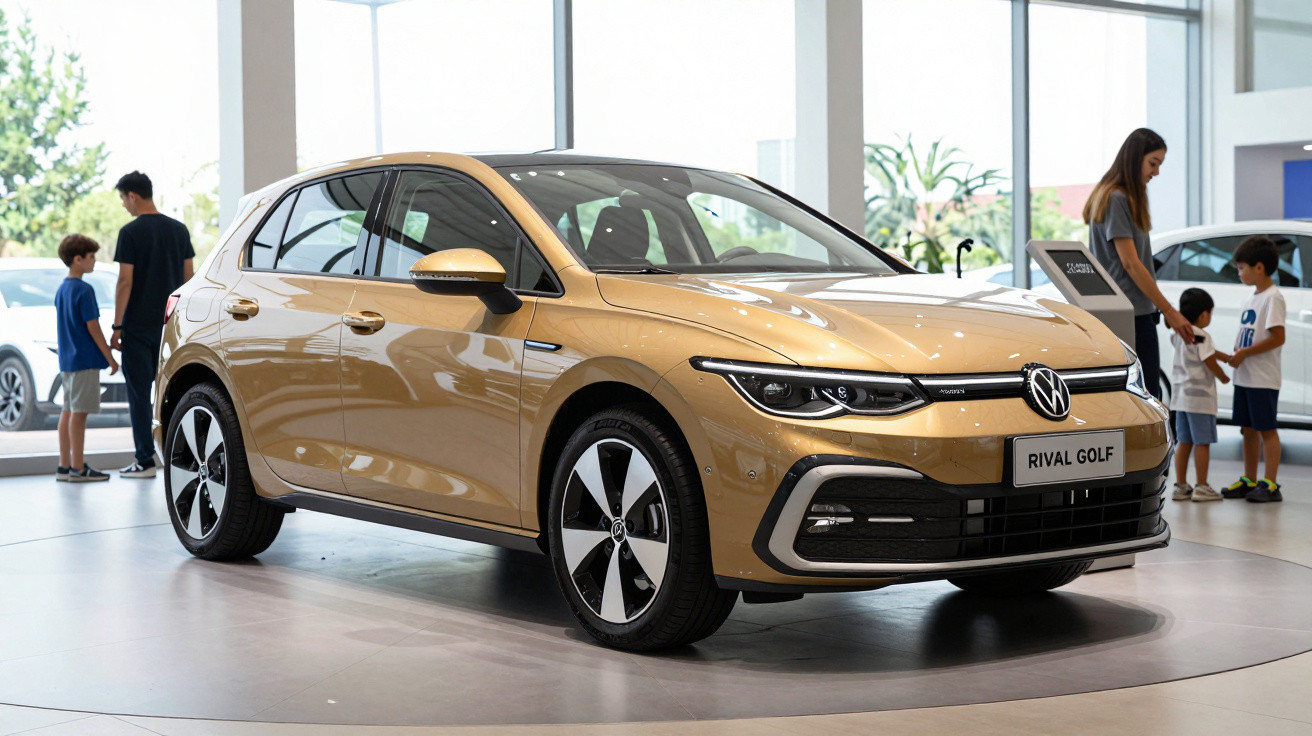
Dacia, already performing strongly in European sales rankings, is developing a new compact family vehicle that takes inspiration from a Moroccan-built bestseller and targets the Volkswagen Golf directly. The plan is straightforward: apply the tough, value-led approach that turned the Sandero into a major success to the compact class, while setting a price traditional manufacturers will struggle to match.
Dacia targets Europe’s compact-car elite
Known internally as C-Neo, the project has a clear purpose: enter the competitive C-segment - occupied by the Volkswagen Golf, Peugeot 308 and Toyota Corolla - with a different kind of proposition. Rather than producing a technology-packed hatchback, Dacia is planning an affordable, practical family-focused crossover.
The approach draws heavily on the formula behind European-market cars built in Morocco, including the Sandero and Duster. Manufacturing in competitively priced factories, using a modular Renault Group platform and restricting the options list all help to reduce costs while maintaining high production volumes.
Dacia aims to sell a true C-segment family car at a price closer to a small hatchback, without sacrificing space or usability.
Beneath its bodywork, the C-Neo is set to use the CMF-B platform, which also underpins the Jogger, Sandero and latest Duster. This allows Dacia to share components, engineering work and production methods, reducing development spending and bringing the car to market sooner. The architecture is also flexible enough for petrol, hybrid and LPG powertrains.
A crossover positioned as a Volkswagen Golf alternative
Rather than replicating the conventional Golf hatchback format, Dacia appears to be creating something between a raised estate and a compact SUV. Early prototypes indicate a length of roughly 4.5 metres, with an extended rear section and more ground clearance than a conventional compact model.
Its profile brings to mind vehicles such as the Peugeot 408 and Citroën C5 X, although its objective is more modest: delivering room, durability and a mildly adventurous appearance at a substantially lower price. The roof seems to have a gentle coupé-style slope, while the elongated rear points to a sizeable boot.
The car mixes the stance of a small SUV, the loading capacity of an estate and the footprint of a compact family car.
At the front, the C-Neo is expected to feature Dacia’s newest design language, including a wider grille, a prominent Y-shaped lighting signature and substantial protective cladding. The intention is to project simplicity and resilience, rather than premium-style sophistication.
Inside: practicality over flashiness
The interior is expected to follow Dacia’s familiar priorities: durable materials, uncomplicated controls and sufficient screen technology to meet modern demands. A central touchscreen, smartphone integration and physical buttons for key functions are all anticipated.
- Straightforward, wipe-clean plastics instead of soft-touch trim throughout
- A big boot with usable proportions and a low loading lip
- Ample storage for everyday family life
- A second row intended to accommodate adults comfortably, rather than children alone
This cabin approach reflects the successful Sandero Stepway formula, another Moroccan-built vehicle that sits among Europe’s best-selling models.
Engines designed for value rather than outright performance
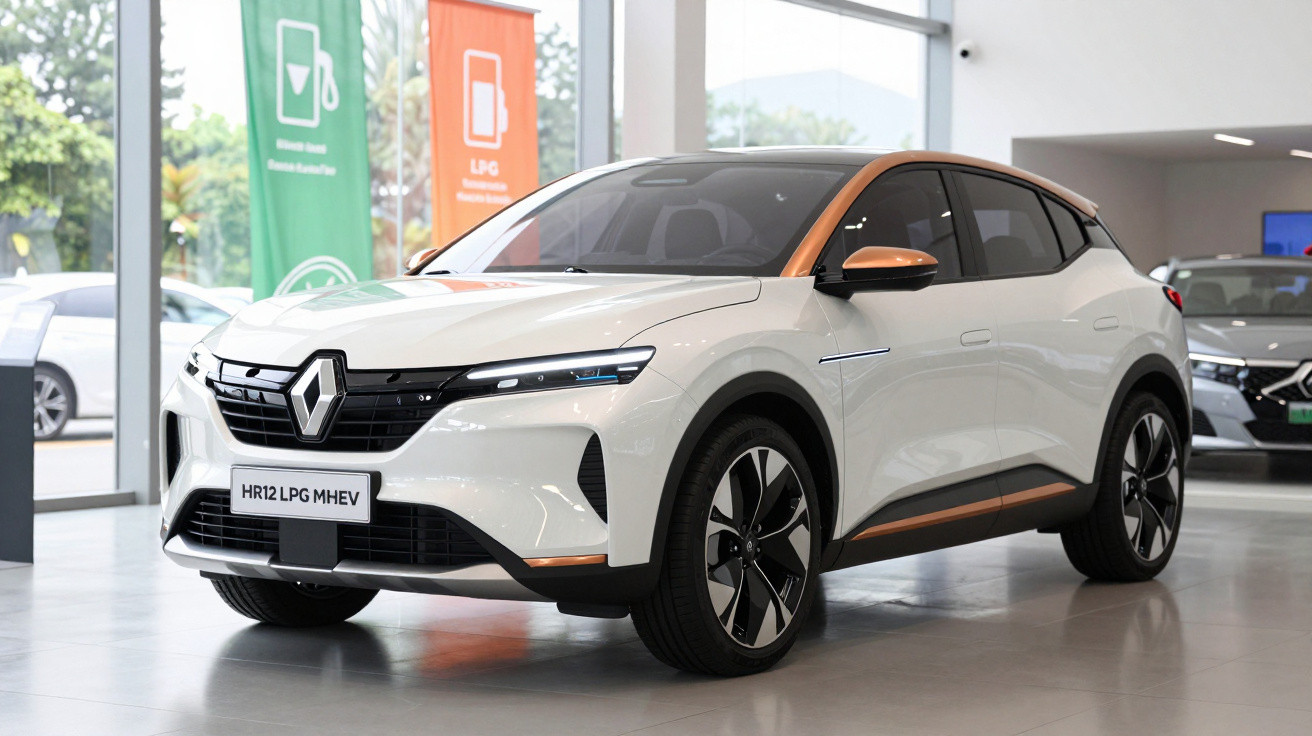
Mechanically, Dacia is avoiding an immediate move towards costly full-electric powertrains for this model. The C-Neo is instead expected to use a combination of small-capacity petrol engines, mild-hybrid technology and an LPG alternative called Eco-G within the range.
The anticipated range includes:
- Turbocharged three-cylinder petrol engines with 48V or 12V mild-hybrid assistance
- A full hybrid (HEV) system already used in the Jogger and Duster
- An Eco-G LPG model, which is highly popular among European Sandero customers
LPG has an important strategic role for Dacia. In many markets it costs less to fill a tank with LPG than petrol, offers a strong driving range and still allows cars to qualify for favourable emissions classifications in low-emission zones. For households closely managing monthly costs, this matters more than headline power outputs.
Rather than chasing performance headlines, Dacia is chasing low running costs and straightforward technology that workshops already understand.
Why is full electric not planned yet?
Dacia already offers the small Spring EV, built in China and aimed at urban use. With a larger family vehicle such as the C-Neo, however, the brand appears unwilling to enter the full-electric market until battery costs and charging infrastructure support a viable business case at Dacia’s usual price points.
Instead, Dacia is concentrating on hybrids that can reduce everyday fuel consumption substantially without the expense and mass of large battery packs. That compromise may suit many motorists outside major cities: it removes charging concerns while lowering fuel costs and emissions compared with a purely combustion-powered car.
A Volkswagen Golf competitor aimed at under €25,000
The price could prove to be the most disruptive aspect. Early signs suggest Dacia intends to position the entry-level C-Neo at around €25,000 in Europe. This is normally the price territory of small hatchbacks and entry-level crossovers, rather than spacious compact family models available with hybrid technology.
| Model | Segment | Typical starting price (Europe) |
|---|---|---|
| Dacia C-Neo (target) | Compact (C) | ≈ €25,000 |
| Volkswagen Golf | Compact (C) | Often above €30,000 |
| Peugeot 308 | Compact (C) | Often above €30,000 |
| Toyota Corolla Hybrid | Compact (C) | Frequently mid-€30,000s |
By taking advantage of lower labour costs at factories including those in Morocco, pared-back equipment specifications and components shared with existing vehicles, Dacia aims to narrow this price difference. The proposition is a car with the footprint and boot capacity of a traditional family model for a price more commonly associated with a smaller city car.
If Dacia holds the line on pricing, C-Neo could feel like getting a family estate for the cost of a city hatchback.
Moroccan production as an understated competitive advantage
Morocco has steadily developed into a manufacturing centre for Renault and Dacia models supplied throughout Europe. Plants in Tangier and Casablanca build cars including the Sandero and Logan, both of which regularly feature near the top of European sales charts. Lower manufacturing costs, better logistics and an experienced workforce give Dacia a built-in advantage over competitors producing mainly in Western Europe.
This manufacturing strategy also shapes the C-Neo programme. Relying on an established platform and existing supplier networks should mean fewer unforeseen issues and a better chance of achieving the ambitious price objective. For customers, a vehicle “built in Morocco” becomes a marker of strong value rather than a compromise.
What this could mean for families deciding between electric and hybrid
For a typical European family covering 19,000–24,000 km annually, the financial calculation is shifting. A fully electric compact car can reduce energy costs, but its greater purchase price and insurance costs may eliminate that advantage for certain motorists. A C-Neo with LPG or full-hybrid technology could occupy a compelling middle position.
Consider a household just outside a large city, without a private drive and with restricted access to dependable public charging. An electric hatchback could seem like a risk. A hybrid C-Neo, by contrast, can use familiar filling stations, meet local emissions requirements and still use significantly less fuel than an older petrol estate.
There are compromises to consider. Residual values for non-electric vehicles could shift as regulations change, while tax policies can move quickly. Nevertheless, the choice of petrol, hybrid and LPG powertrains gives Dacia scope to adjust between markets, allowing buyers to select the energy source that suits their everyday circumstances rather than a political timetable.
If Dacia can bring together Morocco’s cost benefits, an intelligent crossover layout and straightforward, low-frills engineering, the C-Neo could become its own Volkswagen Golf response: not through imitation, but by challenging it where it matters most - the family budget.



Comments
No comments yet. Be the first to comment!
Leave a Comment