Fiats seem to decline as they grow: begin small, increase in size, and they gradually become less appealing. Here is Fiat’s entertaining descent from brilliance to mediocrity. The Panda and 500 are class-leading, world-conquering cars: tiny, characterful machines bursting with charm and spirit.
The Punto is not quite as exceptional, yet it remains a genuine Fiat. It is eager, attractive, rapid and immediately distinctive – a lively Italian alternative to a bland Polo or similarly sized Japanese hatchback.
Fiat Bravo: a capable but compromised hatchback
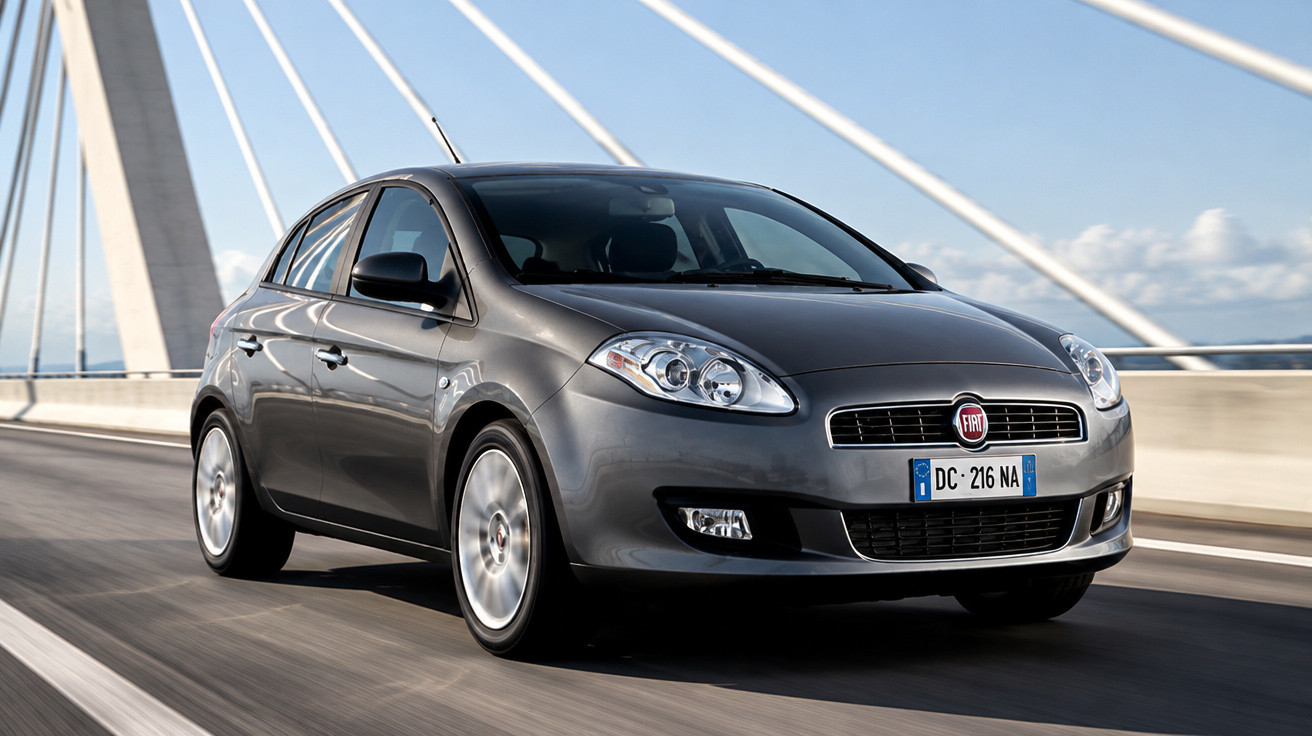
That brings us to the new Fiat Bravo. We rather like it, in truth, but it edges towards mediocrity. It retains some of the Punto’s flair and vitality, while losing ground to rival cars in several other significant areas.
Competition in this sector is brutally intense. At the value-focused end are well-equipped models such as the Kia Cee'd and Hyundai i30; the Ford Focus and Vauxhall Astra occupy the middle ground; while the Volkswagen Golf and Audi A3 sit further upmarket.
The Bravo is competitively priced, positioned somewhere between the Cee'd and the Focus. It cannot quite surpass the Ford, but it trounces anything less expensive thanks to its genuine personality. It is also vastly superior to Fiat’s larger model – whatever that is called. Er, Cryo, Cromey, thing.
Fiat Bravo styling and interior
The new Bravo ought to sell strongly on the strength of its looks alone. Only a particularly unforgiving observer could describe it as unattractive. Place it beside its competitors and its streamlined, Maserati-esque front end is unmistakable, with stretched headlights and a prominent grille. That is more than can be said for the Focus/Golf/Auris/Cee'd crowd, all of which play things far too cautiously.
Its rear end is similarly clean and uncomplicated. Italian style will always attract buyers, and that helps explain why Fiat is making such a healthy profit nowadays.
Climb inside the Bravo and the cabin feels fresh and bright, featuring numerous contrasting finishes and materials. Unfortunately, it is not especially high-quality, although it is at least more interesting than the usual bland black-and-grey German approach.
The dashboard flows organically, combining an upper console angled towards the driver with traditional Italian-style recessed instruments.
Driving the Fiat Bravo T-Jet 150
Tall drivers will not find the driving position comfortable. It leaves your legs cramped, apparently because the pedals sit too far from the floor. Your knees and ankles are forced into an extreme bend, and there is no footrest. It is not good.
Nevertheless, the car rides competently, turns in neatly and performs strongly, particularly in this T-Jet 150 version, which uses a 1.4-litre 150bhp turbocharged engine. Every engine is excellent, but the Bravo feels too rough around the edges and insufficiently finished to compete with the best cars in this class. Perhaps it is simply too large to make a truly great Fiat.



Comments
No comments yet. Be the first to comment!
Leave a Comment