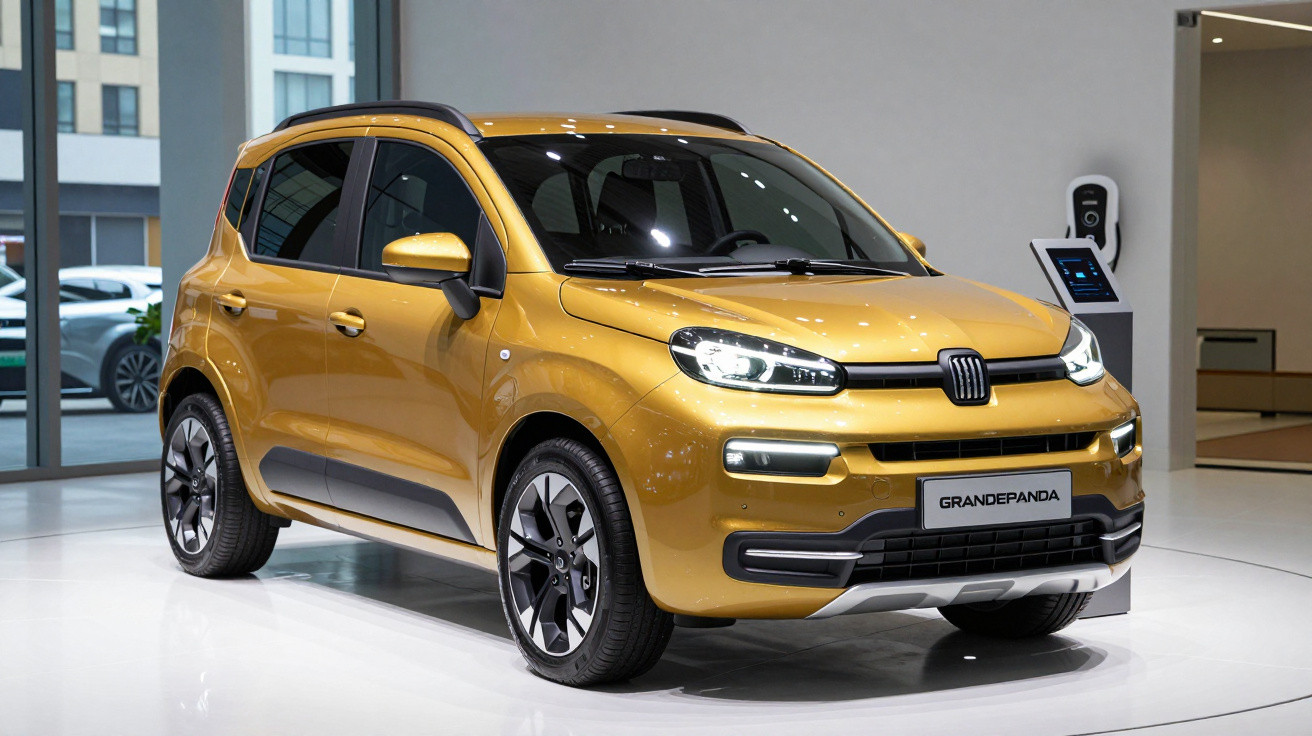
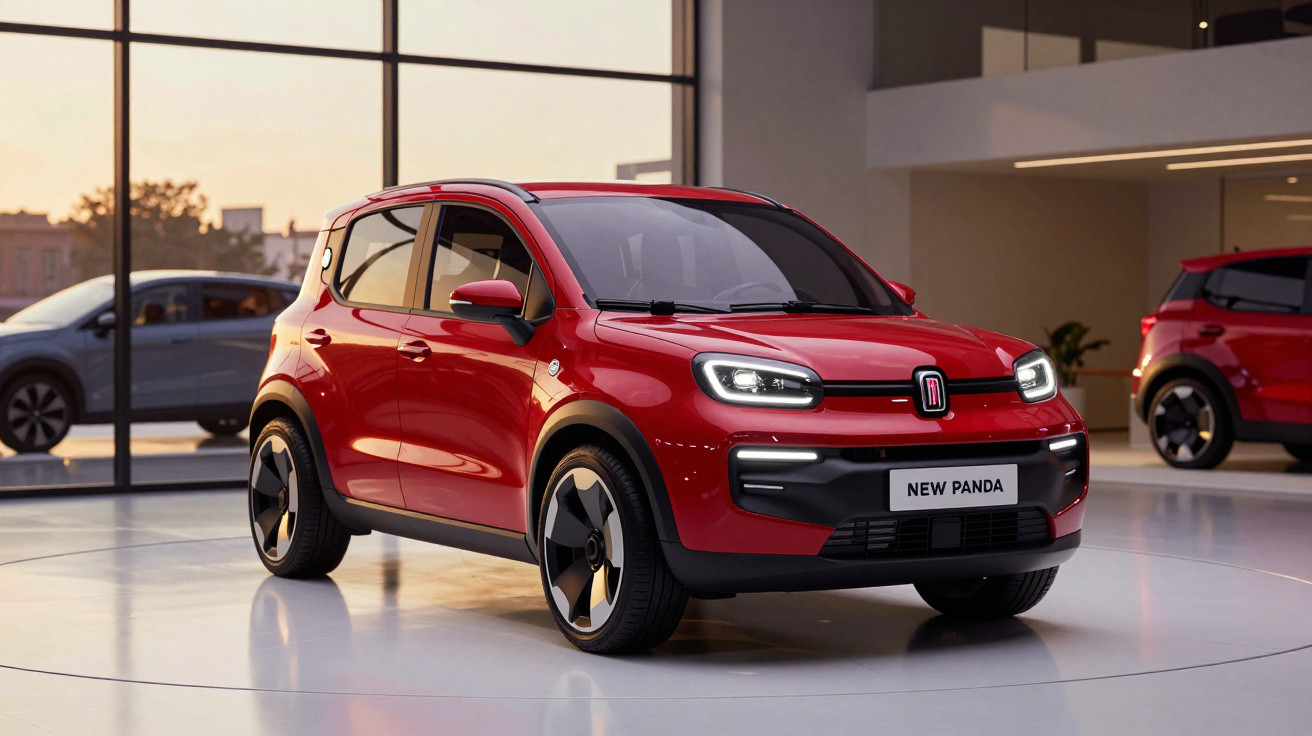
The Grande Panda signals FIAT’s return to the B-segment supermini market - and it is a return on a “Grande” scale.
FIAT had been absent from Europe’s B-segment for seven years, following the Grande Punto’s discontinuation in 2018. That was a difficult gap for a brand whose highest sales volumes are found precisely in the lower market segments.
The Grande Panda fills that space and is FIAT’s first model built on Stellantis’ Smart Car platform, which already underpins the Citroën C3 and Opel Frontera. It shares their powertrains: a 113 hp electric version and a 110 hp petrol hybrid.
We have already driven the electric Grande Panda - see, or revisit, our video review - and it made a very favourable impression. However, the Hybrid costs less, while the lack of a battery beneath the floor brings some positive consequences. We explain why below.
The class-leading boot
Interior room is generous, making the Grande Panda suitable for four adults and one child. Headroom is ample - passengers measuring 1.80 m have four fingers’ clearance to the roof - and legroom is respectable.
Compared with the electric FIAT Grande Panda, the hybrid has 2.2 cm more ground clearance and allows a more natural leg position thanks to its lower floor, made possible by the absence of an underfloor battery. Visibility is broad, while the raised rear seats create an amphitheatre-like view for passengers.
With 412 litres, the boot is the largest in the segment - 50 litres more than in the electric model - and expands to 1366 litres when the rear seats are folded. The body’s boxy shape helps make efficient use of the cabin, although there are steps between the loading and boot-entry surfaces.
Straightforward digital design
The designers have made a deliberate effort to give the cabin a cheerful character. Colourful accents appear on the air vents and in the seat stitching.
The 10-inch digital instrument display and 10.25-inch central screen sit within a surround inspired by the oval shape of the historic Lingotto factory test track. There is even a small car that appears to be lapping the circuit. The climate-control system retains physical controls, and compatible smartphones can be charged and mirrored wirelessly.
The transmission selector is shared with other Stellantis models. Hard plastics feature throughout the cabin, although the build quality feels solid.
Rather than opening gently, the glovebox lid drops down - a common trait in this segment - but there is an additional upper storage compartment. It can be lined with bamboo-fibre fabric, a pleasant reference to the panda bear’s food, thanks to the repositioning of the airbag.
FIAT Grande Panda Hybrid driving dynamics
This mild-hybrid version combines a 29 hp (55 Nm) electric motor, integrated into the six-speed dual-clutch transmission, with a turbocharged 1.2-litre three-cylinder engine producing 101 hp and 205 Nm. Combined output is 110 hp, although the maximum combined torque figure has not been disclosed. It is the same system already used by models including the Citroën C3, Jeep Avenger and Opel Frontera.
On the road, the FIAT Grande Panda Hybrid feels well balanced. Its comfort does not match that of the ë-C3, which uses hydraulic bump stops, but it achieves a sound balance between ride comfort and stability. The semi-rigid rear axle restricts its ability to absorb the sharpest imperfections, yet its responses are gentler than those of the electric version, which has to contend with the battery’s weight.
The steering weight is well suited to urban use, although its three turns from lock to lock demand more arm movement in tight manoeuvres. The brakes stand out for their progressive response from the first part of the pedal travel.
During acceleration, electric-motor assistance offsets the combustion engine’s more restrained low-rev response. It operates on the Miller cycle, prioritising efficiency. The 10 seconds from 0 to 100 km/h improve on the electric model’s time, and the 160 km/h top speed is also higher.
It can travel solely on electric power over short distances, using energy recovered under braking and deceleration. However, the battery has a capacity of just 0.8 kWh - 50 times less than that of the electric Grande Panda.
There are no drive modes, although the gearbox includes an “L” setting that makes it more responsive when downshifting. Without paddles or a manual control, this function can provide an engine-braking effect on more demanding descents.
The e-DCT gearbox deserves praise for its seamless shifts between combustion and electric operation, without torque interruptions during gear changes. Its 48 V battery also supplies the comfort and safety systems.
Over a 156 km route driven at a more spirited pace than usual, consumption averaged 7.2 l/100 km. That is above the official 5.1 l/100 km figure, but remains acceptable for this kind of first drive. We will need to wait for a longer test in Portugal to assess consumption in other conditions.
Hybrid is only the beginning
The FIAT Grande Panda Hybrid is the first version to reach the market. Pricing starts at 18 600 euros for the Pop, rises to 20 100 euros for the Icon tested here, and reaches 22 600 for the best-equipped La Prima.
Towards the end of the year, the petrol-only Grande Panda with a manual gearbox will arrive, offering a more attractive entry point to the range at close to 15 000 euros.
After that, we will also receive the 4×4, recently revealed as a concept car. It will be the most expensive combustion-engined version, though it will still cost less than the fully electric model.

Comments
No comments yet. Be the first to comment!
Leave a Comment