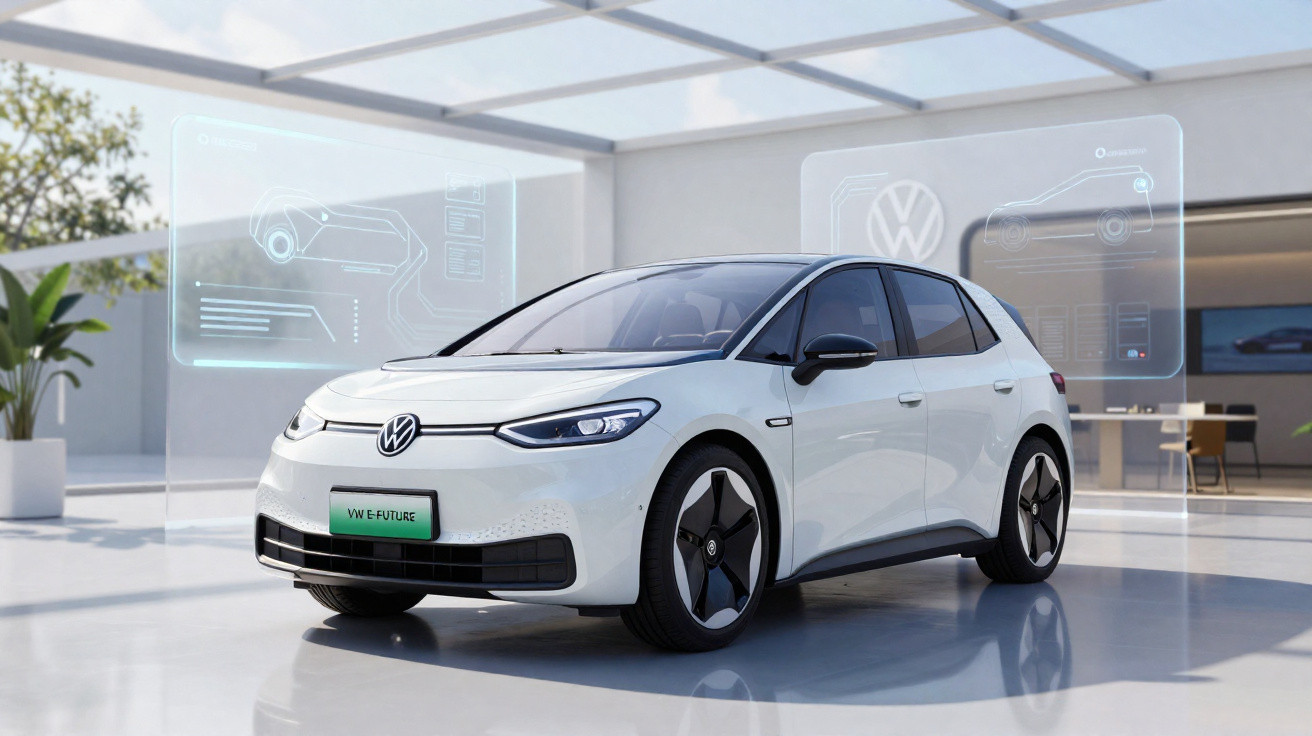
The way Volkswagen Group has allocated its announced investment makes its leading priorities immediately clear. Of the vast sum revealed, €122 billion will be channelled into the development and production of electric vehicles and software.
The announcement came during Volkswagen Group’s annual conference. Oliver Blume, the group’s chief executive, described 2023 as “decisive for delivering strategic objectives”.
According to the latest annual report, the German group will raise investment by 13%, with electrification and associated areas accounting for two-thirds of the overall total.
Alongside major investment commitments and a new model - which will put Volkswagen in the volume race for fully electric models - the company has also explicitly prioritised improving productivity.
Arno Antlitz, Volkswagen Group’s chief financial officer, said that 2023 must be “the year of productivity” in an interview with 360 Grad, a newspaper published by employees. Blume’s strategy therefore looks set to create considerable internal change.
The plans also include battery production and digitalisation investment aimed at the Chinese market. The Group is also substantially expanding its North American footprint, opening its first battery factory outside Europe in Canada.
Market confidence remains high, but investor pressure is growing
The market has reacted positively to Volkswagen Group’s investment announcement and its other forecasts. The Group expects sales revenue to reach €350 billion this year. The projected 14% increase in deliveries, driven by reduced instability in the supply chain, is giving these expectations further momentum.
However, pressure from investors is intensifying. Volkswagen Group’s spending on electrification is substantial, covering not only products but also the battery factories planned for the coming years. On top of this comes the cost of developing combustion engines to comply with Euro 7 standards. It is an “enormous ship” that Blume must steer carefully, as any deviation costs both time and a great deal of money.
2022 performance
The past year ended on a positive note for Volkswagen Group, although the effects of the pandemic and the war in Ukraine were still being felt. Its profit margin stood at 8.1%, while both revenue and profits exceeded their 2021 levels, though they could have been stronger.
Nevertheless, every brand recorded higher profits. Even SEAT and the volume brands managed to withstand the severe test of 2022. Despite delivering fewer cars, the combined operating profits of Volkswagen, Skoda and SEAT rose to €4 billion, compared with €3.5 billion in 2021.
CARIAD, the Group’s software division, ended the year with a negative performance, reporting losses of more than €2 billion.
Increasing dividend distributions will remain an exceptionally difficult task. Volkswagen Group has highlighted several obstacles, including its planned investments, geopolitical instability and the effort required to meet emissions rules that some manufacturers consider to be of questionable effectiveness.
The future will be far from straightforward, although it could be made easier if the European Union responds positively to manufacturers’ pressure for changes to the forthcoming Euro 7 standard.
Source: Automotive News


Comments
No comments yet. Be the first to comment!
Leave a Comment