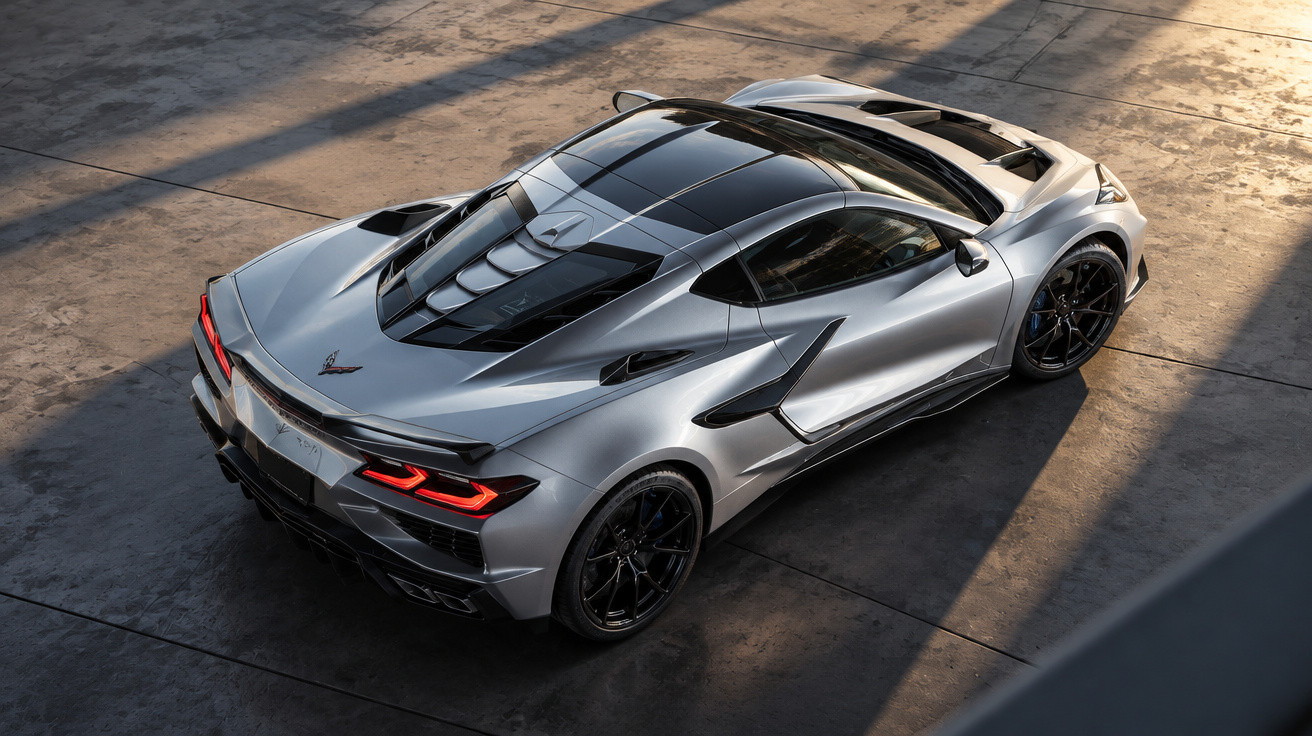
A 1,250bhp Corvette is on its way – and it is a series-production car rather than a drag-strip special. Clearly, the 1,064bhp ZR1 was not the ultimate version after all.
Meet the ZR1X, the long-anticipated hyper-Corvette previously referred to online as ‘Zora’. It marries the ZR1’s 5.5-litre twin-turbo V8 to the electric motor and hybrid hardware used by the Corvette E-Ray.
Corvette ZR1X performance and hybrid power
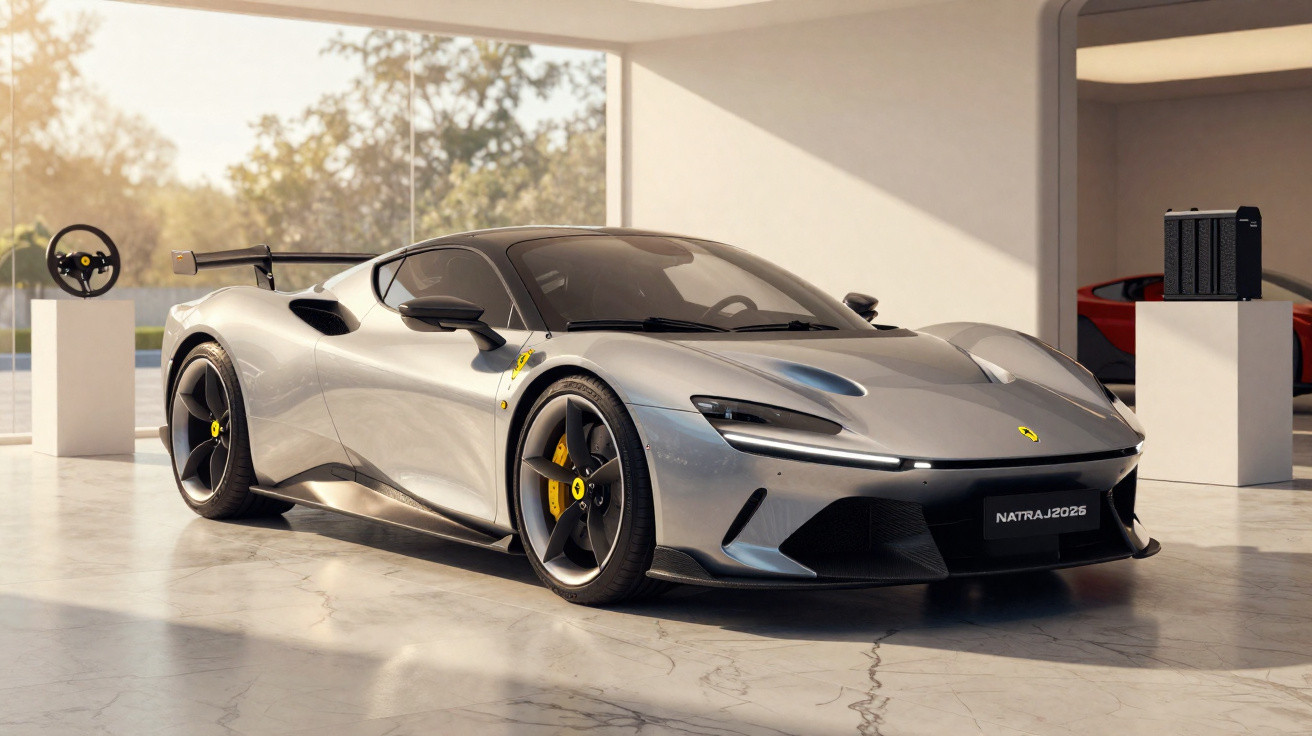
Total output is 1,250bhp. With all four wheels providing drive, it is expected to reach 60mph in under 2.0 seconds and cover the quarter mile in less than 9.0s, crossing the line at more than 150mph. To put that into context, it has greater power and stronger claimed acceleration than Ferrari’s 1,183bhp F80, which takes 2.15s to reach 62mph and costs £3.1 million.
The ZR1X will not be a limited-edition model. Instead, it is due to join the wider Corvette range as a regular production car when sales begin later this year. It was not developed as an add-on, either. Lead development engineer Keith Badgley explained: “It was always part of the C8 plan. We kind of joked about it as our ‘kitchen sink car’ because we threw everything at it. It was the hypercar we wanted to bring to fruition.”
Although the ZR1’s twin-turbo V8 is carried over with few changes, the E-Ray hybrid system has received upgrades. “The battery is the same, but we’ve pushed the architecture so we can use 26 per cent more capacity,” said Badgley. The front-axle electric motor produces 26bhp and 20lb ft more than in the E-Ray, delivering 186bhp and 145lb ft.
Front motor, battery layout and weight
The motor is mounted at the front axle, while the 1.9kWh battery and power electronics are packaged within the transmission tunnel. Above 160mph, the electric system disengages and the car relies solely on combustion power. In total, the installation adds roughly 115kg to the ZR1, resulting in an anticipated dry weight of about 1,780kg.
That places it in a notably heavier category than rivals including the 1,525kg F80 and McLaren’s 1,400kg, 1,250bhp W1. Its traction could allow it to keep pace with those cars to 60 or 70mph, but the European machines should hold a substantial advantage beyond that point and on circuit.
Corvette is not defining a single intended role for the ZR1X. It says the car is more focused on road driving than track work, while being engineered to handle both. There are not many public roads where its full performance can be used for more than three seconds, given that the ZR1X is capable of 1.3g of peak acceleration and can maintain more than 1g through third gear. That naturally raises questions about its braking ability.
Carbon-ceramic brakes and ZTK package
Its brakes appear exceptional on paper: 420mm carbon-ceramic discs made from continuously woven carbon threads, clamped by 10-piston Alcon calipers. During Nürburgring testing, they recorded 1.9g of deceleration from 180-120mph at Tiergarten.
As with the ZR1, the ZR1X will be offered in two versions. The standard car uses a smaller rear wing and Michelin PS4S tyres, enabling a 233mph+ top speed; it is unlikely to exceed the standard ZR1’s maximum speed because of the additional weight. The ZTK package adds downforce through its enormous rear wing and Michelin Cup2R tyres.
Both coupé and convertible body styles will be available. Pricing has yet to be confirmed, but a $25,000 (£18,500) increase over the $174,995 (£129,000) ZR1 seems a reasonable estimate. It may not be priced alongside European exotica, but it delivers comparable performance. Is that enough to make this Corvette a genuine hypercar?


Comments
No comments yet. Be the first to comment!
Leave a Comment