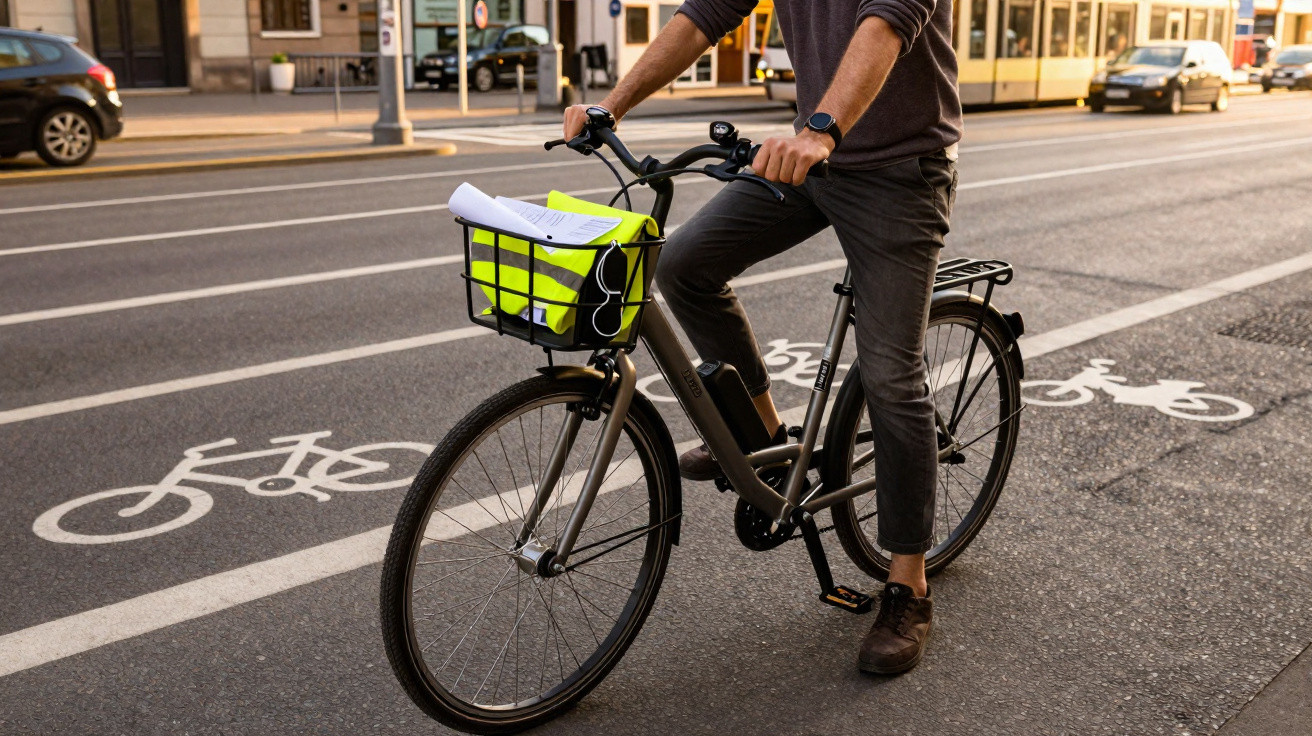
As electric bikes become more powerful and intelligent, the balance between freedom, safety and regulation is becoming increasingly unstable around the world.
Riders are asking for greater performance and longer range, while manufacturers are responding with new motors and sophisticated software. Policymakers, meanwhile, must regulate a rapidly changing sector that barely existed when today’s rules were introduced.
When power blurs the e-bike’s identity
For many years, the European definition of an e-bike has relied on a straightforward threshold: 250 watts of continuous power, with pedal assistance ending at 25 km/h. This benchmark dates from the 1990s, when e-bikes were slow, specialist products. Modern motors present a very different picture.
New drive systems advertise peak outputs approaching 1,000 watts, with the DJI Avinox M1 and Yamaha PW-X4 among the most prominent examples. This peak output is delivered in brief bursts for pulling away and climbing. It can make carrying cargo easier and help riders tackle steep ramps without losing momentum. The market has changed quickly.
Industry veteran Hannes Neupert says the previous framework no longer reflects how e-bikes are actually used. In his view, many supposedly “compliant” e-bikes would go beyond historic limits if their peak output and transient performance were tested rigorously. The distinction between continuous and peak power ratings has created uncertainty. Riders still pedal, and the motor still provides assistance only, but the figures now overlap with those of lightweight mopeds.
Peak ratings near 1,000 W push e-bikes toward moped territory, even as their legal status still says bicycle.
This contradiction is driving an expanding debate over regulation. As performance increases, the “bicycle” classification remains unchanged. Cities must therefore deal with quicker acceleration at junctions, heavier machines on shared routes and differing assumptions among motorists and riders.
E-bikes at a regulatory crossroads
Claus Fleischer, head of Bosch eBike Systems, has called on the European Union to establish an unambiguous maximum for peak power. He suggests 750 watts as the upper limit. His objective is clear: retain e-bikes’ status as bicycles. Going beyond that threshold could bring them under scooter regulations, introducing tighter requirements for insurance, equipment and permitted access.
German trade associations, including ZIV, have likewise called for certainty. They are concerned that a legal reclassification could capture ordinary e-bikes alongside a small number of high-output models. The consequences would be substantial socially and economically. E-bikes receive subsidies in many areas, may use cycle lanes and do not require a licence. A change in legal status could remove those advantages from a significant part of the market.
The fight is not about speed limits alone. It is about keeping access to bike lanes, subsidies, and everyday convenience.
- If they were reclassified as mopeds, many e-bikes might require insurance, registration plates and equipment inspections.
- Councils could prohibit them from cycle tracks, shared paths and parks.
- Retailers would have to introduce additional compliance procedures, increasing prices and slowing uptake.
- Police forces would take on a fresh enforcement challenge involving spot checks and disagreements.
Returning to the pedal-first philosophy
Higher power is not solely aimed at thrill seekers. Older riders depend on smooth assistance to remain mobile. Employees use cargo bikes instead of vans for school runs and last-mile deliveries. Riders with reduced mobility can benefit from stronger torque at low speed. An inflexible cap on peak output could affect these groups first.
Insurers raise another, more contentious point. Some argue that sufficient power can improve safety in traffic by allowing cyclists to clear junctions sooner and maintain pace with cars on hills. Their main concern is not outright wattage, but sudden acceleration below 15 km/h. Poorly controlled delivery can make inexperienced riders lose balance. They argue that software is better placed than a strict watt limit to address that issue.
Why 250 W continuous is not the whole story
Continuous output is a thermal measure: it describes what a motor can provide indefinitely without overheating. Peak output is temporary, shaped by battery voltage, current restrictions and the length of time the controller permits a surge. Motors carrying the same rating can therefore feel markedly different. One may provide a brief, forceful burst, while another may distribute torque through a longer, steadier ramp to improve stability.
Test results also differ between laboratories and manufacturers. Gradients, rider mass, wind and cadence all influence performance. This is why e-bikes labelled “250 W” can still pull away strongly from a standstill. The controller determines the way the power is delivered. Rider safety often depends more on that calibration than on the label on the motor casing.
What policymakers could do next
Europe could update the standard without restricting innovation. A number of options are available:
- Create a harmonised test for peak power and burst duration using a controlled hill profile.
- Introduce a maximum acceleration level below 15 km/h to protect inexperienced riders and users of heavier bikes.
- Permit greater peak output for cargo, tandem and adaptive bikes, provided their power delivery is more tightly controlled.
- Make transparent labels compulsory for torque, peak duration and battery discharge limits.
- Retain the 25 km/h assistance limit, while certifying safer torque curves for urban riding.
- Trial geofenced settings that reduce power in crowded locations while retaining climbing assistance.
| Category | Typical technical limits | Legal status in the EU |
|---|---|---|
| EPAC (pedelec) | Pedal assistance to 25 km/h, 250 W continuous, higher short peaks | Treated as a bicycle, no insurance, bike lanes allowed in most countries |
| Speed-pedelec | Pedal assistance to 45 km/h, higher continuous output | L1e-B category, insurance and approved helmet required, lane access limited |
| Moped-style e-vehicle | Throttle, higher speeds and mass | Registration, insurance, and road access rules vary by country |
A market shaped by climate goals and everyday realities
Municipal authorities want fewer cars on city streets. Employers support bicycle purchase schemes, while households seek flexible and affordable ways to travel. E-bikes can meet these demands when they remain straightforward to buy and simple to use everywhere. If regulation becomes excessively strict, journeys by car may return. If the rules remain unclear, disputes will increase on paths and at junctions.
Manufacturers are positioned between these pressures. They compete through rapid starts, quiet drive systems and extended range, but they also have a duty to tune their products safely. Smooth launch control can prevent heavier bikes from wobbling. Thermal safeguards reduce power fade on climbs. Clear labelling enables buyers to select the appropriate bike for their journey and cargo.
Power helps, but control matters more. Modulation, torque sensing, and smart limits prevent scares at low speed.
Practical notes for e-bike riders and buyers
- Check torque ratings as well as wattage. Strong torque at low cadence is useful for hills and cargo.
- Choose bikes with adjustable modes. An “eco start” setting can make busy junctions more manageable.
- Consider the bike’s weight with its battery fitted. Additional mass changes both stopping distance and handling.
- Enquire about certified batteries and chargers. Effective heat management and high-quality cells reduce fire risk.
- Understand local requirements concerning child seats, trailers and cargo width.
A quick hill calculation example
A total system mass of 110 kg, comprising rider, bike and cargo, travelling up a 10% gradient at 10 km/h requires roughly 300 watts simply to climb, excluding wind and other losses. Once rolling resistance and drivetrain losses are included, the motor may need to supply closer to 400–450 watts for a short burst. This illustrates why peak power matters for real-world starts and ramps, even where the continuous limit remains 250 watts.
What to watch in the coming months
Brussels is likely to reopen parts of the EN 15194 framework relating to test methods. Trade bodies are expected to argue for a clearly defined peak-power window and acceleration cap. There may be dedicated allowances for cargo and adaptive bikes. Software updates could make “gentle start” profiles standard equipment. Retailers may receive clearer information on peak duration and recommended loads. Cities could also test signage for heavy e-bikes on narrow paths at busy times.
The fundamental issue will remain: should e-bikes operate like bicycles in every setting, or like small motor vehicles in traffic? The response will influence motor design, lane access and the everyday journeys of millions.


Comments
No comments yet. Be the first to comment!
Leave a Comment