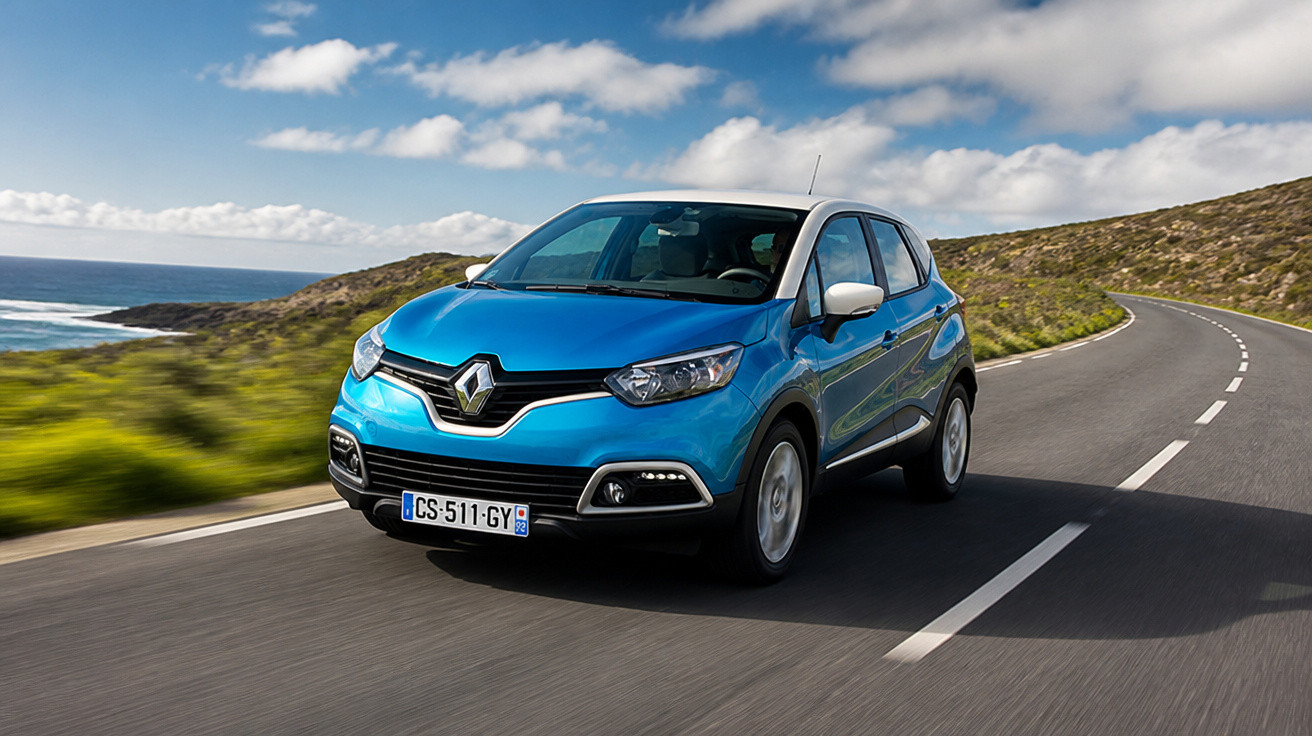
What is it?
Think of it as a Renault Clio with a dose of steroids. The Captur is Renault’s contender in the rapidly expanding small soft-roader market, aimed at rivals including the Nissan Juke and the marginally larger Vauxhall Mokka.
See more Captur pictures here
The word ‘soft’ is especially relevant. This is not a vehicle intended for serious off-road work: the Captur is front-wheel drive only and firmly geared towards family life. School runs and supermarket trips are exactly its territory, while its engines are hardly built for scorching the road.
Renault Captur engines and driving
What engines does it use?
Our test car had the 1.5-litre diesel engine, producing 89bhp and 220Nm. With the manual transmission, it reaches 0-62mph in 12.6 seconds; the twin-clutch version takes 13.1 seconds. Two petrol engines are offered as well: an 89bhp three-cylinder and a larger 119bhp inline four-cylinder, although neither manages 0-62mph in under 10.0 seconds.
See more Captur pictures here
Still, that scarcely matters. This car is intended for unhurried progress, and nobody will be attempting burnouts with four occupants and children on the rear seats. What is more, the diesel feels less sluggish than the data implies, thanks to a useful surge of torque once its turbo arrives at 1,500rpm. It is not an outstanding overtaking machine, admittedly, but the Captur responds well enough and feels sufficiently brisk once moving.
Its compliant ride and genuinely impressive refinement make the Captur rather unexciting, but entirely suited to the job it is expected to perform.
Renault Captur space and practicality
If family use is the priority, is it practical?
Up to a point, it is. The Captur’s boot is generously sized, matching that of the larger Mokka, while the two highest trim levels feature unusual removable, zip-off seat covers. The idea is that, after children, a dog or an irresponsible husband have been sick on them, you can unzip the covers, wash them, zip them back on and leave the Captur looking new once more.
Its practical layout also explains why the Captur uses the Clio platform rather than the Juke’s. Renault and Nissan belong to the same company, so sharing a platform between the Captur and Juke might initially have appeared logical. However, the Juke is offered with four-wheel drive, whose additional mechanical components compromise cabin room. The front-wheel-drive-only Clio architecture creates more interior flexibility, and the Captur clearly benefits: rear accommodation is roomy and four adults can sit comfortably.
Even so, Renault seems to have missed an opportunity inside. There are storage spaces, certainly, but they are neither as ingenious nor as plentiful as those in the Scenic. It is as though the firm that helped establish the MPV has partly lost sight of its origins.
Personalisation and Renault Captur technology
Are there any other USPs?
Renault says the Captur provides far more scope for personalisation through three ‘themed collections’. That may sound a little Ab Fab, yet the ‘collections’ are called Arizona, Manhattan and Miami. Very exotic...
Each theme is further divided into four packs: colour, exterior gloss, interior touch and style. As a result, selecting a Captur will not be a quick task, given the sheer number of possible combinations. Whether this merely dresses up the Captur is open to debate, but buyers appear to want this sort of choice today, so Renault can hardly be criticised for supplying it.
See more Captur pictures here
In addition, higher trim levels, starting at £14,995, include MediaNav - built-in touchscreen sat-nav, in plain English. For £450, R-Link, Renault’s ‘app’ system, can be specified. It provides six months of downloadable functions, including a live news feed and horoscopes, and can read emails aloud.... It even lets you alter the engine sound so the Captur resembles a classic Renault.
Excellent. I’ll take an A110, then.
Thought you might.
Should you buy the Renault Captur?
Seriously, then: should I consider a Captur?
Yes, if you are shopping for a small crossover. For one thing, prices begin at £12,495, representing strong value for this class. In my view, it looks fine, drives acceptably, and has ample space for the children you will be transporting.
Here is the TopGear qualification, though. The Captur plays things exceptionally safely: it is the market’s most beige car - and, ironically, perhaps its most vivid blue one too. Renault itself concedes that this is not a daring vehicle; unlike the Juke, it was not designed to prompt a reaction or split opinion.
It ought to sell well because there are currently few competitors. Yet when more rivals arrive, the Captur seems likely to fade into the background, since its abilities lack sufficient breadth. Regardless of how many Americana-style ‘collections’ are added...


Comments
No comments yet. Be the first to comment!
Leave a Comment